 Beer Galaxy
A 50 cl glass of beer contains on average 180 to 260 calories, depending on the type and alcohol content. A standard lager at 5 % provides about 220 kcal, a light beer at 4 % around 160 kcal, and a strong beer at 8 % can exceed 320 kcal. Non-alcoholic beers drop to 60-90 kcal per 50 cl.
This number can quickly rise if the beer is stronger in alcohol or enriched with sugars and other ingredients. Conversely, some light or non-alcoholic beers have a much lower calorie content. Calories and sugar move together: see how much sugar a beer actually contains.
Some non-alcoholic beers are an interesting option for those watching their alcohol intake.
The following sections detail the differences between beer styles, common brands, and lower-calorie alternatives.
How many calories are there in 50 cl of beer?
Beer calories by serving size (100 ml to 1 litre)
A standard beer contains roughly 40 to 50 kcal per 100 ml. From this base you can estimate the calories of any serving: a 33 cl bottle holds about 130–165 kcal, a 50 cl can around 200–250 kcal, and a full litre between 400 and 500 kcal. Stronger or maltier beers sit at the top of each range, light and alcohol-free beers at the bottom.
| Serving size | Average calories (classic beer) |
|---|---|
| 100 ml | 40–50 kcal |
| 25 cl (small glass) | 100–125 kcal |
| 33 cl (standard bottle/can) | 130–165 kcal |
| 50 cl (0.5 L can / UK pint) | 200–250 kcal |
| 1 litre (Maß) | 400–500 kcal |
These figures are for a classic 4–5% beer. For a precise count, multiply the volume by the beer’s energy density: an alcohol-free beer is closer to 25–35 kcal per 100 ml, while a strong craft beer (8%+) can exceed 70 kcal per 100 ml. For the detail on a UK pint, see our guide to the calories in a pint of beer.
A 50 cl glass of beer provides a significant amount of calories, depending on the alcohol content and style chosen. A light lager does not have the same energy impact as a strong or craft beer, which is richer in ingredients.
Calorie calculation for 50 cl
A standard 50 cl pint of lager contains on average between 180 and 260 calories. This estimate is based on an alcohol content of 4 to 5 per cent.
For non-alcoholic beer, the same quantity provides around 140 to 170 calories, as the absence of alcohol significantly reduces the energy value.
A strong beer with an alcohol content of over 7% can contain between 300 and 500 calories per 50cl. This is equivalent to a small light meal in terms of energy intake.
| Type of beer (50 cl) | Estimated calories |
|---|---|
| Classic blonde (4-5%) | 180–260 kcal |
| Alcohol-free | 140–170 kcal |
| Strong beer (7-9%) | 300–500 kcal |
Alcohol content remains the main factor in calorie calculation.
Comparison with other beer formats
A smaller size reduces calorie intake. A 25 cl glass of lager contains approximately 90 to 130 calories.
A 33 cl can of classic lager often contains between 120 and 170 calories. For a strong beer, the figure can exceed 200 calories.
The size of the container influences the total amount of calories consumed, even if the calorie density remains the same.
Factors influencing calorie content
The alcohol content (ABV) is the first factor. The higher it is, the more calories the beer contains.
The added ingredients also play a role. Some beers contain sugar, lactose or flavourings such as chocolate, which increase the energy value.
The style of beer also influences the calorie content. A light lager remains lower in calories than a strong IPA or a rich stout.
The brewing method can also alter the calorie density. An unfiltered craft beer sometimes contains more residual sugars than a standard industrial beer.
Calorie differences between types of beer
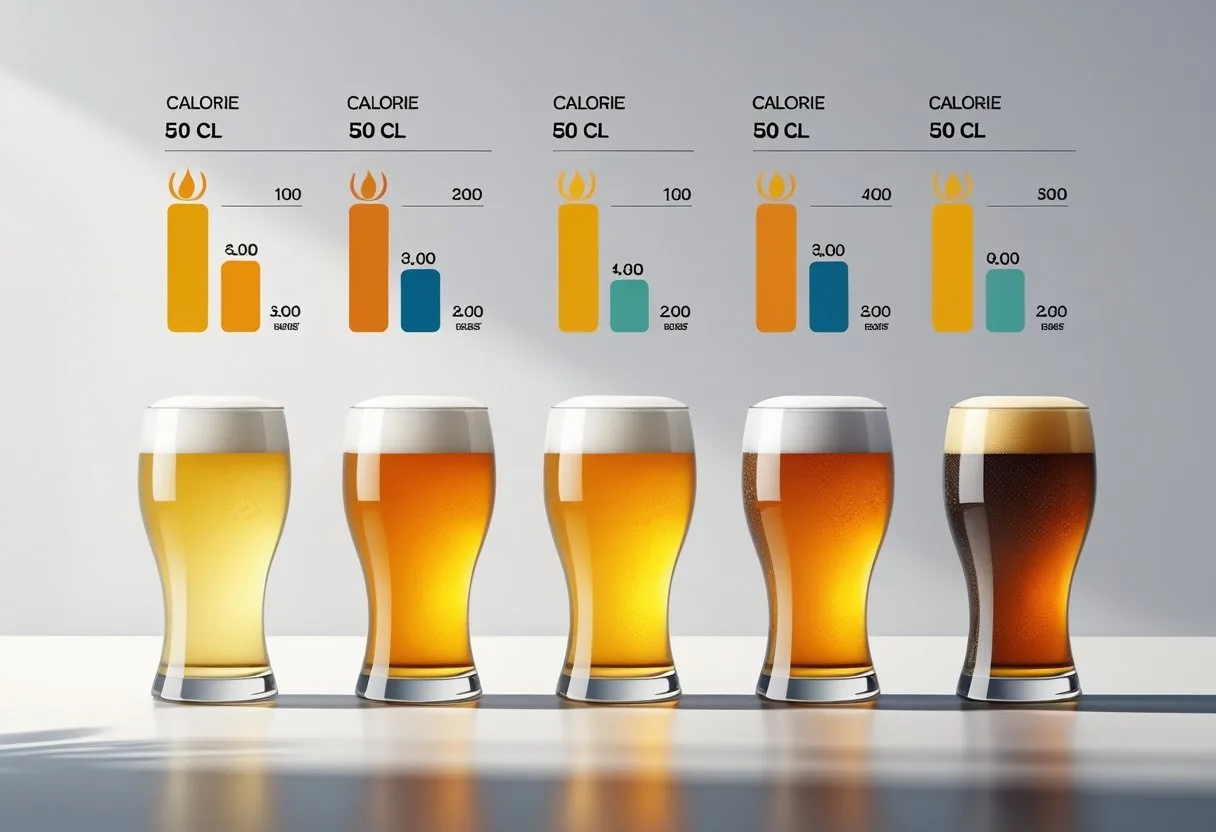
The number of calories in 50 cl of beer depends on the style, alcohol content and ingredients used. Beers with a higher alcohol content or containing additives such as sugar or roasted malt generally have more calories than lighter versions.
Blonde beer
A standard 50 cl pint of lager contains on average between 180 and 260 calories. These beers are often light, with an alcohol content of around 4 to 5%.
Industrial blond beers, such as lagers and pilsners, remain among the lowest in calories. Their bottom fermentation and simple recipe limit the concentration of residual sugars.
Some stronger blondes, such as Belgian Tripels or certain hop-rich IPAs, can easily exceed 300 calories per 50 cl. The higher alcohol content (7% or more) directly increases the energy intake.
White beer
White beer, often brewed with wheat, has a slightly higher calorie content than a light lager. A 50 cl bottle generally contains between 200 and 280 calories, depending on the alcohol content.
They often have a smoother texture and a fuller body, which may be due to residual sugars left over after fermentation. These sugars add a few extra calories compared to a classic lager.
Light versions, with around 4 to 5% alcohol, remain moderate in energy. Some stronger or flavoured white beers (citrus, coriander, spices) can exceed 300 calories if they exceed 6% ABV.
Dark beer
Dark beers and related styles such as porter and stout are among the most calorific. A 50cl glass often contains between 250 and 400 calories.
Their richness comes from the use of roasted malts. These malts provide aromas of coffee, chocolate or caramel, and a higher density that increases energy intake.
A light porter around 4.5% can remain under 280 calories, but an imperial stout or Belgian brown above 8% easily exceeds 450 to 500 calories per pint.
Calories in popular brands per 50 cl
A 50 cl pint of beer often contains between 200 and 250 calories, depending on the brand and alcohol content. The alcohol content and carbohydrate density directly influence the energy value.
Heineken
A pint of Heineken (5% alcohol) contains an average of 220 to 250 calories. This corresponds to approximately 11 g of pure alcohol and nearly 17 to 20 g of carbohydrates.
This lager is often served in 50 cl bottles in bars. For someone watching their calorie intake, this represents the energy equivalent of a small light meal.
Compared to other standard lagers, Heineken is in the upper middle range in terms of calories. Its alcohol content plays an important role, as each gram of alcohol provides 7 calories.
| Volume | Alcohol (ABV) | Calories | Carbohydrates |
|---|---|---|---|
| 50 cl | 5 per cent | ~230 | 17–20 g |
Carlsberg
Carlsberg Pilsner (4.6% alcohol) is slightly weaker than Heineken. A 50 cl pint contains an average of 210 to 230 calories.
It contains approximately 15 to 18 g of carbohydrates and less than 2 g of protein. Its calorie content is similar to that of many classic lagers, but slightly lower due to its lower alcohol content.
| Volume | Alcohol (ABV) | Calories | Carbohydrates |
|---|---|---|---|
| 50 cl | 4.6 per cent | ~220 | 15–18 g |
Corona
Corona Extra (4.5% alcohol) is often served with a slice of lime. A 50 cl pint contains approximately 210 calories, which puts it in the same range as Carlsberg.
It generally provides 14 to 16 g of carbohydrates, making it a slightly lighter beer than Heineken. Its milder taste and moderate alcohol content explain its slightly lower calorie content.
| Volume | Alcohol (ABV) | Calories | Carbohydrates |
|---|---|---|---|
| 50 cl | 4.5 per cent | ~210 | 14–16 g |
Nutritional elements and empty calories
A 50 cl beer mainly provides energy in the form of calories from alcohol and carbohydrates. It provides few essential nutrients, which is why it is often referred to as empty calories.
Alcohol and calorie content
Alcohol is the main source of calories in beer. Each gram of alcohol provides approximately 7 kcal, which is almost twice as much as carbohydrates or proteins.
A 50 cl pint with 5% alcohol contains nearly 20 g of pure alcohol. This represents approximately 140 kcal from alcohol alone.
These calories do not provide any significant amount of vitamins or minerals. They are referred to as empty calories because they increase energy intake without improving nutritional quality.
The alcohol content varies depending on the type of beer. A light beer with 3% ABV contains fewer calories than an IPA or an abbey beer with over 7% ABV.
The higher the alcohol content, the greater the calorie content of the alcohol.
Simple carbohydrates and sugars
Beer also contains simple carbohydrates derived from the fermentation of cereals. These carbohydrates come mainly from barley and malt, sometimes supplemented with wheat or other grains.
In 50 cl of classic lager, there are approximately 15 to 20 g of carbohydrates, or 60 to 80 additional kcal. These sugars are quickly absorbed and do not provide lasting satiety.
Beer contains very little dietary fibre. This accentuates the effect of ‘liquid calories’ that quickly enter the bloodstream without giving the impression of having eaten.
Some craft beers or stouts, which are richer in roasted malt, may contain more carbohydrates. Conversely, a non-alcoholic or low-carbohydrate beer may contain less than 10 g per 50 cl.
Actual nutritional intake
Beer contains few nutrients in significant quantities. It contains small traces of B vitamins (B3, B6, folic acid) and minerals such as potassium, magnesium and phosphorus.
Hops contain certain polyphenols with antioxidant properties, but their concentration remains low compared to fruit or vegetables.
Beer also contains silicon, sometimes cited for bone health, but it is not a reliable source.
Non-alcoholic beer and lower-calorie options
The alcohol content directly determines the number of calories in a beer. Non-alcoholic or low-alcohol beers offer a lighter alternative, while retaining some of the taste and experience.
They enable you to limit your energy intake without completely giving up this type of drink.
Calories in non-alcoholic beer
An alcohol-free beer contains an average of 25 kcal per 100 ml, or approximately 75 to 85 kcal per 25 cl glass. For a 50 cl bottle, this represents between 150 and 170 kcal.
This value remains lower than that of a classic lager, which can reach 180 to 260 kcal for the same quantity. The difference is mainly due to the absence or very low presence of alcohol, as 1 g of alcohol provides approximately 7 kcal.
There are variations depending on the brand and style. Some non-alcoholic beers contain more residual sugars to compensate for the loss of flavour associated with the absence of alcohol, which may slightly increase their calorie content.
Compared to sugary drinks such as soft drinks, non-alcoholic beer is still moderate, but it is not completely “zero calorie”.
Comparison with traditional beers
A classic 50 cl lager contains on average 180 to 260 kcal, which is about 100 kcal more than a non-alcoholic beer of the same volume. Strong beers, such as certain Belgian beers or stouts, can even exceed 300 to 500 kcal per 50 cl.
The alcohol content (ABV) remains the main factor. The higher it is, the more calories the beer contains. Added ingredients, such as sugar, lactose or chocolate in some recipes, can also increase the calorie count.
Lightweight alternatives
Apart from non-alcoholic beer, there are several lighter styles available. Micro IPAs (less than 3% alcohol) and Session IPAs or Pale Ales (3 to 5% alcohol) offer a lower-calorie option while retaining a hoppy flavour.
Lagers and pilsners are also popular choices, often around 5% alcohol and therefore lower in calories than strong beers. They remain affordable and easy to find.
For an even lower calorie option, industrial “light” beers (such as Bud Light and Miller Lite) or certain craft beers can contain less than 100 kcal per 33 cl.
These alternatives are suitable for those who want to limit their energy intake while enjoying a beer with a taste similar to the classic version.
Moderate consumption and impact on health
Beer provides calories from the alcohol and carbohydrates it contains. How it is consumed directly influences its effects on weight, metabolism and overall health.
Effects of excessive consumption
Drinking more than the recommended intake leads to a significant calorie overload. For example, two 50cl pints can add around 460 calories in a single evening, which is equivalent to a full meal.
Alcohol also disrupts metabolism. The liver prioritises the elimination of ethanol, which slows down fat burning.
This situation promotes energy storage in the form of adipose tissue, especially in the abdominal area. In the long term, drinking too much beer increases the risk of weight gain, liver problems and cardiovascular disease.
The effects are amplified if you also consume salty or fatty foods, such as crisps or cold meats, which are often served with aperitifs.
Regular and excessive consumption can also alter appetite. Beer stimulates hunger and can lead to increased eating, which exacerbates calorie excess.
Recommendations for moderation
Experts recommend limiting alcohol consumption, including beer. In practice, this corresponds to approximately 2 standard drinks per day for women and 3 for men, without exceeding 10 drinks per week.
A standard glass is equivalent to 25 cl of beer with 5% alcohol. It is best to plan days without drinking to reduce the strain on the liver.
Moderation also involves choosing smaller sizes, such as a 25 cl half pint rather than a 50 cl pint.
Certain simple habits help to limit calorie intake:
- Alternate beer and water to reduce the total amount.
- Avoid beers with high alcohol content, which often contain more calories.
- Do not automatically associate beer consumption with high-fat snacks.
These measures help to enjoy the conviviality of beer while limiting the negative effects.
Beer and weight management
Weight management depends on the balance between calorie intake and energy expenditure. A 50 cl pint of lager contains around 230 calories.
This can represent a significant portion of one’s daily diet. In comparison, a light or non-alcoholic beer contains fewer calories.
Choosing these alternatives helps reduce overall energy intake without sacrificing taste. The indirect effect of beer on appetite should also be considered.
It can stimulate the consumption of savoury snacks. This quickly adds several hundred extra calories.
To limit the impact on weight, it is better to:
- Consume beer with balanced meals.
- Engage in regular physical activity to compensate for energy intake.
- Avoid daily consumption to limit calorie accumulation.
Non-alcoholic beer: the calorie paradox
Against most expectations, non-alcoholic beers often contain more residual sugar than their full-strength equivalents. When fermentation is stopped early to limit alcohol, unfermented sugars remain. A non-alcoholic beer can contain 4–7g of sugar per 100ml, compared to under 1g for a standard lager.
In total calories, a 50cl non-alcoholic beer still delivers 80–120 kcal — about half a standard lager. Alcohol contributes 7 kcal/g, carbohydrates 4 kcal/g. In a 5% beer, alcohol alone accounts for 60–70% of total calories.
How beer compares to other drinks
At a similar alcohol content per serving: a 25cl glass of red wine (13%) delivers 200–220 kcal; a 25cl gin & tonic (5%) around 120 kcal; a 50cl standard lager (5%) lands at 200–250 kcal. Beer is not the most caloric alcoholic drink when you account for the same amount of pure alcohol consumed.
The weight gain associated with regular beer drinking is more strongly linked to eating behaviors than to the beer calories themselves — the appetite-stimulating effect and the food choices made alongside it matter more than the drink’s calorie count.
📊 Calorie comparison table for 50 cl beers
| Beer type | Calories /100 ml | Calories /50 cl (≈17 oz) |
|---|---|---|
| Alcohol-free beer (Heineken 0.0) | 21 kcal | ~105 kcal |
| Classic lager 5% (Heineken, Kronenbourg) | 42 kcal | ~210 kcal |
| Light pils 4% (Stella Artois) | 40 kcal | ~200 kcal |
| Wheat beer 5% (Hoegaarden) | 44 kcal | ~220 kcal |
| Belgian Tripel 9% (Westmalle) | 85 kcal | ~425 kcal |
| Imperial Stout 10% | 95 kcal | ~475 kcal |
| Carlsberg 5% | 43 kcal | ~215 kcal |
| Guinness Draught 4.2% | 35 kcal | ~175 kcal |
| Budweiser 5% | 43 kcal | ~215 kcal |
| Corona Extra 4.6% | 37 kcal | ~185 kcal |
| Leffe Blonde 6.6% | 53 kcal | ~265 kcal |
| Leffe Brune 6.5% | 52 kcal | ~260 kcal |
| Duvel 8.5% | 78 kcal | ~390 kcal |
| Chimay Blue 9% | 82 kcal | ~410 kcal |
| Westmalle Tripel 9.5% | 85 kcal | ~425 kcal |
| Rochefort 10 (11.3%) | 105 kcal | ~525 kcal |
| Cider comparison 5% | 44 kcal | ~220 kcal |
Frequently Asked Questions
How many calories in 50 cl of beer on average?
Around 200-220 kcal for a classic 5% beer (Heineken, Kronenbourg, Budweiser). A strong 8-10% beer climbs to 350-500 kcal. A 0.0% non-alcoholic beer drops to about 100 kcal per 50 cl.
What is the least caloric beer?
Alcohol-free beers (Heineken 0.0, Beck’s Blue) cap at 100-130 kcal per 50 cl. Light beers at 2-3% sit around 140-170 kcal. Guinness Draught (4.2%) is surprisingly low at 175 kcal despite its reputation.
Why are stronger beers more caloric?
Alcohol contains 7 kcal per gram — almost as much as fat (9 kcal/g) and more than sugar (4 kcal/g). A 10% beer (10 g alcohol/100 ml) already contributes 70 kcal/100 ml from alcohol alone, before residual sugars.
Does beer really make you fat?
Beer itself isn’t more caloric than wine or fruit juice (volume-for-volume). The risk comes from (1) consumed volume — 1 L = 400 kcal, (2) alcohol blocking fat oxidation, (3) the snacking that often comes with it.
How to reduce calorie intake while still drinking beer?
Three strategies: (1) choose a light, alcohol-free, or low-ABV beer (3-4%), (2) limit to 25-33 cl per occasion, (3) avoid dessert beers (imperial stout, barley wine, sweet fruit beers) which often exceed 100 kcal/100 ml.
🍻 Explore our beers
Over 1,000 craft beers listed, with a comparator and nutritional info.
Browse the full catalogue →