 Beer Galaxy
Beer pancakes without milk are made with 250 g flour, 3 eggs, 33 cl blonde beer, a pinch of salt and 1 tbsp oil — no dairy. Beer replaces milk and adds lightness and crispness thanks to its CO₂ bubbles. A traditional recipe from northern France and Belgium, perfect for lactose-intolerant. Ready in 10 minutes.
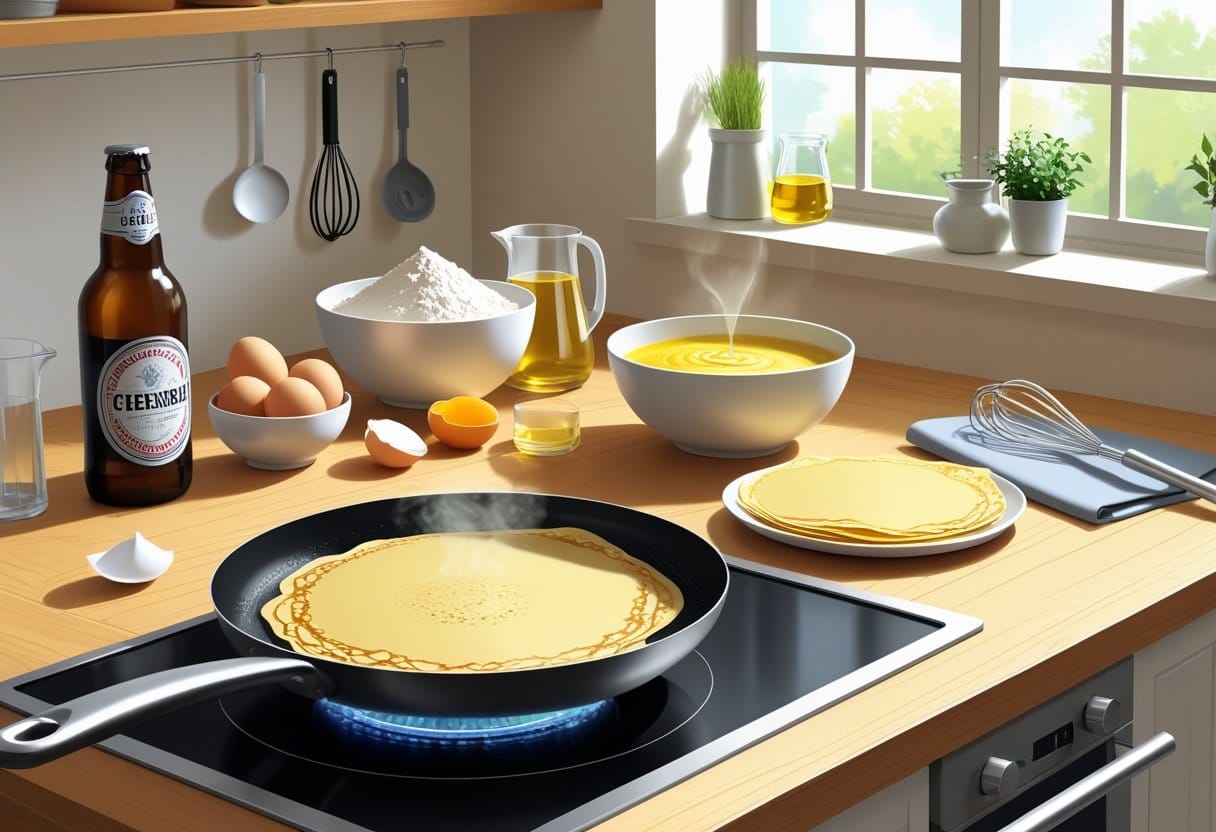
With a few basic ingredients such as flour, eggs and beer, you can make a smooth batter without milk. This method adds a different twist to the classic recipe.
You can choose a sweet or savoury version depending on your preference. Below you will find details of the ingredients, preparation, cooking tips and ideas for fillings.
Essential ingredients for milk-free beer pancakes
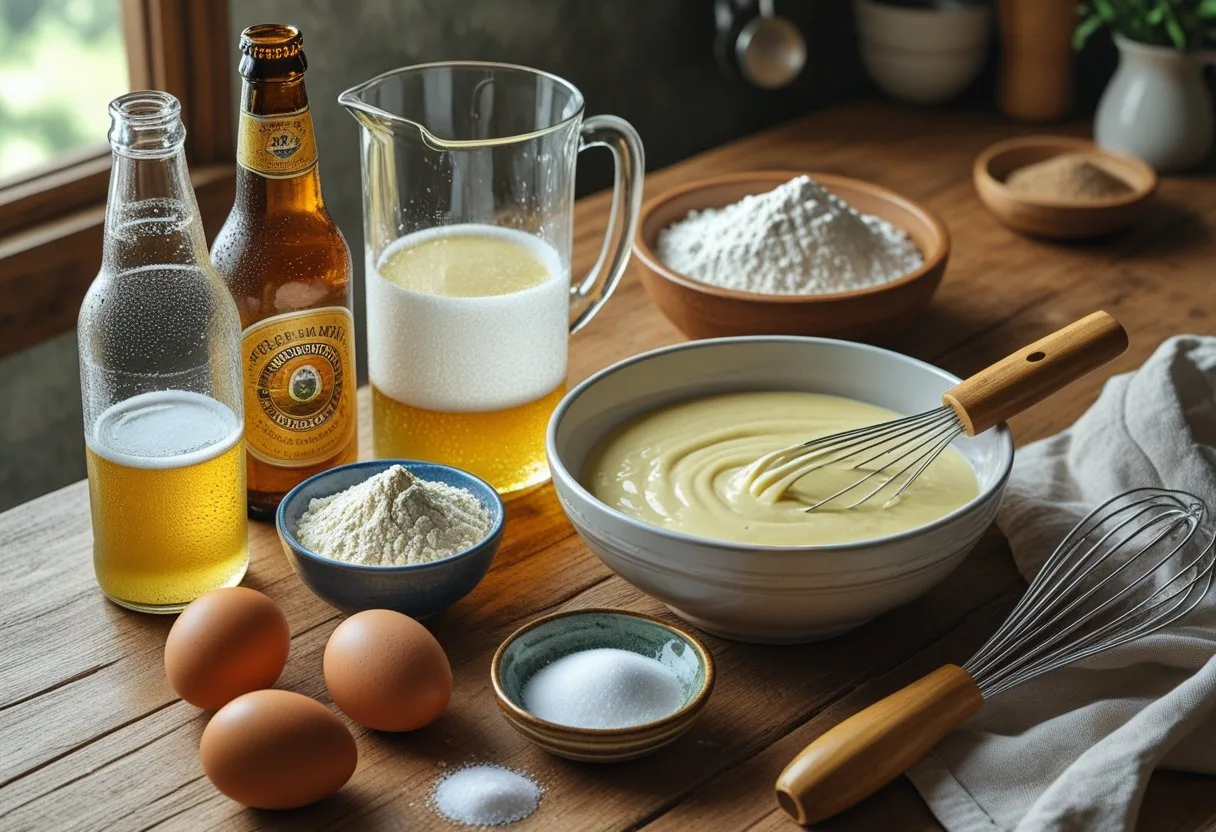
The choice of beer, the balance of flours and the fat content play a key role in the success of the batter. Each ingredient influences the texture and flavour of the pancakes.
Choice of beer
Beer replaces milk and serves as the main liquid. It adds carbon dioxide bubbles, which make the dough light.
The type of beer affects the taste and texture. A lager remains smooth and light.
It does not overpower the other ingredients and produces thin pancakes. A wheat beer adds a slightly fruity note.
Dark or bitter beers are less suitable. Their strong flavour dominates the mixture and makes the pancakes heavier.
For those who avoid alcohol, use non-alcoholic beer.
| Type of beer | Expected outcome |
|---|---|
| Blonde | Light and balanced dough |
| White | Mild and aromatic flavour |
| Brunette | Denser texture, strong flavour |
| Alcohol-free | Digestible alternative |
In general, allow 25 to 50 cl of beer depending on the amount of flour.
Using flour and salt
Flour forms the basis of the dough. It allows the beer to bind with the other ingredients.
Wheat flour remains the most common. You can also use buckwheat or rice flour to vary the flavours.
Add a pinch of salt to balance the flavour. It brings out the aromas of the beer.
Some people mix several types of flour to achieve a finer texture. For example, combine wheat flour and cornflour for more supple pancakes.
The choice depends on your preferences and the planned filling.
Role of melted butter and oil
Melted butter or oil softens the batter and prevents it from sticking to the pan. They also add flavour.
Butter gives a richer flavour. Oil remains more neutral and lighter.
In general, add 30 to 50 g of melted butter or 1 to 2 tablespoons of oil. Avoid adding too much so as not to weigh down the dough.
If you avoid dairy products, replace butter with rapeseed or sunflower oil. These oils are heat resistant.
Lightly grease the pan before each batch, even if the batter already contains melted butter or oil. This will ensure your pancakes are golden brown and easy to flip.
Preparation of beer pancake batter
To make successful beer crêpe batter, mix the ingredients thoroughly. Achieve a smooth texture without lumps and allow sufficient time for the batter to rest.
Mix the ingredients in the salad bowl.
Place the flour in a fairly large mixing bowl. Add a pinch of salt.
Form a well in the centre for the eggs. This method makes it easier to gradually incorporate the liquids.
Pour in the beer gradually while whisking. The effervescence of the beer aerates the batter.
Add melted butter or a dash of oil to soften the dough.
Tips for a smooth batter
A hand whisk is sufficient to obtain a smooth batter. You can also use an electric mixer or a hand blender.
Pour in the beer gradually to avoid lumps. If necessary, pass the batter through a sieve or blend it quickly.
The ideal consistency should be fluid, like a light cream. Add a little water if the mixture seems too thick.
The batter should pour easily from a ladle without being too runny.
Resting the dough at room temperature
Leave the dough to rest for about 30 minutes at room temperature. This allows the flour to absorb the liquids.
During resting, the bubbles in the beer make the dough lighter. There is no need to place it in the refrigerator unless the weather is very hot.
Cover the bowl with a clean cloth to prevent the dough from drying out. After resting, the dough is ready to cook in a hot, lightly oiled frying pan.
Cooking beer pancakes
To cook them successfully, prepare the pan well and control the temperature. The fat and the way you pour the batter influence the texture of the pancakes.
Preparing the pan
Use a clean, dry non-stick frying pan. Heat it over medium-high heat before you begin.
A pan that is too cold will produce thick pancakes. A pan that is too hot will burn them.
Grease the surface with a little melted butter or neutral oil. Butter adds a rich flavour, while oil withstands heat better.
Spread the fat in a thin layer with a brush or kitchen paper. Repeat this step every two or three pancakes.
Pour a ladleful of batter into the centre of the hot pan. Tilt the pan to spread the batter quickly.
Techniques for light pancakes
Beer adds air bubbles that make the dough light. Avoid over-mixing the dough before baking so as not to lose this effect.
Cook the first side until the edges start to lift and small bubbles appear. This indicates that the pancake is ready to be flipped.
Flip the pancake quickly with a thin spatula. The second side cooks in a few seconds and should remain lightly coloured.
To keep the pancakes soft, stack them and cover them with a clean cloth. They will stay warm and won’t dry out on the surface.
Ideas for garnishes and accompaniments
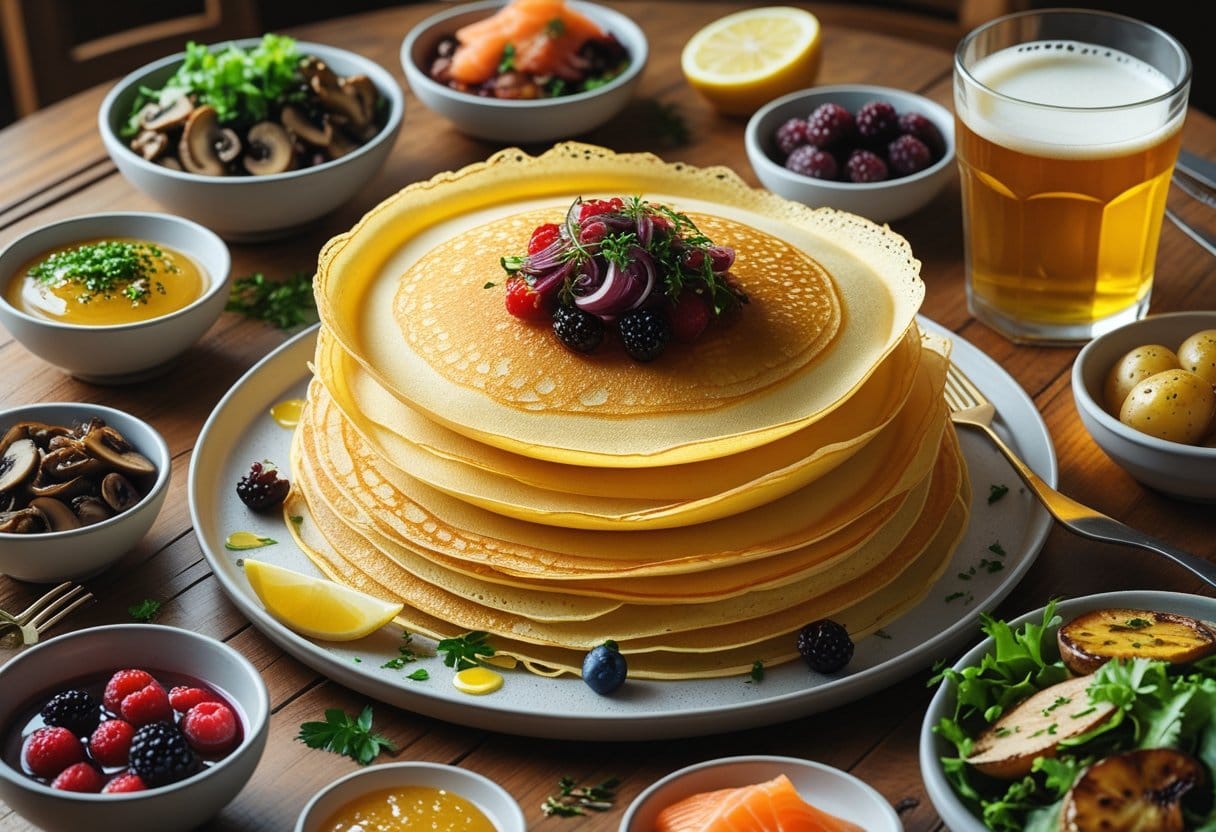
Beer pancakes are equally suited to sweet and savoury fillings. Their light texture pairs well with simple or elaborate toppings without weighing down the dish.
Sweet recipes
Beer pancakes go very well with classic toppings such as sugar and lemon juice. This combination remains light and brings out the flavour of the batter.
For a gourmet option, serve them with fresh fruit and whipped cream. Red fruits, such as strawberries or raspberries, add a tangy touch that balances the sweetness.
Chocolate remains a safe bet. A simple spoonful of spread or a drizzle of melted chocolate transforms the pancake into a comforting dessert.
Add homemade jams (apricot, raspberry, plum) or honey to vary the flavours. These toppings require little preparation and are ideal for a quick snack.
A table can help you choose according to your preferences:
| Topping | Main flavour | Opportunity |
|---|---|---|
| Sugar + lemon | Tart, fresh | Simple snack |
| Fruit + cream | Fruity, light | Dessert |
| Chocolate | Mellow, rich | Gourmet evening |
| Jam | Fruity, sweet | Breakfast |
Savoury recipes
Beer pancakes also go well with savoury fillings. Their lightness means they can be topped with rich ingredients without becoming too heavy.
Choose grated cheese and ham for a classic option. The cheese melts into the warm pancake and creates a simple and satisfying filling.
For a more complete version, top them with eggs, mushrooms and spinach. This combination provides protein and vegetables, ideal for a light meal.
Add smoked salmon and a touch of crème fraîche for more pronounced flavours. This combination works well thanks to the soft texture of the beer crêpe.
Serve with a topping of grilled vegetables (courgette, peppers, aubergine) for a balanced vegetarian option. These vegetables add flavour without overpowering the pastry.
A quick list of savoury toppings:
- Cheese + ham
- Egg + mushrooms + spinach
- Smoked salmon + crème fraîche
- Grilled vegetables + fresh herbs
Tips for making perfect beer pancakes without milk
The success of the dough depends on the choice of ingredients and how they are used. You can also adjust the recipe to suit your needs.
Adaptations for lactose intolerant individuals
Even if the recipe does not contain milk, certain ingredients such as butter can cause problems for people with intolerances. Replace melted butter with a neutral vegetable oil, such as sunflower or rapeseed oil. These oils provide a smooth texture without altering the taste.
For a lighter version, reduce the oil by half if the pan is non-stick. Those who prefer a lighter flavour can use deodorised coconut oil.
Check the beer you are using. Most beers do not contain lactose, but some flavoured or special beers may include additives. Choose a light lager to obtain a smooth, easily digestible batter.
Variations and storage tips
For a change, add a spoonful of vanilla sugar for a dessert version. Stir chopped herbs such as chives into the dough for a savoury version.
If you are not eating the pancakes immediately, stack them with baking paper between each one. This will prevent them from sticking together.
Store them in an airtight container in the refrigerator for up to 48 hours. You can also freeze them and then reheat them in a pan or in a low oven.
Comparison with other pancake recipes
Crêpe batter made with beer has a lighter texture and a subtle flavour. It is also suitable for those who want to limit or avoid dairy products.
Differences from the traditional recipe
The classic crêpe recipe uses milk to add creaminess. In the beer version, the effervescence and lightness of the bubbles replace this role.
This gives a softer, airier texture, different from the creamy density of milk pancakes. The taste also changes. The beer adds a subtle, sometimes slightly malty note, which remains mild if you choose a beer that is not too bitter.
Beer dough is prepared in the same way as the traditional recipe: flour, eggs, fat and liquid. The main difference lies in the mouthfeel and digestibility.
Benefits of the milk-free version
The absence of milk makes this recipe suitable for people who are lactose intolerant. It is also suitable for those who choose to reduce their consumption of dairy products.
You can prepare pancakes that are accessible to more guests without any special ingredients. Beer also has technical benefits.
Its natural gas helps to create a smooth, easy-to-spread batter. This reduces the risk of thick or heavy pancakes.
Cooking is faster. It often results in slightly crispy edges.
This variant remains versatile. It is suitable for sweet fillings such as sugar, lemon or fruit.
You can also use it for savoury versions with cheese, ham or vegetables. The simplicity of the ingredients makes it economical and convenient.
It is useful in households where milk is not always available.
Which beer should you use for pancakes?
Each beer style produces a different result. A light lager or pilsner is the most neutral — it provides the bubbles without flavoring the batter. A wheat beer (hefeweizen, witbier) adds light fruity and spicy notes that work well with sweet fillings. For savory pancakes — cheese, mushrooms, ham — an amber ale adds depth and complexity that pairs well with umami flavors.
One rule: the hoppier and more bitter the beer, the more its flavor carries through after cooking. An IPA will leave a noticeable bitterness in the final pancake. For versatile crepes, look for a beer under 20 IBU.
Resting the batter and cooking tips
Beer pancake batter keeps for up to 24 hours in the fridge. After that, the CO2 bubbles have escaped and the lightness disappears — it’s better to cook the same day. Take it out 30 minutes before cooking; cold batter chills the pan and produces uneven results.
Pan temperature matters: hot but not smoking, around 180°C. Too hot and the outside burns before the inside sets; not hot enough and it sticks and stays doughy. A small knob of fat every 3–4 pancakes is enough — more creates greasiness rather than a better crust.
The recipe: beer pancakes without milk
⏱ Prep 10 min · 🔥 Cook 25 min · 🍽 Serves 12 pancakes · 🥩 Difficulty Easy
Ingredients
- 250 g (2 cups) all-purpose flour
- 500 ml fresh blond beer
- 200 ml water (or sparkling water for extra lightness)
- 3 whole eggs
- 50 g neutral oil (or melted butter if tolerated)
- 2 tbsp sugar
- 1 pinch salt
- 1 tsp orange blossom water (optional)
Steps
- Mix the dry ingredients. In a bowl, combine flour, sugar and salt. Make a well in the centre.
- Add the eggs. Crack eggs into the well. Mix gently from the centre, gradually incorporating the flour.
- Add the liquids. Add oil, then beer, whisking to avoid lumps. Add water until you get a flowing batter. Add orange blossom water if desired.
- Rest 30 min. Cover and rest 30 minutes at room temperature. Beer acts as a natural aerator.
- Check consistency. Batter should coat the back of a spoon without being too thick. Add water if needed.
- Heat the pan. Heat a crepe pan over medium-high heat. Oil lightly the first time only.
- Cook the pancakes. Pour a small ladle of batter, swirl to coat. Cook 1 min, flip, cook 30 sec.
- Serve. Sprinkle with sugar, top with jam, dairy-free spread, or simply lemon and sugar.
Frequently Asked Questions
Why replace milk with beer?
Three reasons: (1) avoid lactose for intolerant people, (2) beer contains CO2 which lightens the batter, (3) its residual sugars promote browning. Pancakes are thinner, airier and brown better than with water alone.
Which beer should I use?
A simple blond beer (lager, white, pils). Avoid bitter beers (IPA) which transmit bitterness to the batter. Non-alcoholic beer works very well if you avoid alcohol.
Does the alcohol stay in the pancakes?
No. Alcohol evaporates almost entirely during cooking (the pan is at 180-200 °C / 360-390 °F, alcohol evaporates at 78 °C / 173 °F). Only cereal aromas remain. Suitable for children.
Is dairy-free batter harder to handle?
Quite the opposite — it’s even simpler! Without milk, batter is more fluid and spreads better in the pan. Only adjustment: watch the heat, as it browns faster. If colouring too quickly, lower the heat.
🍻 Explore our beers
Over 1,000 craft beers listed, with a comparator and nutritional info.
Browse the full catalogue →