 Beer Galaxy
Beef in beer (or carbonade flamande) is made by slow-cooking 1 kg of stewing beef with 50 cl of dark beer, onions, bacon, spice bread and brown sugar for 2.5 to 3 hours. The beer tenderises the meat and creates a rich sauce with malty, slightly sweet notes. A signature dish of northern France and Belgium.
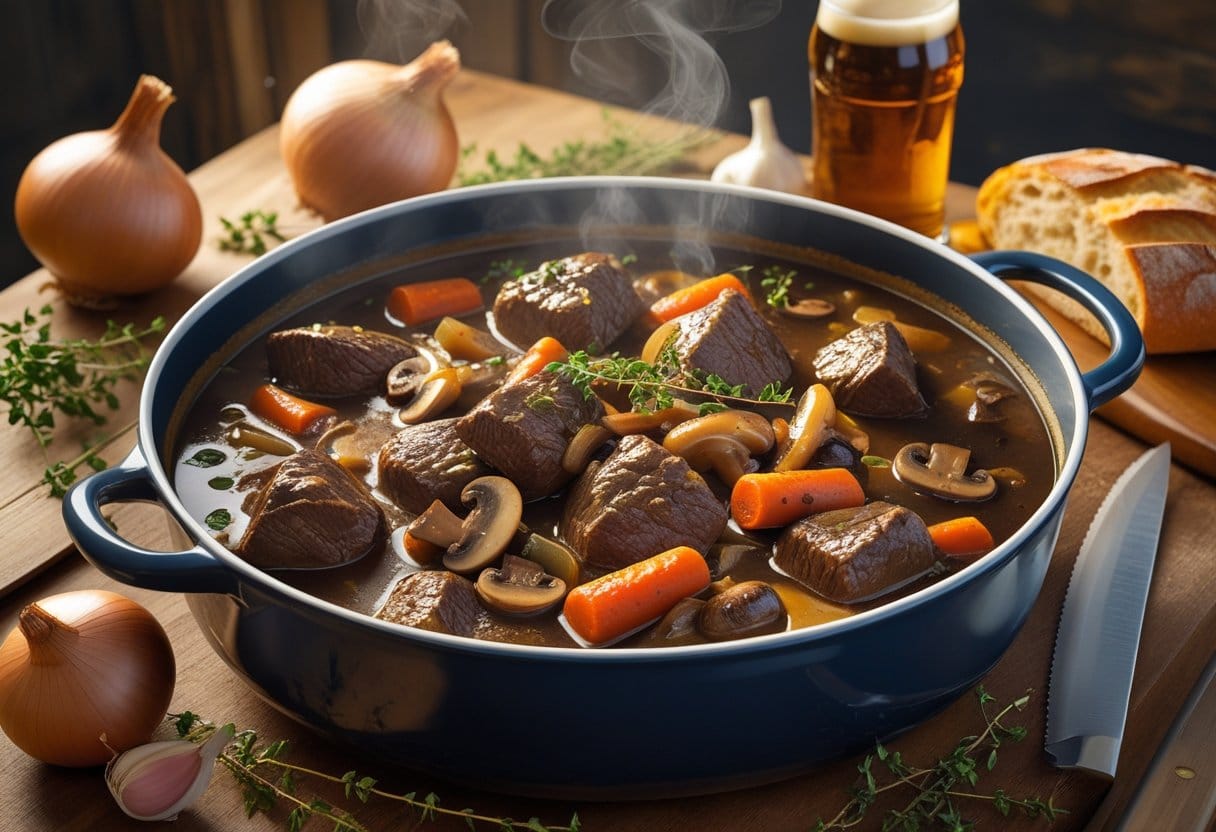
It seduces with its balance between the sweetness of the vegetables, the depth of the beer and the aroma of the herbs. Each stage of preparation, from the choice of meat to slow cooking, plays an essential role in achieving a tender texture and a well-blended sauce.
This guide presents beef cooked in beer, its key ingredients, cooking techniques and possible variations. It is suitable for many occasions and always offers a warm and generous experience.
What is beef cooked in beer?
Beef stew with beer is a slow-cooked dish that combines pieces of meat, vegetables and beer to create a rich and flavourful sauce. Slow cooking tenderises the meat and develops deep aromas.
This dish is often served during meals with family or friends.
Origins and history of the dish
Beef cooked in beer originates from northern France and Belgium, where beer plays an important role in cooking. Local breweries have long provided the basis for many stew recipes.
Peasant kitchens used less noble cuts of meat, such as cheek or brisket, which become tender after several hours of cooking. Beer often replaced wine, which was less accessible in these regions.
This dish has established itself as a regional speciality, similar to Flemish carbonnade. It can be found in many cookbooks and on the menus of traditional brasseries.
Specific characteristics of taste and aromas
Beer gives the dish a unique flavour. Depending on the type chosen, the result varies:
- Dark beer: caramelised and slightly bitter notes.
- Blonde beer: milder and lighter flavour.
- Amber beer: a balance between roundness and bitterness.
Slow cooking concentrates the flavours and blends them with vegetables such as carrots, onions or mushrooms. The meat becomes tender and is infused with the aromas of malt and hops.
The sauce can be adjusted to suit your preferences: thicker by reducing the liquid, or thinner by keeping the lid closed.
Popularity in home cooking
Beef stewed in beer remains a popular dish in many households. It takes time to prepare, but requires little supervision.
It is often cooked in large quantities, which allows several people to be fed around the same table. This collective aspect makes it a frequent choice for shared meals.
Potatoes, chips or pasta are often served as a side dish to soak up the sauce. The dish tastes even better when prepared the day before and reheated.
The essential ingredients for a successful beer-braised beef dish
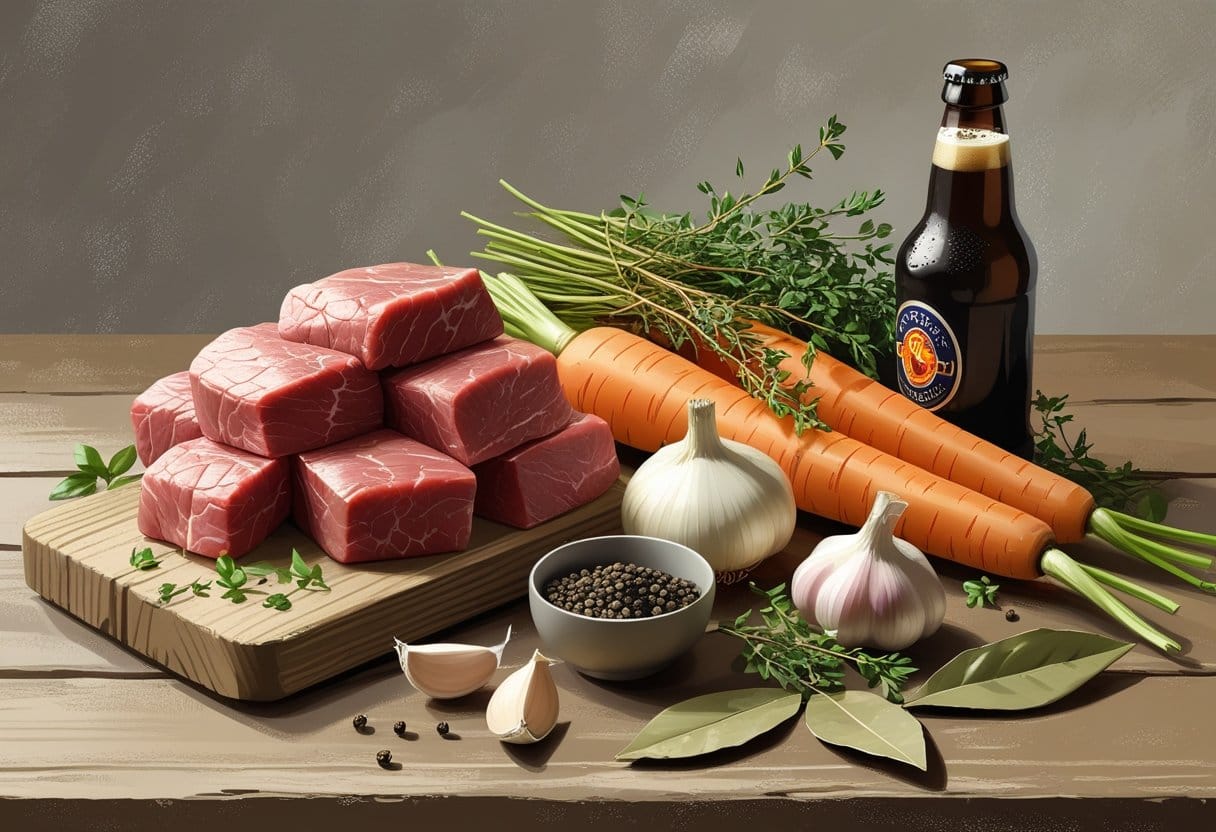
A good beef stew with beer depends on the quality of the meat, the balance between vegetables and herbs, the choice of beer, and the precise addition of spices and condiments. Each element counts towards the texture, depth of flavour, and harmony of the dish.
Selecting the ideal meat
The success of a beer stew depends on the cut of beef chosen. Cuts of beef that are suitable for slow cooking, such as chuck, shank or shoulder, produce tender, flavourful meat after several hours of simmering.
These cuts contain enough collagen to give a melt-in-the-mouth texture. Meat that is too lean may dry out.
It is best to cut the meat into large, even cubes. This size allows for even cooking and prevents the pieces from falling apart in the sauce.
Before simmering, sear the meat in a mixture of butter and olive oil to brown it nicely and enhance the flavours. You can sprinkle a little flour on top to thicken the sauce.
The importance of vegetables and herbs
Vegetables give the sauce structure and add a sweetness that balances the bitterness of the beer. Onions and carrots are essential: the former provide an aromatic base, while the latter add a touch of sweetness.
Garlic completes this duo and adds a more pronounced flavour. Some also add button mushrooms, which absorb the sauce and enrich the texture.
The bouquet garni plays a key role. It often consists of bay leaves, thyme and sometimes parsley.
It is best to cut the vegetables into fairly large pieces so that they withstand long cooking while releasing their flavours into the sauce.
Choice of beer: dark or light
Beer defines the character of the dish. A dark beer gives a more full-bodied, slightly bitter sauce with notes of malt and coffee.
Lighter lager beer has a milder, less pronounced flavour. It is suitable for those who prefer a more subtle sauce.
Some chefs use craft beers to vary the flavour profiles. It is important to choose a high-quality beer, as its flavour will become more concentrated after several hours of cooking.
After pouring the beer into the casserole dish, it is advisable to boil it for a few minutes to remove the alcohol while retaining the aromas.
Essential spices and condiments
Spices and condiments add the finishing touch. Salt and pepper season the dish, but other ingredients enrich the recipe.
A little mustard adds a touch of acidity and spice. Tomato paste adds colour and a slight acidity.
Some thicken the sauce with a roux, mixing butter and flour. This gives it a creamier texture.
It is best to adjust the seasoning at the end of cooking. Flavours become more concentrated over time, so taste before adding extra salt or pepper.
Preparation and cooking techniques
The success of a beer stew depends on the quality of the cuts, the proper browning of the ingredients, the deglazing process, and the patience required for slow cooking. Each step influences the tenderness of the meat and the richness of the sauce.
Prepare and chop the ingredients.
Preparation begins with the choice of beef cut. Cuts rich in collagen such as chuck, shoulder or cheek are well suited to slow cooking.
Cut the meat into even cubes measuring 4 to 5 cm. This size ensures even cooking and prevents the pieces from drying out.
Accompanying vegetables, such as carrots, onions, and celery, add sweetness and depth of flavour. They are cut into medium-sized pieces so that they hold up well during slow cooking.
A bouquet garni or a few cloves of garlic complete the aromatic base. These elements give structure to the sauce and balance the richness of the beer.
Sear and caramelise the meat and vegetables.
Start cooking by searing the meat in a hot casserole dish with a little oil. This step creates a brown crust thanks to the Maillard reaction, which develops caramelised aromas.
Do not overfill the casserole dish. Brown the pieces in small batches to prevent them from boiling in their own juices.
After the meat, sauté the vegetables in the cooking juices. The onions and carrots caramelise slightly, enhancing the colour and flavour of the sauce.
Once the base is nicely browned, return the meat to the casserole dish. This blend of flavours serves as the foundation for simmering.
Deglaze and simmer in a casserole dish
Pour the beer into the still-hot casserole dish to deglaze it. This loosens the juices stuck to the bottom and enriches the sauce with powerful aromas.
A dark beer has roasted and slightly bitter notes. A lager has a sweeter taste.
Add the stock to top up the cooking liquid. It softens the beer and helps to achieve a balanced sauce.
Cover the casserole dish and place it in the oven or leave it on a low heat. Maintain a steady cooking temperature, without boiling vigorously, to keep the meat tender.
Slow simmering blends the flavours and thickens the sauce naturally.
Mastering slow cooking for melt-in-the-mouth meat
Slow cooking transforms tough cuts of beef into melt-in-the-mouth meat. The meat can be easily pulled apart with a fork.
Allow between 2 and 3 hours on a low heat or in the oven at 160–180 °C. The cooking time varies depending on the size of the pieces and the type of meat.
Check the cooking regularly. If the sauce reduces too much, add a little stock.
If the meat remains firm, continue cooking in 30-minute increments.
Leave the casserole dish closed for about fifteen minutes after cooking. This resting period stabilises the flavours and keeps the meat tender.
Variations and tips for customising beef stew with beer
The choice of beer type and the addition of a few simple ingredients greatly alter the flavour of the dish. Chefs can also tweak the sauce to achieve greater depth and balance.
Adapt the recipe to lager or stout
Dark beer makes a rich sauce with malty and caramelised notes. It goes well with slow-cooked cuts of beef such as chuck or cheek.
This type of beer tenderises the meat and gives it a rounded, slightly sweet flavour.
Lighter lager creates a smoother, less dense sauce. It brings out the flavour of the vegetables and retains a fresher taste.
It is a good choice for those who prefer a less strong dish.
| Type of beer | Main flavour | Result in the sauce |
|---|---|---|
| Brunette | Malty, caramelised | Rich, dark sauce |
| Blonde | Mild, slightly fruity | Lighter sauce |
The choice depends on preference: a dark beer for a hearty meal, a lager for a milder option.
Add mushrooms, mustard or tomato purée.
Button mushrooms add a tender texture and earthy flavour. Add them at the beginning of cooking so that they melt into the sauce, or at the end to keep them slightly firm.
Mustard enhances the depth of the sauce. A spoonful of strong mustard adds spice, while wholegrain mustard adds texture and richness.
Tomato concentrate adds acidity and balances the bitterness of the beer. A small amount is enough to give a bright colour and a balanced taste.
Tips for an even tastier sauce
Sprinkle the meat with flour before pouring in the beer to obtain a thick, flavourful sauce. The flour acts as a thickener and gives the sauce a creamy texture.
Slow simmering, between 2 and 3 hours, makes the meat tender and the sauce concentrated. The gentler the cooking, the better the flavours of the beer and vegetables blend together.
Add a spoonful of honey or a dash of balsamic vinegar to soften the bitterness of a dark beer. A little pepper or chilli spice will enhance a lager that is too sweet.
Prepare the dish the day before and reheat it to improve the sauce. The flavours continue to develop as it rests.
Side dishes and service
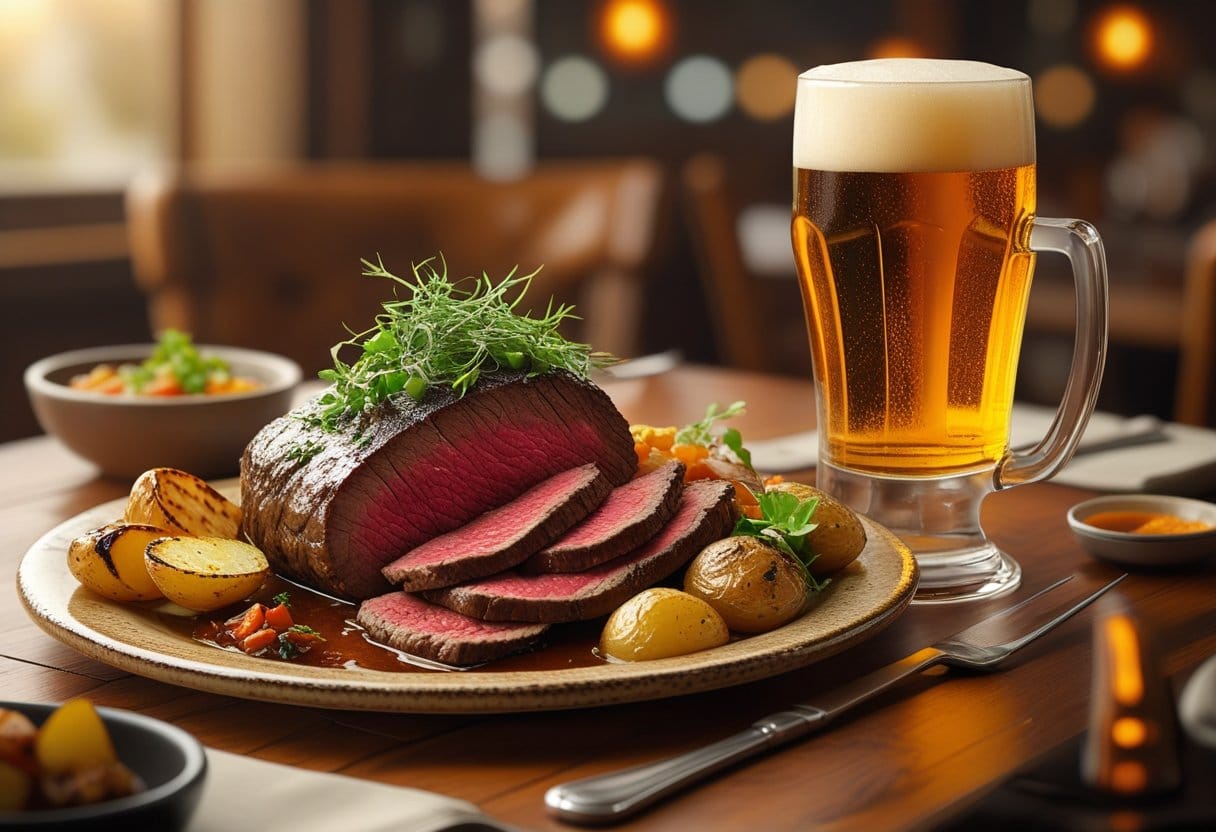
A dish of beef simmered or grilled in beer gains flavour with simple, well-chosen accompaniments. Vegetables, starchy foods and bread balance the richness of the meat and make the meal more enjoyable to share.
Homemade mashed potatoes
Homemade mashed potatoes offer a smooth texture that contrasts with the richness of the beef and beer. They absorb the sauce and soften the caramelised flavours.
Choose floury potatoes such as Bintje or Yukon Gold for a light and creamy consistency.
Butter and whole milk ensure a creamy texture. Add a small amount of cream for extra richness without masking the flavour of the meat.
Serve the purée piping hot to catch every drop of sauce.
Roasted or steamed vegetables
Roasted vegetables add a sweet, caramelised note that pairs well with dark or amber beer. Carrots, parsnips, onions and beetroot are delicious when roasted in the oven with a drizzle of oil.
Steamed vegetables such as green beans, broccoli or peas retain their freshness and add lightness. Cooking them quickly preserves their vitamins and balances out a dish rich in sauce.
You can combine both methods. For example, serve roasted carrots with steamed green beans for a contrast between sweetness and crunchiness.
Simple seasoning is all you need: salt, pepper and a few fresh herbs such as parsley or thyme. This brings out the flavour of the beef and beer.
Crispy bread and other ideas
Crispy bread is the ideal accompaniment to beef stewed in beer. Its firm crust and light crumb absorb the sauce without falling apart. A traditional baguette or country loaf works well.
For a change, try lightly toasted bread or bread rubbed with garlic. This adds an aromatic touch without masking the flavours of the main course.
Add a lightly seasoned green salad or a small portion of gratin dauphinois to complete the meal. These additions add variety without making the meal too heavy.
Bread remains the most practical and popular choice, especially during family meals where everyone helps themselves freely.
Tips for a convivial meal
Beef cooked in beer is ideal for shared meals. Serve it directly from the casserole dish at the table for a relaxed and welcoming atmosphere. Everyone can help themselves according to their appetite.
Offer several side dishes to satisfy all tastes. Mashed potatoes, roasted vegetables and crusty bread are suitable for all guests.
Focus on the quality of the ingredients and keep the portions simple. Fresh, well-seasoned products are all you need to bring out the best in the meat and beer sauce.
Accompany the meal with a suitable beer or a light red wine to complete the experience. This makes the dish even more enjoyable to share with family or friends.
Practical advice and storage
Beef cooked in beer tastes better when prepared in advance, stored properly and reheated carefully. Storing it in the refrigerator or freezer extends its shelf life. A few simple tips can help you transform leftovers into tasty new dishes.
Prepare in advance and reheat
Beef cooked in beer develops a richer flavour after resting overnight. The aromas of the meat and sauce blend better, resulting in a more balanced dish.
Cook it the day before a meal for more flavour.
Reheat the dish in a saucepan over low heat rather than in the microwave. This method keeps the meat tender and prevents the sauce from thickening too quickly. Add a little water or stock to adjust the texture if necessary.
Reheat slowly, with a lid on, to preserve moisture. Small portions reheat in 10 to 15 minutes. A large casserole dish takes longer.
Storage and freezing
Store the beef in beer for 2 to 3 days in the refrigerator in an airtight container. Allow it to cool completely before covering and storing.
For longer storage, freeze the dish for up to 3 months. Divide it into individual portions to make reheating easier.
Defrost the dish in the refrigerator for several hours. Reheat it gently, as you would a fresh dish.
Tips for making the most of leftovers
Leftover beer-braised beef makes for quick meals. Pulled beef works well in hot sandwiches or pasta dishes.
You can also use the meat in a savoury pie. The remaining sauce can be used as a base for risotto or to flavour roasted vegetables.
Mix the sauce with mashed potatoes to make a hearty dish. Add fresh herbs such as parsley or chives while reheating the dish.
These herbs add freshness and balance the richness of the dish.
Which beer works best for a beef stew?
The beer you choose directly shapes the sauce. A dark malty ale (Chimay Red, Newcastle Brown Ale, Leffe Brune) adds caramel and toasted bread notes — deeper color, richer sauce. A pale lager gives a lighter, cleaner result, better when you want vegetables to stay prominent. An amber ale sits in between. Avoid heavily hopped IPAs: bitterness concentrates during long cooking and throws the balance off.
The practical rule: use a beer you’d enjoy drinking alongside the dish. Flat, thin beer makes flat, thin sauce. For 1 kg of beef, 33-50 cl is the right range — enough to create a sauce without flooding the pot.
Why long, slow cooking matters
During a 2–3 hour braise at 80–90°C, two things happen simultaneously. The collagen in tough cuts (chuck, brisket, shin) breaks down into gelatin, producing that silky, coating texture. The beer’s alcohol evaporates in the first 30 minutes; what stays behind are residual sugars, malt compounds, and polyphenols that participate in Maillard reactions with the meat proteins.
This is why the cut matters as much as the beer: collagen-rich, secondary cuts give far better results than lean steaks, which tighten and dry out over long cooking. Ask your butcher for chuck or brisket and cut it yourself into 4–5 cm cubes for optimal browning surface.
The recipe: beef and beer stew
⏱ Prep 30 min · 🔥 Cook 3 h · 🍽 Serves 6 servings · 🥩 Difficulty Easy
Ingredients
- 1.2 kg (2.5 lb) beef chuck or cheek, cut into large cubes
- 500 ml Belgian dark beer (Leffe Brune, Chimay Bleue or abbey ale)
- 4 yellow onions, sliced
- 3 garlic cloves, crushed
- 2 carrots, sliced thick
- 2 tbsp strong mustard
- 2 tbsp brown sugar
- 2 slices gingerbread spread with mustard (optional, Flemish style)
- 1 bouquet garni (thyme, bay, parsley)
- 2 tbsp flour
- 50 g butter + 2 tbsp oil
- Salt, black pepper
Steps
- Sear the beef. Pat the beef cubes dry, season with salt and pepper. Brown in batches in hot butter and oil in a heavy pot. Set aside.
- Soften the onions. In the same pot, cook the onions over low heat for 10 minutes until golden. Add crushed garlic.
- Singer. Return the beef, sprinkle with flour, stir 2 min on high heat to toast lightly.
- Deglaze with beer. Pour in the dark beer, scraping the bottom of the pot. Add brown sugar, mustard, bouquet garni, carrots and gingerbread (mustard side down).
- Simmer. Cover and cook on very low heat for 2h30 to 3h, or in the oven at 150 °C (300 °F). Meat should fall apart with a fork.
- Check the sauce. Remove bouquet garni. If sauce is too thin, reduce uncovered for 10 min. Adjust salt and pepper.
- Serve. With homemade fries, mashed potatoes or fresh pasta. Even better reheated the next day.
Frequently Asked Questions
Which beer should I use for cooking beef?
A Belgian dark abbey ale like Leffe Brune or Chimay Bleue is ideal: its malty caramel and toasted bread notes enrich the sauce. Avoid IPAs and heavily hopped beers — bitterness concentrates during long cooking.
What cut of beef works best?
Gelatinous braising cuts give the best results: chuck, cheek, shin, blade, or shoulder. Collagen melts into gelatin after 2-3 hours of cooking, producing the signature fork-tender texture and silky sauce. Avoid lean cuts like sirloin which dry out.
Can I freeze beef and beer stew?
Yes, up to 3 months. Let it cool completely, divide into individual portions in airtight containers. Thaw overnight in the fridge and reheat gently in a saucepan with a splash of water if the sauce has thickened.
What goes well with beef and beer stew?
Classic sides are homemade fries (Flemish style), mashed potatoes or fresh pasta. A crisp green salad or steamed vegetables (green beans, broccoli) balance the richness. For drinks, serve the same beer used for cooking, slightly chilled.
🍻 Explore our beers
Over 1,000 craft beers listed, with a comparator and nutritional info.
Browse the full catalogue →