 Beer Galaxy
The alcohol content of a beer is its percentage of alcohol by volume (% vol. or ABV). Light beers sit around 3 to 4 % (table beer, some lagers), standard beers 4.5-5.5 % (blondes, pilsners, lambics), strong beers 6-9 % (IPAs, tripels, stouts) and imperial or quadruples can exceed 10-12 %. A mixed drink shifts the figure too: a Picon beer lands around 6.5 % once the bitter is poured in. ABV depends on how much sugar yeast ferments during brewing.
Understanding this figure allows you to distinguish between a light beer with an alcohol content of 3%, a classic beer with an alcohol content of around 5%, and a strong beer with an alcohol content exceeding 7%.
There are also systems such as the “Régie degree”, still used in France. This system classifies beers according to the density of their wort before fermentation.
Understanding how to interpret the degree helps you choose the right beer for the occasion or style. Calculation methods, categories and legal regulations structure the world of brewing.
What is the alcohol percentage of beer?
The alcohol percentage of a beer — its ABV, for alcohol by volume — tells you how much of the liquid in your glass is pure alcohol. Most beers sit between 4 and 6%, but the range is wide.
| Beer type | Typical alcohol percentage |
|---|---|
| Alcohol-free beer | under 0.5% |
| Light lager | 3 to 4% |
| Standard lager or pilsner | 4.5 to 5.5% |
| IPA | 5.5 to 7% |
| Belgian strong ale, imperial stout | 8 to 12% |
Two beers of the same style can differ by a full percentage point, so the label on the bottle is always the reliable figure — not the style name.
What is the degree of beer?
The alcohol content of a beer indicates the amount of ethanol present in the drink. This measurement influences the legal classification of beers in France and how they are perceived in terms of taste or strength.
Definition of the alcohol content in beer
The alcohol content corresponds to the percentage of ethanol contained in a beer in relation to the total volume. This is referred to as the alcohol by volume (% ABV).
In France, this figure must be clearly displayed on the label of each bottle or can. For example, a beer with an alcohol content of 5% by volume contains 5 millilitres of pure alcohol per 100 millilitres of beverage.
There is also a specific classification called “degree of regulation“, used for tax and legal purposes. It distinguishes between categories such as table beer (2° to 2.2°), bock beer (3.3° to 3.9°), luxury beer (over 4.4°) and special beer (over 5°).
This distinction regulates marketing and helps consumers quickly identify the strength of a beer.
Difference between alcohol content and alcohol level
The term alcohol content is often used as a synonym for alcohol level, but there is a subtle difference. Alcohol level expresses a scientific and standardised measurement (% vol.), while alcohol content refers to this value in a more common way.
In brewing, other units such as the Plato degree (°P) measure the density of the wort before fermentation. This data indicates the amount of fermentable sugars and therefore the alcohol potential.
The final alcohol content depends on the conversion of these sugars into ethanol by yeast. Two beers may have the same alcohol content but different initial densities, which affects their texture.
Impact of degree on flavour and perception
The alcohol content influences the flavour, texture and mouthfeel. A light beer with an alcohol content of 3% appears smoother and easier to drink.
Conversely, a strong beer with an alcohol content of over 8% offers a rounder mouthfeel, alcoholic warmth and more intense aromas. Ethanol also acts as an aroma carrier.
The higher the percentage, the more it brings out certain malty, fruity or spicy notes. Strong beers may seem more complex but also heavier to drink.
The perception of alcohol content varies depending on the style. A 5% ABV blonde lager will seem balanced, while a stout with the same alcohol content will seem denser due to its roasted malts — Beamish Irish Stout, at just 4.1% ABV, is a good example.
How to measure the alcohol content of beer
The alcohol content of beer is calculated based on the conversion of sugars into ethanol during fermentation. The measurement is based on a comparison of the density of the wort before and after this process.
Role of initial and final density
The initial density (ID) corresponds to the measurement of the must before fermentation. It indicates the concentration of fermentable sugars.
The higher the density, the greater the alcohol potential. The final density (FD) is measured after fermentation.
It shows the amount of sugars remaining that have not been converted into alcohol. The difference between DI and DF allows the proportion of sugars converted into ethanol to be estimated.
The most common calculation uses a simplified formula:
Alcohol
content ≈ (DI – DF) × 131.25
This formula gives an estimate of the percentage of alcohol by volume (% vol).
A DF too close to the DI indicates incomplete fermentation. Conversely, a very low DF suggests that almost all fermentable sugars have been consumed.
Using the hydrometer and refractometer
The hydrometer is the most commonly used instrument. It floats in a sample of wort or beer and indicates the density based on the depth of immersion.
The sample is taken in a test tube to prevent any contamination of the fermenter.
The refractometer works differently. It measures the refractive index of a liquid, which varies depending on the sugar concentration.
This tool requires little liquid and provides a quick reading. After fermentation, the presence of ethanol distorts the measurement, so a correction must be applied.
The hydrometer remains the benchmark for monitoring fermentation from start to finish. The refractometer is useful for quick measurements before fermentation.
Influence of temperature on measurement
Temperature affects the density of a liquid. Most hydrometers are calibrated for measurement at 20°C.
If the beer is warmer or colder, the reading must be corrected using a compensation table.
For example:
| Liquid temperature | Density correction |
|---|---|
| 10 °C | -0.003 |
| 20 °C | 0 |
| 30 °C | +0.003 |
An uncorrected measurement can result in an alcohol content that is several tenths of a percent inaccurate.
The refractometer is less sensitive to temperature variations. It is often equipped with an automatic compensation system.
Recording the temperature at the time of measurement ensures a more accurate estimate of the final ethanol content.
The different types of beer according to their strength
The alcohol content of a beer determines its strength, its use and the context in which it is consumed. The categories range from light beers intended for drinking with meals to stronger beers associated with tasting.
Table beers
Table beers have a low alcohol content, often between 1.5% and 3% ABV. They are served during family or group meals.
They accompany food without being heavy or causing rapid intoxication. Their texture is light and their flavour mild.
The hops remain subtle, leaving more room for cereal notes. In the official classification, they belong to the low-alcohol beer category.
This degree serves as a reference for determining the taxation and legal category of the beverage. Today, these beers are less common in shops.
Some craft breweries still produce modern versions, similar to non-alcoholic beers but with more flavour.
Bock beers
Bock beers form an intermediate category, with an alcohol content between 3.5% and 5.5% ABV. They account for a large proportion of everyday consumption in Europe.
They are often blonde, but there are also amber and brown versions. Their profile combines lightness with a more pronounced bitterness than that of table beers.
The term ‘bock‘ refers both to the style and the container, as these beers were traditionally served in thick mugs. Ordering a bock meant ordering a standard draught beer.
These beers are well-balanced: strong enough to be enjoyed outside of meals, but not too strong to remain accessible to everyone. They occupy a central place in the brewing industry.
Premium beers
Luxury beers
often have an alcohol content of over 6% ABV.
They are similar to tasting beers and sometimes resemble light wines thanks to their rich aroma and strength.
Brewers use more malt for these beers.
This increases the fermentable sugar content and the final alcohol content.
Premium beers have a denser body and intense flavours. This category
includes Belgian triples, certain strong ales and malt-rich brown beers.
They are generally consumed on special occasions.
Their higher price reflects the notion of “luxury”.
This designation indicates a stronger degree and a perceived higher quality.
Brewers pay particular attention to the ingredients and the brewing process.
Speciality beers and non-alcoholic beers
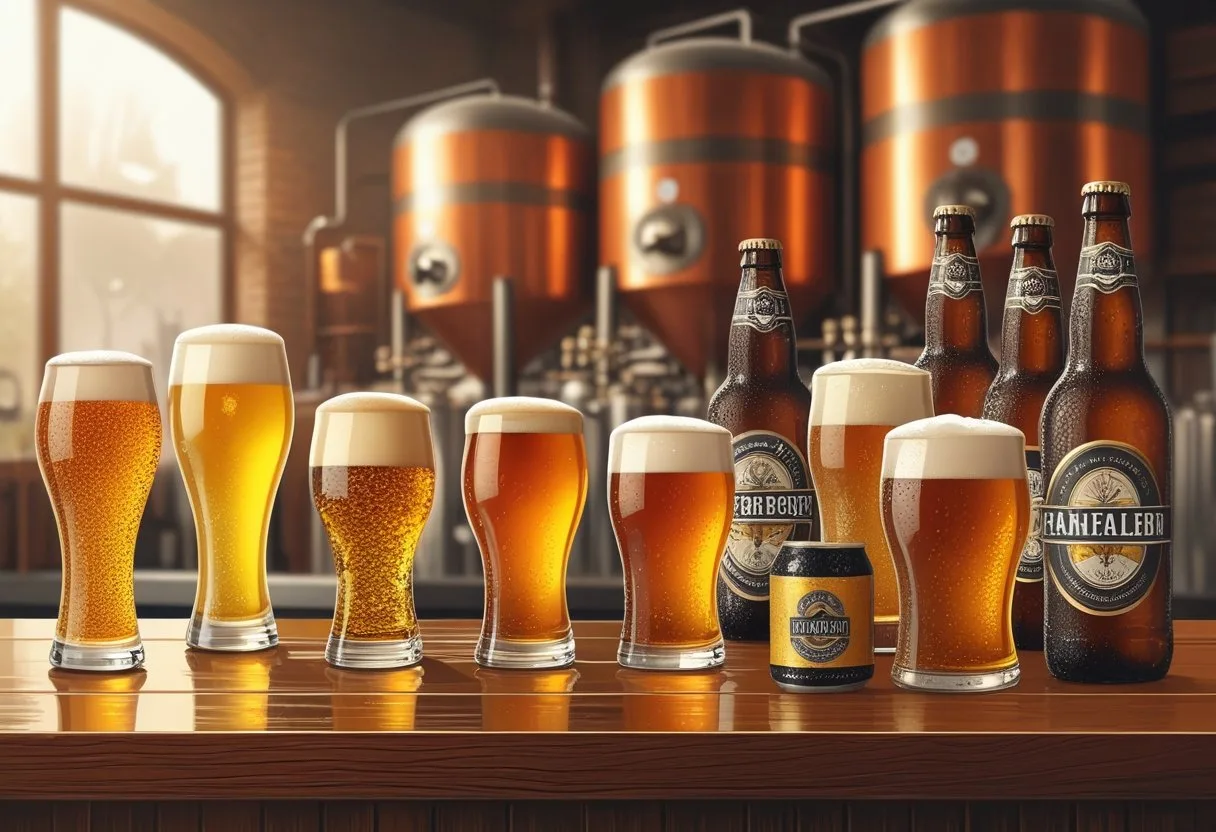
In France, beers are often classified according to their alcohol content.
Some categories include strong beers, while others include products with very low or no ethanol content.
Speciality beers and strong beers
Special beers
in France generally exceed 5% ABV.
They differ from luxury beers (around 4.4% ABV) and bock beers (3.3 to 3.9% ABV).
This official classification is used to differentiate between ranges based on their alcohol content.
These beers often offer more body and a more thorough fermentation process.
They include blond, amber or brown beers, depending on the recipe.
A higher proportion of fermentable sugars in the wort increases their alcohol content.
Common examples:
- 1664 or Heineken (over 5% ABV)
- Certain strong Belgian beers exceeding 7% ABV.
These products are popular for their aromatic intensity and distinctive character.
However, they should be consumed in moderation due to their alcohol content.
Non-alcoholic beers: definition and specific characteristics
In France, the term “non-alcoholic beer” applies to beverages with an alcohol content of 1.2% vol. or less.
They therefore contain very little ethanol, but never zero, except for beers labelled 0.0% after complete dealcoholisation.
Two main methods are used to manufacture them:
- Early termination of fermentation to limit alcohol production.
- Dealcoholisation after fermentation, by filtration or evaporation.
These beers retain a malt and hop base.
Their profile is lighter.
They meet the demand of those who want a user-friendly, alcohol-free alternative.
There are blonde, amber and IPA versions, with flavours similar to classic beers.
Their regulatory status guarantees a very low alcohol content, clearly indicated on the label.
Beer styles and alcohol content variations
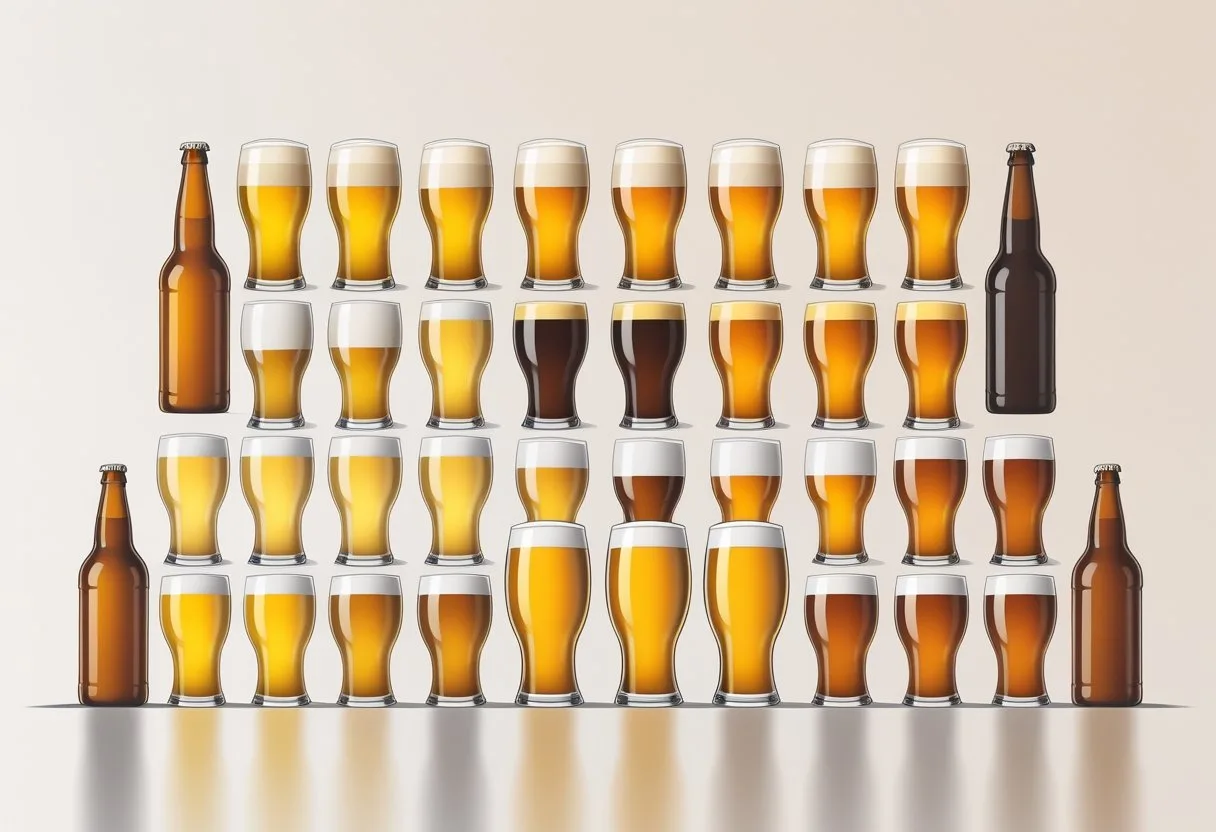
Beer styles vary in colour, taste and alcohol content.
Some are light and easy to drink, while others are stronger depending on the ingredients and brewing method.
Blonde, brown and white beer
Blonde beers are often light, with an alcohol content between 4% and 6%
. They have a golden colour and a mild flavour, sometimes slightly malty.
They are suitable for those looking for a refreshing beer.
Dark
beers generally have a higher alcohol content, between 5% and 7%, sometimes more.
Their flavour is reminiscent of caramel, coffee or chocolate thanks to more roasted malts.
They offer a richer mouthfeel.
White beers, often called witbier or weissbier, are brewed with wheat.
Their alcohol content ranges from 4.5% to 5.5%.
They are distinguished by their pale colour, abundant foam and fruity or spicy aromas.
| Type of beer | Colour | Average degree | Dominant flavours |
|---|---|---|---|
| Blonde | Golden | 4–6 per cent | Sweet, malty |
| Brunette | Dark | 5–7 per cent | Caramel, coffee |
| White | Pale | 4.5–5.5 per cent | Fruity, spicy |
IPA and craft beers
IPA (India Pale Ale) beers have a strong hop presence.
Their alcohol content often varies between 5% and 7.5%, but some Double IPAs exceed 8%.
The bitterness is pronounced, with aromas of citrus, pine or tropical fruits.
In craft beers, the variation in degrees is even greater.
Brewers create beers ranging from 3% to over 10% ABV.
This diversity allows the style to be adapted to the season, the dish or the occasion.
A light IPA emphasises freshness and bitterness.
A stronger version develops intense and persistent flavours.
Legislation and safety concerning beer strength
The alcohol content in beer serves to inform consumers.
It also influences taxation, labelling and the prevention of alcohol-related risks.
Regulations in France govern these aspects in order to protect public health.
They also ensure that information is provided clearly.
The concept of degree governed in France
In France, the degree régie
corresponds to the alcohol content by volume, i.e. the proportion of alcohol in a beverage.
This measurement determines the legal classification of beers and their taxation.
The legislation distinguishes between several categories:
- Table beer: 2° to 2.2°
- Bock beer: 3.3% to 3.9%
- Premium beer: over 4.4% ABV
- Special beer: over 5% ABV
This classification influences the final price and presentation of the products.
Labels clearly indicate the alcohol content, in accordance with European regulations for any beverage exceeding 1.2%.
The degree of regulation harmonises taxation and informs consumers.
It represents a tool for transparency and control in a market where the variety of beers is increasing.
Responsible consumption and road safety
The issue of alcohol content in beer directly affects road safety. The higher the alcohol content, the greater the effect on driving ability.
Even a so-called “light” beer can be enough to exceed the legal limit of 0.5 g/L of alcohol in the blood.
Strong beers, sometimes exceeding 8% ABV, pose an increased risk, particularly among young adults.
Recent studies show significant consumption of these drinks.
Regulations require clear information on labelling. They prohibit any mention suggesting that beer has medical benefits.
In practice, knowing the alcohol content helps everyone assess the impact of drinking on their reflexes and alertness.
This allows you to anticipate the effects and avoid driving after drinking.
How ABV is measured
The official European measurement — Titre Alcoométrique Volumique (TAV) — is the volume of pure ethanol in 100 volumes of drink at 20°C. In practice, the brewer measures wort density before and after fermentation using a hydrometer or refractometer. The difference between original gravity (OG) and final gravity (FG) gives an approximate ABV figure.
The simplified formula used by homebrewers: ABV = (OG – FG) × 131.25. A beer with OG 1.050 and FG 1.010 gives (1.050 – 1.010) × 131.25 = 5.25% ABV. Official labeling requires distillation or ebuliometry measurement rather than calculation alone.
ABV by style: practical reference points
Beer styles are defined partly by their alcohol range. Session beers: under 4% — Berliner Weisse (2.5–3%), Berliner Gose (4%), Belgian table beers (1.5–3%). Standard range: 4–6%, covering the majority of lagers, blonde ales, and wheat beers. Strong ales: 6–9%, including double IPAs, bock, Belgian dubbel. Very strong: above 9% — barley wine (8–14%), eisbock (up to 14%), imperial stout (10–12%). The record: BrewDog’s Sink the Bismarck, at 41% ABV through fractional freezing — legally a spirit rather than a beer under regulatory definitions.
In France, beers above 8.5% ABV fall into a different excise duty category and face stricter advertising restrictions — a practical threshold worth knowing if you’re shopping at the higher end of the range.
Frequently Asked Questions
What is the ABV of a beer?
ABV (Alcohol By Volume) is the volume percentage of pure alcohol. A 5% beer contains 5 ml of pure alcohol per 100 ml. Mainstream beers range from 4-6%. Strong Belgian beers reach 8-12%. Alcohol-free beers are 0.0% to 0.5%.
How is beer strength measured?
The brewer measures original gravity (before fermentation) and final gravity (after) with a hydrometer. The difference indicates fermented sugar, hence alcohol produced. Simplified formula: ABV ≈ (OG – FG) × 131. Accurate to ±0.2%.
What is the strongest beer in the world?
Snake Venom from Scottish brewer Brewmeister reaches 67.5% (record validated in 2013). Note: these are extreme beers obtained by fractional freezing, not natural fermentation. With classic fermentation, the record approaches 25-30% (Samuel Adams Utopias, BrewDog Sink the Bismarck).
Why do some beers exceed 10%?
Three techniques: (1) long fermentation with high alcohol-tolerance yeasts (champagne, wine), (2) progressive sugar addition (Belgian method for tripels and quads), (3) fractional freezing to concentrate alcohol (eisbock). Rochefort 10 Trappist reaches 11.3% with traditional fermentation.
How to choose beer strength?
Apéritif / light meal: 4-5%. Substantial meal: 5-7%. Digestif: 8-10%+. Driving: 0.0% only. ABV affects consumption quantity: 1 pint of 5% = half a pint of 10% in absolute alcohol.
🍻 Explore our beers
Over 1,000 craft beers listed, with a comparator and nutritional info.
Browse the full catalogue →