 Beer Galaxy
The Cannstatter Volksfest (Stuttgart Beer Festival) runs every year from late September to early October, over 17 days, on the Cannstatter Wasen plain. Founded in 1818, it is the world’s second largest beer festival after Munich’s Oktoberfest, with ~4 million visitors, 8 large beer tents, fairground rides and beers brewed locally in Stuttgart.
Every autumn, Stuttgart hosts one of Germany’s most memorable events: the Cannstatter Volksfest, also known as the Stuttgart Beer Festival. It takes place every year between late September and early October and attracts millions of visitors who come to enjoy beer, food and local traditions.

Founded in 1818, the Cannstatter Volksfest is now the second largest beer festival in the country after Munich’s Oktoberfest. Families, beer lovers and curious visitors gather to share convivial moments around lively tents, traditional parades and concerts.
Beyond beer, the event highlights the region’s cultural heritage. Folk costumes, festive music, traditional dishes and fireworks punctuate the days and evenings.
What is the Stuttgart Beer Festival?
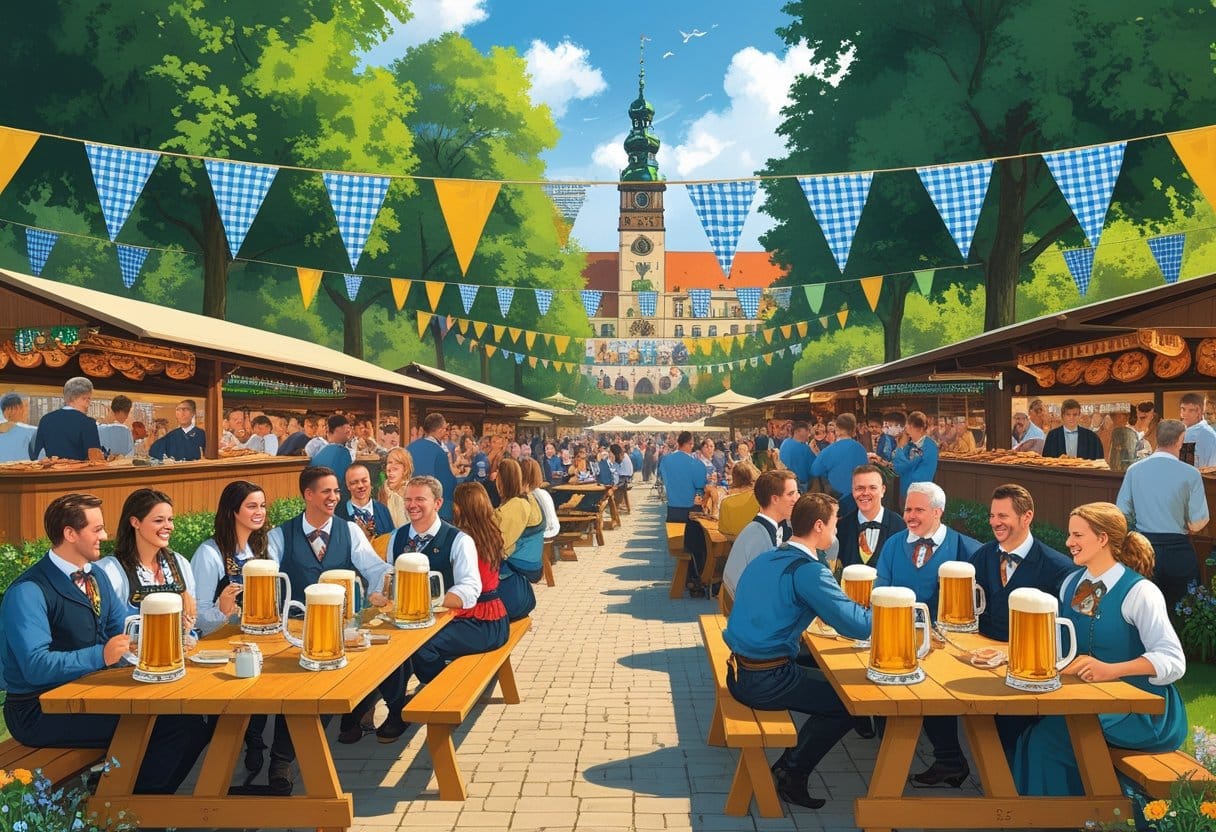
The Stuttgart Beer Festival, known as Cannstatter Volksfest, is one of Germany’s largest popular events. It combines brewing traditions, a family atmosphere and fairground attractions.
Origins and history of the Cannstatter Volksfest
The Cannstatter Volksfest began in 1818 in Stuttgart. King William I of Württemberg and Queen Catherine created it to celebrate the end of a famine and support local agriculture.
At first, it was an agricultural fair where farmers presented their crops and livestock. Gradually, the festival took on a more festive dimension with stalls, music and beer.
Over the years, the festival has become a mixture of fair and popular celebration. It attracts hundreds of thousands of visitors every year and maintains a link with its agricultural roots through parades and local traditions.
Differences with Munich’s Oktoberfest
The Cannstatter Volksfest is often compared to Munich’s Oktoberfest, but there are several differences. The Stuttgart event is less well known internationally, giving it a more local and family-friendly atmosphere.
The Oktoberfest focuses mainly on beer and large tents, while the Volksfest also offers a large funfair. There are modern rides, a Ferris wheel and attractions for children.
Both festivals share elements such as traditional costumes (dirndl and lederhosen) and large beer tents. The Cannstatter Volksfest stands out for its regional character and less touristy atmosphere.
Location and key dates
The festival takes place in Cannstatt, a district of Stuttgart, on the Wasen, on the banks of the Neckar. Every year, this area hosts the festival’s installations, with its tents, stalls and attractions.
The event lasts approximately three weeks, usually from late September to mid-October. In 2025, it will take place from 27 September to 13 October.
Visitors can reserve a table in a tent or wait at the entrance. This arrangement helps to manage the crowds and maintain the friendly atmosphere of the Cannstatter Volksfest.
Festival atmosphere and traditions
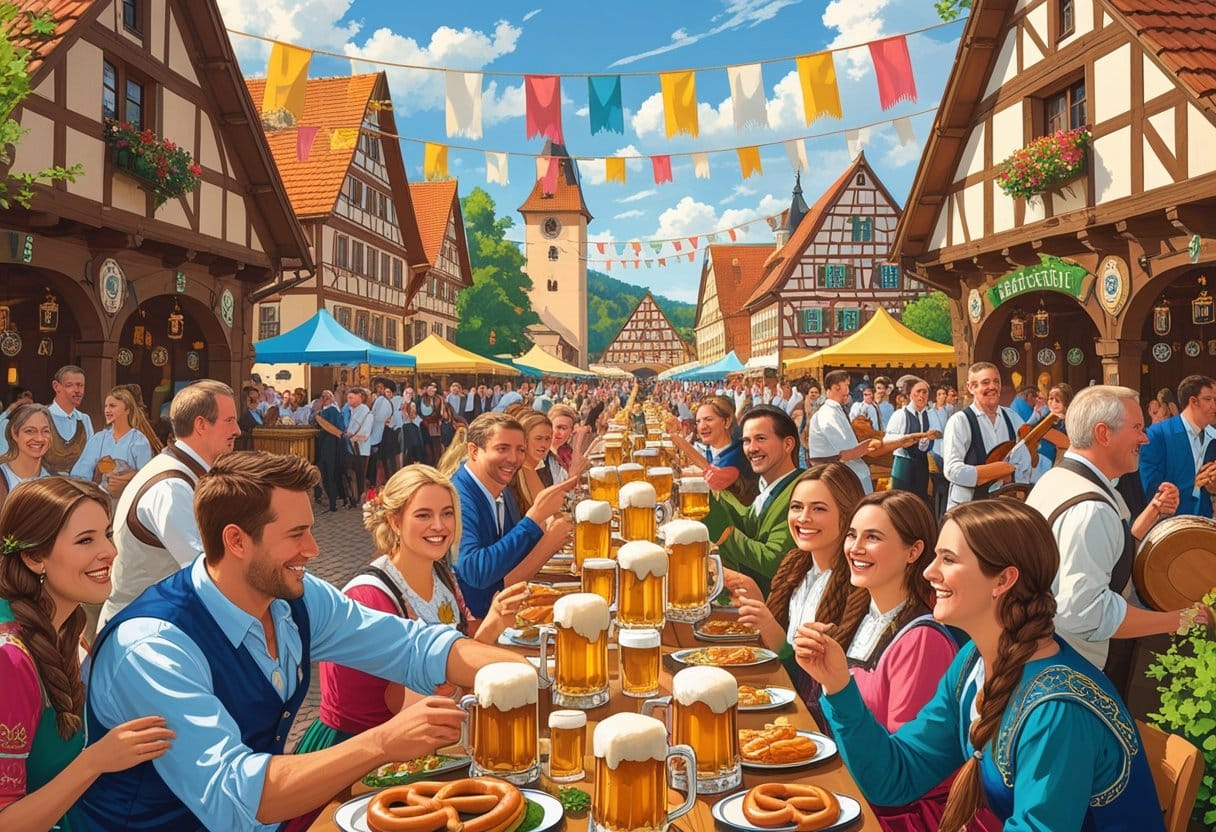
The Stuttgart Beer Festival stands out for its blend of German traditions, varied musical entertainment and popular gatherings. The event combines cultural heritage with a festive atmosphere.
Traditional costumes and customs
Traditional costumes play a central role in the identity of the festival. Men often wear Lederhosen (leather trousers) with braces, while women wear Dirndls, colourful dresses with fitted bodices and aprons.
Visitors also often choose to wear these outfits to share in the festive spirit. This strengthens the sense of community and brings participants closer to German culture.
Customs include gestures such as raising one’s mug as a sign of conviviality or sharing a communal meal in tents. These practices show that the festival is a time for socialising.
Live music and entertainment
Live music livens up the festivities. Large tents host traditional German orchestras playing popular tunes and creating a warm atmosphere.
In the evening, modern bands play rock, pop or international covers. This diversity appeals to different audiences and maintains a dynamic atmosphere.
The entertainment also includes fairground rides, games of skill and shows for children. There is something for everyone.
Parade and iconic events
The brewery parade is a highlight of the festival. Around 3,500 participants parade in traditional costumes and decorated floats.
Brass bands accompany the procession and attract large crowds of spectators. This parade showcases local breweries, associations and regional traditions.
Fireworks displays, organised several times during the festival, draw visitors together in the evening. These shows enhance the festive atmosphere at the Cannstatter Wasen site.
Beers and gastronomy
The Stuttgart Beer Festival showcases a wide variety of regional beers and typical Swabian cuisine. Visitors can also discover the ritual of serving beer in Mass glasses and the unique atmosphere of the festival tents.
Selection of beers and local specialities
Breweries in Stuttgart and Baden-Württemberg offer beers brewed especially for the event. Most are pale lagers served cold, but there are also amber beers and a few craft varieties.
Some breweries offer limited-edition recipes that are only available during the festival. As for the food, the dishes are simple but hearty.
Visitors enjoy roast chicken, grilled sausages, giant pretzels, and pork dishes served with sauerkraut or potatoes. Traditional desserts such as apple or plum pies round out the menu.
For those who prefer wine, several marquees also offer regional vintages.
| Traditional dish | Recommended support |
|---|---|
| Roast chicken | Light lager |
| Grilled sausage | Amber beer |
| Giant pretzel | White wine from the region |
The Mass ritual
The Mass refers to the one-litre glass mug used to serve beer. It is heavy, often decorated, and remains one of the most visible symbols of the festival.
The waiters carry several Masses at once, which impresses visitors. Receiving a Mass is part of the experience.
It embodies conviviality and encourages sharing among friends or family. La Mass encourages you to take your time.
Visitors drink slowly, accompanying each sip with a meal or conversation. This ritual reinforces the collective spirit of the Cannstatter Volksfest.
Discovering the marquees
The large marquees form the heart of the festival. Each brewery manages its own space, decorated with banners, carved wood and colourful lights.
Visitors sit down at long tables side by side. Each marquee offers a menu of beers and dishes, often different from that of its neighbour.
Some favour traditional German music, while others host modern bands for lively evenings. It is best to book in advance to secure a seat, especially in the evenings and at weekends.
The marquees offer an immersion in local culture, including food, beer and music.
Attractions and entertainment
The Stuttgart Beer Festival is not just about beer tents and beer. It also offers numerous activities for thrill seekers and families with children.
Carousels and funfair
Over 300 fairground operators set up their attractions on the site. Visitors can enjoy everything from classic bumper cars to modern roller coasters.
The large, dismantlable Ferris wheel, one of the most impressive in Europe, offers a panoramic view of Stuttgart and the festival site. Thrill seekers can enjoy high-speed rides, whitewater rafting and other spectacular attractions.
These attractions appeal to a wide audience, from teenagers to adults seeking an adrenaline rush. In addition to the rides, the funfair offers shooting galleries, games of skill and lotteries.
Visitors win traditional prizes such as soft toys or sweets. This part of the festival creates a friendly and lively atmosphere, true to German folk fairs.
Activities for families and children
Families will find many options suitable for younger children. Colourful carousels, mini roller coasters and ghost trains offer fun experiences without being too intense.
The organisers design these attractions to ensure children’s safety and enjoyment. Several stalls also offer simple games such as hook-a-duck and easy shooting galleries.
This allows even the youngest children to actively participate. Sweets such as toffee apples, candy floss and pretzels complete the experience.
Folk performances and outdoor musical entertainment add a cultural dimension that is accessible to all ages.
Practical advice for visitors
Every year, the Stuttgart Beer Festival attracts several million people to Cannstatter Wasen, on the banks of the Neckar River. To fully enjoy the event, it is best to plan your stay in advance, organise your travel arrangements and follow local rules.
Reservation and access to marquees
The marquees form the heart of the festival and host major local breweries such as Dinkelacker, Stuttgarter Hofbräu and Schwaben Bräu. Tables are in high demand, especially in the evenings and at weekends.
It is best to book several weeks in advance to guarantee a seat. The brasseries or their official websites manage reservations.
A reservation often includes vouchers for beer and food. Without a reservation, it is still possible to get in, but you need to arrive early in the day.
Mornings and early afternoons are quieter, making it easier to find a table.
Accommodation and transport
Stuttgart welcomes nearly four million visitors during the festival. Hotels and apartments fill up quickly, especially around the city centre and near Bad Cannstatt.
It is advisable to book accommodation several months in advance. Public transport is the most convenient way to get to Wasen.
The S-Bahn and U-Bahn lines serve Bad Cannstatt station directly. Buses also run regularly to the site.
If you are travelling by car, parking spaces around the Neckar are limited and often full by late morning. Many visitors choose to park at park-and-ride facilities outside the city and continue by tram or train.
Safety and regulations
The festival includes alcohol consumption, but local authorities regulate this practice. They carry out regular checks, particularly for drink driving.
It is best to use public transport or arrange for a designated driver. Large bags and dangerous items are not permitted on site.
Security checks are carried out at the entrance to the Wasen. Visitors should travel light to avoid queues.
First aid stations and information points are set up on site. Families with children can enjoy special days, such as Wednesdays, when the rides offer discounts and a more family-friendly atmosphere.
Cultural impact and international influence
The Stuttgart Beer Festival plays a major role in German cultural life and attracts visitors from many countries every year. It combines local traditions, gastronomy and entertainment, making it a popular festival that extends far beyond regional borders.
Attendance and international visitors
The Cannstatter Volksfest attracts between 3 and 4 million visitors each year. This event ranks second among Germany’s largest beer festivals, just after Munich’s Oktoberfest.
Visitors come from Germany, but also from Europe, North America and Asia. Travel agencies often include the festival in their tours, which boosts regional tourism.
Stuttgart’s infrastructure, such as its airport and rail network, facilitates international access. The city is gaining visibility on the world stage and attracting a diverse audience, ranging from beer enthusiasts to families looking for funfair entertainment.
Main attractions for foreign visitors:
- Large beer tents with traditional bands
- Regional cuisine (sausages, pretzels, Swabian dishes)
- Rides and family attractions
- Folkloric atmosphere with traditional costumes (Dirndl and Lederhosen)
Influence on German culture
The festival illustrates the importance of popular festivals in German culture. Created in 1818, it symbolises resilience after an agricultural crisis.
The 23-metre-high fruit column remains the striking symbol of the festival.
It promotes the transmission of regional customs. The inhabitants wear traditional costumes and take part in parades.
They also perpetuate culinary and musical traditions.
The festival reflects German society, blending modernity and heritage. Strict regulations, such as the ban on weapons and cannabis on the site, show that the festival is adapting to current security and public health issues.
Cannstatter Volksfest vs Oktoberfest: the real differences
The two festivals are often confused. Munich’s Oktoberfest, running since 1810, draws roughly 6–7 million visitors over 16–18 days. Stuttgart’s Cannstatter Volksfest, which has run since 1818, welcomes around 4 million over 16 days. The beer served in Stuttgart comes exclusively from Stuttgart breweries (Dinkelacker, Stuttgarter Hofbräu, Schwabenbräu, Fürstenberg, Wulle, Schönbuch) — not the major Bavarian Munich brewers.
The beer styles differ too: Munich’s Oktoberfest historically features Märzen (amber, 5.8–6.3% ABV); Stuttgart’s breweries lean more toward Helles (pale lager) and Hefeweizen (wheat beer). The atmosphere also differs: Stuttgart is known for its family-friendly tents and draws considerably less international tourism than Munich.
Stuttgart’s brewing tradition
Baden-Württemberg is one of Germany’s most active brewing regions. Stuttgart itself is home to several historic large breweries, with Dinkelacker (founded 1888) remaining the regional reference. The area also produces quality wheat beers and, since the 2010s, a growing number of craft breweries.
The Neckar river, alongside which the Cannstatter Wasen fairground sits, historically divided the city’s brewing districts. Bad Cannstatt — absorbed by Stuttgart in 1905 — was originally an independent town with its own brewing tradition, which is why the festival keeps “Cannstatter” in its name despite being held entirely within Stuttgart’s municipal boundaries today.
Frequently Asked Questions
When is Cannstatter Volksfest 2026?
From September 26 to October 12, 2026 (17 days), on the Cannstatter Wasen in Stuttgart. It’s the second largest beer festival in the world after Munich’s Oktoberfest. Traditional date: late September to mid-October. 2026 edition: 179th (festival created in 1818).
How many visitors attend Cannstatter Volksfest?
About 4 million visitors over 17 days in a normal edition (2019 figure, pre-Covid). 2024 edition: back to 3.8 million. Less than Munich Oktoberfest (6-7 million) but the atmosphere is more familial and less touristy. Local Baden-Württemberg residents make up 70% of visitors.
Which breweries serve at Cannstatter?
Seven breweries from Stuttgart and surroundings: Dinkelacker, Schwaben Bräu, Stuttgarter Hofbräu, Sanwald, Hofbräu München (guest), Wulle, Schönbuch. Each large tent (‘Festzelt’) is associated with a single brewery. Beer served is a special Festbier, stronger than standard pils (6-6.5% ABV).
How much does a beer cost at Cannstatter?
In 2024: €14.50 to €15.80 for a Maß (1-litre stein). For 2026, expect €15.50 to €17. Customary tip: round up to nearest half-euro. The glass is not refundable. Budget €50-80 for a full evening with meal (Wurst + Brezel + stein).
How to reserve a table in a tent?
Reservations directly on brewery websites (opening March-April 2026 for the September/October edition). Tables for 8-10 people, ~€250-500 with menu and 2 steins per person. High demand: for weekends, book at opening. Without reservation, access to tents only on weekdays or before 5 PM on weekends.
🍻 Explore our beers
Over 1,000 craft beers listed, with a comparator and nutritional info.
Browse the full catalogue →