 Beer Galaxy
Beer contains sulphites, but in low amounts (typically 1 to 10 mg/L), well below the EU mandatory labelling threshold of 10 mg/L. Above that limit, the label must read “contains sulphites”. They come both from natural yeast fermentation and from added SO₂ used as an antioxidant preservative.
Beer contains sulphites, but in much smaller quantities than wine or dried fruit.
Understanding their role helps to better grasp why some brewers use them. Others seek to do without them.
These choices concern taste, preservation and health, especially for sensitive or allergic individuals.
Between regulations, technical alternatives and trends towards more “natural” beers, the subject of sulphites touches on both science and brewing culture.
What are sulphites in beer?
Sulphites are chemical compounds derived from sulphur. They play an important role in the preservation of fermented beverages.
In beer, they may be naturally present or added to limit oxidation and microbial growth. Food regulations govern their use to protect sensitive consumers.
Definition of sulphites
Sulphites include several chemical forms derived from sulphur, such as sulphite ion (SO₃²⁻), bisulphite (HSO₃⁻) and sulphurous acid (H₂SO₃). They are found in the food industry under codes E220 to E228.
They act as antioxidants and antimicrobial agents. They limit rancidity and loss of freshness and inhibit the growth of undesirable bacteria.
In beer, their role mainly concerns taste stability and protection against unpleasant aromas linked to oxidation. Small quantities are sufficient to extend shelf life without altering sensory qualities.
Natural and added origin
Yeast naturally produces a small amount of sulphites during fermentation. This formation varies depending on the strain, temperature and composition of the must.
Brewers may also add sulphites to preserve their product. They often use potassium metabisulphite (Campden tablets) to neutralise chlorine or chloramines in the brewing water.
Regulations set strict limits: approximately 20 mg/L for filtered beers and 50 mg/L for unfiltered beers. If the beer exceeds 10 mg/L, the label must state “contains sulphites”.
Common compounds such as sulphur dioxide
Sulphur dioxide (SO₂) remains the most common compound. It can be added directly or released from salts such as metabisulphites.
SO₂ acts on several levels:
- It reduces the formation of aldehydes responsible for cardboard-like tastes.
- It limits the activity of undesirable microorganisms.
- It helps to preserve the clarity and freshness of the beer.
Excessively high concentrations may cause reactions in sensitive individuals, such as headaches or respiratory problems.
Role of sulphites in beer brewing
Sulphites act as preservatives and protectants in beer. They influence aroma stability, limit oxidation and reduce the risk of microbial contamination.
Preservation and stability of aromas
Beer is sensitive to changes in taste associated with ageing. Sulphites limit these alterations by neutralising certain compounds responsible for undesirable flavours.
They react with aldehydes formed during fermentation and storage. These molecules can give notes of wet cardboard or paper.
By reducing these reactions, sulphites prolong aromatic stability. The aromas derived from malt and hops remain more faithful to their original profile.
In craft beers, this role becomes essential for preserving aromatic hops.
Prevention of oxidation and contamination
Oxidation is one of beer’s main enemies. It causes a loss of freshness and alters the colour.
Sulphites slow down the reaction between oxygen and the compounds in the wort and finished beer. They also limit the growth of unwanted bacteria and yeasts.
By blocking certain enzymes, sulphites reduce microbial proliferation. This dual action helps to extend shelf life.
This protection is useful for beers that are exported or stored for a long time before consumption.
Use in the various stages of brewing
Brewers can add sulphites at several stages during the brewing process. They are sometimes added to the wort before fermentation to protect sugars and proteins that are sensitive to oxidation.
During fermentation, their presence must be monitored so as not to disrupt yeast activity. An excess slows down the conversion of sugars into alcohol and CO₂.
Some breweries use small quantities after filtration to stabilise the beer before bottling. The dosage depends on the style, type of hops and expected shelf life.
A simplified diagram of their role, step by step:
| Brewing stage | Function of sulphites |
|---|---|
| Must | Protection against oxidation |
| Fermentation | Limited control, avoid excesses |
| Storage/bottling | Stabilisation and preservation |
Sulphite levels according to beer styles and types
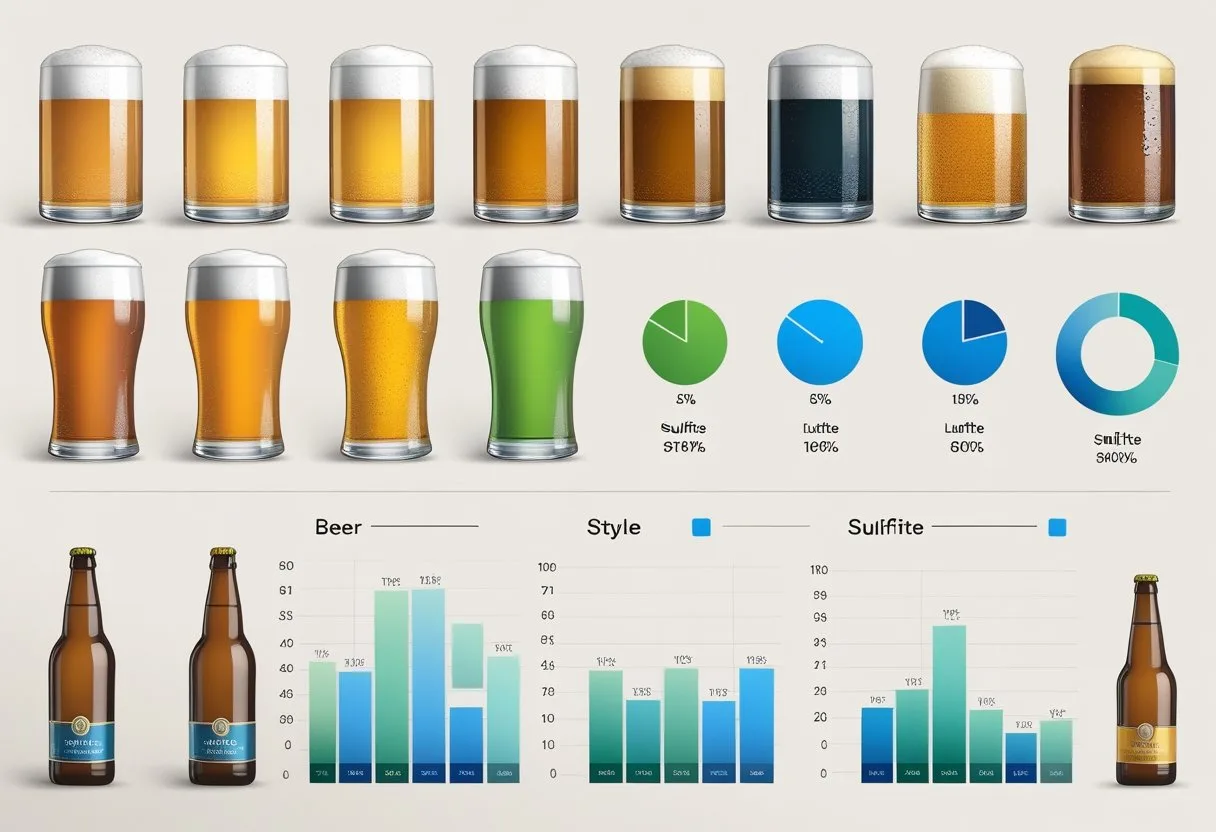
The sulphite content varies depending on the style of beer, the manufacturing processes and the choices made by producers. These differences influence shelf life, taste and tolerance for sensitive individuals.
Comparison of levels according to styles
Filtered beers generally have lower sulphite levels than unfiltered beers. Regulations set a limit of 20 mg/L for filtered beers and 50 mg/L for unfiltered beers.
Lagers and pilsners often contain few added sulphites. Their industrial brewing process relies on filtration and pasteurisation, which reduces the need for preservatives.
Some strong or barrel-aged beers, such as barley wines, have a higher alcohol content. Their longer shelf life and exposure to oxidation explain this difference.
Factors influencing sulphite content
Fermentation plays a key role in the natural production of sulphites. Yeasts produce small amounts of sulphur dioxide.
This production can sometimes be sufficient to reach the mandatory labelling threshold of 10 mg/L. Contact with oxygen also influences levels.
Brewers sometimes add sulphites to limit oxidation, which alters the taste. The more a beer is exposed to air during bottling, the more useful it is to add sulphites.
The quality of the water used also plays a role. Brewers sometimes use sulphites to neutralise chloramines in tap water, which improves flavour stability.
Differences between craft and industrial beers
Industrial breweries use fewer added sulphites. They favour advanced filtration, pasteurisation and bottling under controlled atmosphere.
These methods reduce dependence on chemical preservatives. Craft beers, on the other hand, present more varied cases.
Some microbreweries do not use added sulphites in order to offer “natural” products. Others add small amounts to protect the beer during storage or transport.
Unfiltered or bottle-fermented craft beers more often exceed the 10 mg/L threshold, which requires the statement “contains sulphites”. Standardised industrial beers generally remain below this threshold.
Comparison of sulphites in beer and other alcoholic beverages
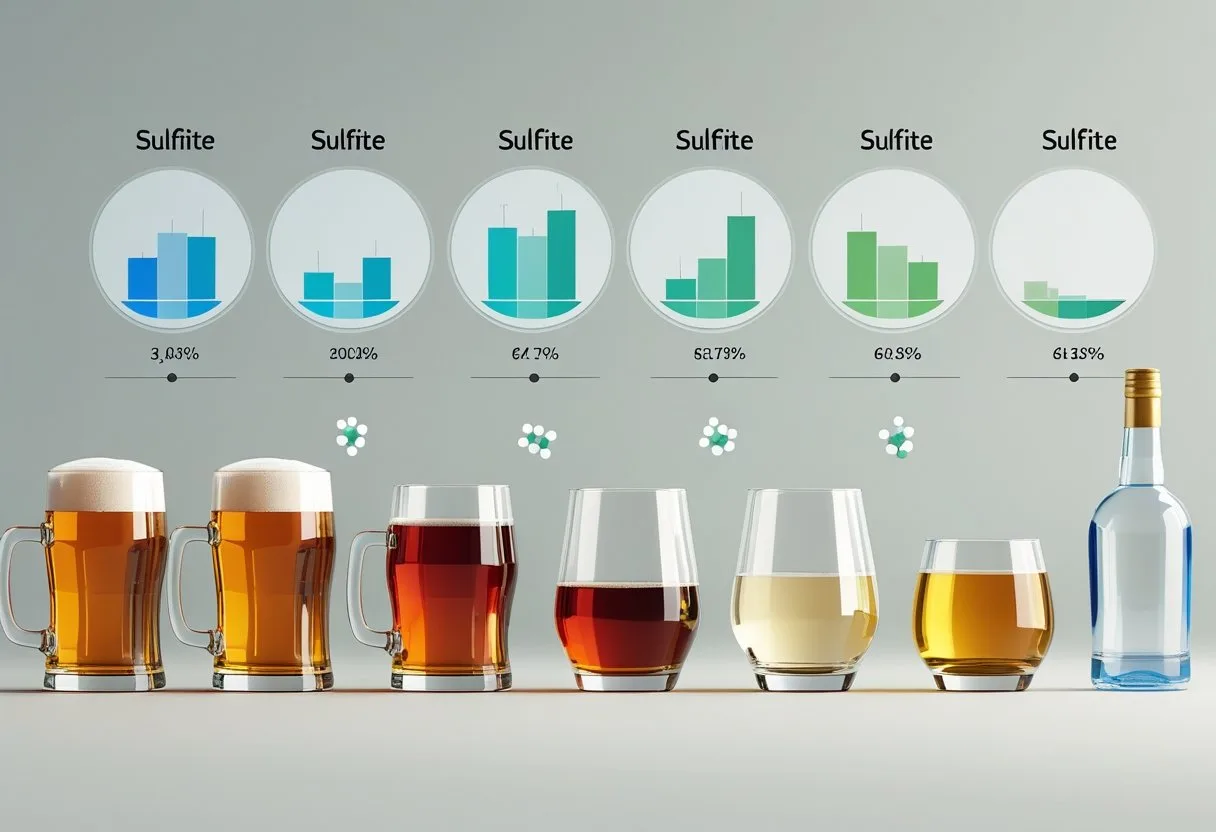
The amount of sulphites varies depending on the type of drink. Beer contains very little.
Wine and champagne have higher levels of sulphites. Spirits such as gin or vodka generally contain very little, as distillation limits their presence.
Beer vs wine and champagne
Beer contains an average of 10 to 20 mg/L of sulphites. The legal limit is 20 mg/L for filtered beers and 50 mg/L for unfiltered beers.
These levels remain much lower than in wine. Red wine can reach around 150 mg/L.
White wine and champagne can contain up to 200 mg/L. Producers use more preservatives in wine and champagne because of their sensitivity to oxidation and bacteria.
Labelling also plays an important role. The statement “contains sulphites” is mandatory when the beverage exceeds 10 mg/L.
A beer may carry this label even if its sulphite content is much lower than that of wine or champagne. People who are sensitive to sulphites are more likely to react to a glass of wine or champagne than to a beer.
Sulphites in gin and other spirits
Spirits such as gin, vodka, rum, and whisky contain very few sulphites. Distillation removes these compounds almost entirely.
This clearly distinguishes these drinks from beer, wine or champagne. The concentrations are generally so low that they do not need to be mentioned on the label.
Some flavoured or cask-aged spirits may contain small traces of sulphites. These levels remain well below those found in sparkling or still wines.
To reduce sulphite consumption, spirits are a less restrictive option than wine, champagne or even beer.
Health: Sensitivity and allergy to sulphites
Sulphites can cause reactions in some people. These reactions range from simple respiratory discomfort to skin or digestive symptoms.
People with asthma and certain medical conditions are particularly affected. It is important to remain vigilant when consuming foods and beverages containing sulphites.
Symptoms of intolerance
Sulphite intolerance is not a classic allergy. It is a non-specific reaction of the body.
Symptoms often appear quickly after ingestion, sometimes within half an hour. The most common signs include:
- Breathing difficulties (wheezing, chest discomfort, asthma attack)
- Runny nose and sneezing
- Skin itching or hives
- Abdominal pain or digestive discomfort
In sensitive individuals, even small amounts can trigger a reaction. Severe cases remain rare.
Prevalence and risk groups
Sensitivity to sulphites affects a minority of the population. It is estimated that around 5% of asthmatics experience a respiratory reaction after consuming sulphites.
The groups most at risk are:
- People with asthma, especially if their asthma is poorly controlled
- Individuals with Fernand-Widal syndrome (a combination of nasal polyposis, asthma and aspirin intolerance)
- People who already have multiple allergies
Prevalence in the general population is low. Certain circumstances, such as regular consumption of wine or dried fruit, increase the risk of exposure.
Sensitivity varies from one individual to another. This explains the diversity of reactions observed.
Advice for sensitive individuals
The first step is to avoid foods high in sulphites. Alcoholic beverages such as white wine, cider, and certain beers may contain sulphites.
Dried fruit, dehydrated potatoes and certain canned products also contain it. In Europe, labelling is mandatory when the concentration exceeds 10 mg/kg or 10 mg/L.
It is therefore essential to read labels carefully. Here are some practical recommendations:
- Choose fresh, unprocessed products
- Check for additive codes E220 to E228 on packaging.
- Inform healthcare and catering professionals of your sensitivity
- Gradually test certain foods under medical supervision if necessary.
A good understanding of the sources of sulphites can effectively reduce symptoms. It is not necessary to adopt excessive dietary restrictions.
Labelling, alternatives and market trends
The presence of sulphites in beer raises questions of transparency for consumers. It also influences the choices of sensitive individuals and innovation among brewers.
Regulation, low-alcohol options and developments in the craft beer market play a central role.
Regulations and labelling requirements
European legislation requires the statement “contains sulphites” to be included when the concentration exceeds 10 mg/l. This statement appears on the beer label, along with other allergens.
The codes used to identify additives range from E220 to E228. These compounds limit oxidation and extend shelf life.
This information allows consumers to compare products and identify beers that are suitable for their tolerance levels. People with asthma or allergies should check these labels.
Regulatory controls ensure consistency across the market, for both major brands and craft breweries. This also facilitates transparency in online sales.
Low sulphite alternatives
Some breweries are developing beers with reduced sulphite content or without artificial additives. They are focusing on more natural brewing processes, such as controlled fermentation or the use of fresh ingredients.
These alternatives meet the demand of consumers who are sensitive to additives or wish to limit their intake. For example, there are ranges of organic beer and craft beers labelled as sulphite-free.
However, brewers face a technical challenge. Without sulphites, beer is more fragile and its storage requires a strict supply chain.
This has an impact on distribution, especially in bars and restaurants. For enthusiasts, these beers offer a clear option without sacrificing the diversity of flavours.
Beer insiders are keeping a close eye on these innovations, as they influence perceptions of quality and naturalness.
Trends in craft and organic beer
The craft beer market values transparency, authenticity and experimentation. Reducing sulphites is part of this approach, alongside the use of local hops and seasonal recipes.
Consumers are increasingly looking for organic craft beers or beers sourced locally. This trend can be seen in supermarkets, but also in specialised bars and online sales platforms.
Labels play a key role. They highlight the fact that no sulphites have been added, but also values such as respect for the environment and sustainability.
Breweries that innovate in this area are gaining visibility. They attract customers who are mindful of ingredients and health-conscious.
Culture, history and food and beer pairings
Beer and sulphites have a long-standing relationship. Their role as preservatives influences the taste quality.
The moderate presence of sulphites allows for the creation of beer styles suited to food pairings and cultural events.
History of sulphites in beer
Sulphites are among the oldest additives used in fermented beverages. The Celts already added sulphur compounds to their barrels to prolong preservation.
Over the centuries, brewers have adopted these agents to protect beer from oxidation and microbial contamination. Their use has become similar to that in wine production.
In modern times, European regulations have set specific limits on their use in beer. Unlike wine, the doses remain low.
This preserves the authenticity of the malt and hop aromas. This development represents a compromise between tradition and food safety.
Food and beer pairings with low sulphite content
Beers containing little or no sulphites appeal to those who prefer more natural products. Their profile highlights the freshness of the grains and the complexity of the hops.
They go well with simple, fresh dishes. Here are a few examples:
- Light lager → salads, fresh cheeses
- Mild amber beer → roast poultry, grilled vegetables
- Moderate IPA → spicy dishes, mild curry
- Stout → chocolate desserts, mature cheeses
These combinations highlight the beer without masking its aromatic notes. Unlike wines rich in sulphites, low-sulphite beer promotes a more direct taste experience.
Some brewers draw inspiration from North American craft traditions, such as those of Henry Weinhard, known for his fermented beverages and root beer. They thus offer more authentic alternatives.
Beer events and festivals
Beer festivals play an important role in promoting low-sulphite beers. These events bring together brewers, restaurateurs and consumers for tastings and food pairings.
In France, specialised trade fairs showcase craft beer and its additive-free variations. Visitors can discover food and beer pairing workshops, where the emphasis is on the complementary nature of local dishes and various styles of beer.
Internationally, festivals in Belgium, Germany and the United States promote diversity in brewing practices. They also provide a showcase for breweries that are experimenting with production methods to reduce the use of sulphites.
What French and European regulations say
In France and across the EU, the maximum permitted sulfite level is 20 mg/L for filtered beers and 50 mg/L for unfiltered beers. Labels must declare sulfites when levels exceed 10 mg/L. Most commercial lagers sit between 2 and 8 mg/L — well below the labeling threshold.
For comparison, a standard white wine contains 150–200 mg/L of added sulfites. That single glass exposes you to 10–20 times more sulfites than a beer. People who describe themselves as “sensitive to beer sulfites” are often reacting to something else entirely: histamine, tyramine, or fermentation byproducts called congeners.
Sulfites and health: what the data actually shows
Documented sulfite sensitivity affects around 0.25% of the general population. Among asthmatics, the figure rises to 5–10%. Typical symptoms — itching, breathing difficulty, headaches — generally appear above 20–30 mg/L, a level most beers never reach.
Beer-related headaches are far more likely caused by histamine (present in unfiltered ales and bottle-conditioned beers) and tyramine than by sulfites. Keeping a note of the beer style — filtered vs. unfiltered, ale vs. lager — helps identify the real culprit if you experience regular reactions.
Frequently Asked Questions
Does beer contain sulfites?
Very little naturally (1-10 mg/L), produced by yeast during fermentation. Most beers don’t carry a ‘contains sulfites’ label because they stay below the 10 mg/L legal threshold. Industrial beers may add up to 20 mg/L as antioxidant and antimicrobial. Wine contains 10-30 times more.
What’s the legal sulfite labelling threshold?
10 mg/L (10 ppm) for fermented beverages in EU and US (FDA). Above this threshold, ‘contains sulfites’ is mandatory. Most craft beers stay below. Wines, however, almost always exceed and carry the label.
What share of the population is sulfite-sensitive?
About 1% of the general population and up to 5-10% of asthmatics. Symptoms: headaches, skin flushing, nausea, nasal congestion. Distinct from gluten or yeast allergy, which have different symptoms.
Which beers avoid sulfites?
Unpasteurised craft beers without antioxidant additives. Trappists (Westvleteren, Rochefort, Westmalle), ‘raw’ beers (no filtration or pasteurisation), bottle-conditioned beers. Read the additives list: E220 to E228 are sulfites.
Does organic beer contain sulfites?
Certified organic beers (EU leaf label, USDA) prohibit or strictly limit added sulfites. However, natural sulfites (produced by yeast) remain. For zero-added-sulfite beer, look for explicit ‘no added sulfites’ labelling.
🍻 Explore our beers
Over 1,000 craft beers listed, with a comparator and nutritional info.
Browse the full catalogue →