 Beer Galaxy
A regular beer contains on average 1 to 3 g of sugar per 100 ml, i.e. 3 to 9 g per pint (33 cl). Standard lagers and pilsners usually sit around 2 g/100 ml, stouts and strong beers can reach 5 to 8 g/100 ml, while some flavoured beers exceed 10 g/100 ml. The amount depends on the style, brewing process and level of fermentation.
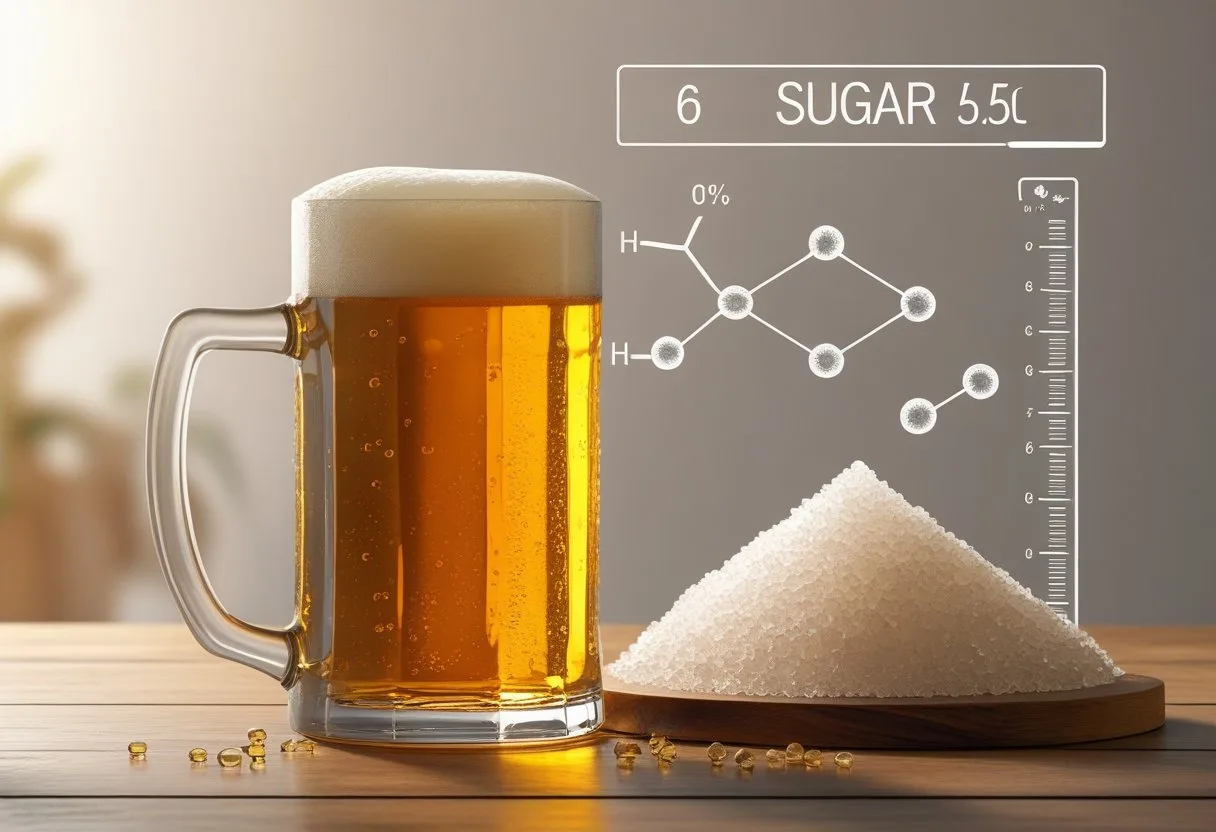
Some of the sugar comes from the cereals used. Another part remains in the form of residual sugar after fermentation.
Some beers taste sweeter than others because of this residual sugar.
Comparing beer to other alcoholic beverages also reveals some interesting differences. Some beers contain less sugar than a glass of sweet wine or a cocktail. Other styles, such as fruit beers or barleywines, can rival these beverages.
This variation affects taste, health impact, and daily consumption.
Sugar content in beer
Beer always contains a certain amount of sugars, whether fermented or residual. The level varies depending on the style, the brewing process and the choice of ingredients.
Amount of sugar according to beer type
The sugar content varies greatly depending on the style of beer.
A light lager contains on average between 0.5 and 1.5 g of sugar per 100 ml. This corresponds to approximately 1.5 to 5 g for a 33 cl bottle.
Stronger beers such as stouts, barleywines and doppelbocks have higher values. They can contain up to 6 sugar cubes per 33 cl, or nearly 30 g.
Fruit-flavoured or flavoured beers often contain added sugar. They regularly exceed 20 g per bottle, as the sugar from the fruit is added to the residual sugars from the malt.
The same applies to beer mixed at the point of serving. A measure of bitter syrup or liqueur adds its own sugar on top of the beer’s: our guide to Picon beer details the usual doses and what they change, in sugar as much as in taste.
Beers labelled “brut” or “low carb” are brewed to minimise residual sugars. They remain among the driest and least sweet beers on the market.
Comparison between traditional beers and non-alcoholic beers
Non-alcoholic beer has a distinctive feature: fermentation is stopped or limited, leaving more unfermented sugars. It therefore often contains more sugar than the alcoholic version.
For example, a classic 33 cl lager contains an average of 3 to 5 g of sugar. A non-alcoholic beer can contain up to 7 to 10 g, and some even exceed 15 g depending on the production method.
Zero-sugar non-alcoholic beers do exist, but they are still rare. They are based on the complete fermentation of simple sugars, which reduces the final sugar content.
There are still complex carbohydrates from cereals.
If you are trying to limit your sugar intake, a classic light lager may sometimes contain less sugar than a non-alcoholic beer.
Differences between popular brands
There are significant differences between the major brands.
A Heineken lager contains around 3 g of sugar per 33 cl, which is moderate.
Budweiser is in a similar range, with 3 to 4 g.
Busch and other American industrial lagers have similar profiles, often between 2 and 5 g per can.
These beers are intended to be light and refreshing, which explains their low sugar content.
Some Belgian brands, such as Leffe, add sugar during the brewing process.
A pint can therefore contain the equivalent of seven sugar cubes, which is much more than a standard lager. Famous
stouts such as Guinness also contain more residual sugars, even without any added sugar.
Their high malt content contributes to a higher alcohol content than that of light lagers.
Origin of sugar in beer
The sugar in beer comes mainly from malted grain and the fermentation process.
Yeast consumes some of it to produce alcohol and gas, while the rest remains in the form of residual carbohydrates.
Malting and sugar formation
Malting begins with barley or other cereals. The grains are moistened, left to germinate, then dried.
This process activates enzymes capable of converting starch into simple sugars.
Maltose then becomes the most important fermentable sugar and serves as an energy source for yeast.
Other sugars, such as oligosaccharides, also appear, but yeast and the human body cannot break them down.
The choice of malt type directly influences the quantity and nature of the sugars.
Caramelised malt provides more residual sugars and gives a noticeable sweetness to certain dark beers.
Role of wort and carbohydrates
After malting, the crushed grains are mixed with hot water to form the mash.
This stage, called brewing, allows the enzymes to continue converting the starch into soluble carbohydrates.
The wort then contains a mixture of fermentable sugars (such as maltose and glucose) and non-fermentable sugars (mainly oligosaccharides).
The former will serve as fuel for the yeast, while the latter will remain in the final beer.
The initial density of the wort, measured in degrees Plato or specific gravity, indicates the sugar concentration.
The higher this density, the higher the beer’s alcohol potential.
Transformation of sugar through fermentation
During fermentation, the yeast added to the wort consumes the fermentable sugars.
It mainly converts maltose and glucose into ethanol and carbon dioxide.
This transformation greatly reduces the amount of sugar remaining in the beer.
Oligosaccharides and certain complex sugars are not assimilated by the yeast.
They remain in the drink and contribute to its flavour.
The type of yeast used influences the amount of residual sugars.
Some strains consume a wider variety of carbohydrates, resulting in a drier beer.
Others leave more sugars behind, creating a sweeter beer.
Fermentation process and impact on residual sugar
The sugar present in the wort does not entirely convert into alcohol.
Some of it remains in the form of residual sugar, influencing the taste, density and energy value of the beer.
This result depends mainly on yeast activity, fermentation conditions and the possible use of enzymes.
Yeast action and types of strains
Yeasts play a central role in the conversion of fermentable sugars.
The most common are Saccharomyces cerevisiae (top-fermented beers, such as ales) and Saccharomyces pastorianus (bottom-fermented beers, such as lagers).
Each strain has a level of attenuation, i.e. its ability to consume sugars.
A high-attenuation yeast reduces the residual sugar level more, while a low-attenuation yeast leaves more.
The first sugars to disappear are glucose, fructose and sucrose, which are quickly metabolised by yeast.
Next, they attack maltose and maltotriose, which take longer to break down.
Some strains ferment maltotriose poorly, which explains why some beers remain sweeter.
The choice of strain therefore directly influences the final profile of the beer, both in terms of sweetness and calorie content.
Factors influencing the amount of residual sugar
The amount of residual sugar depends on several technical parameters:
- Fermentation temperature: a lower temperature slows down the action of the yeasts and can leave more sugars.
- Fermentation time: stopping too early results in a sweeter beer.
- Composition of the must: the proportion of starches and complex sugars influences the unfermented portion.
- Oxygenation and nutrients: a lack of oxygen or minerals can limit the effectiveness of yeasts.
Brewers often measure the density of the wort to monitor sugar consumption.
When the density remains stable over several days, fermentation is considered complete.
These factors explain why two beers made from the same recipe can have different levels of residual sugar.
Use of specific enzymes
Some brewers use enzymes to modify the amount of residual sugar. Amylase and, above all, glucoamylase break down complex sugars into simple sugars.
Yeast ferments these simple sugars more easily. This technique makes it possible to produce so-called “ultra-attenuated” beers, with very little sugar remaining.
It is often found in dry IPA-style beers or in certain low-calorie beers. Brewers must carefully control the addition of enzymes, as excessive degradation results in a very dry beer with little roundness.
Targeted use of enzymes balances fermentation and limits excess residual sugars. Enzymes allow the sugar profile to be precisely adjusted according to the desired style.
Comparison with other alcoholic beverages
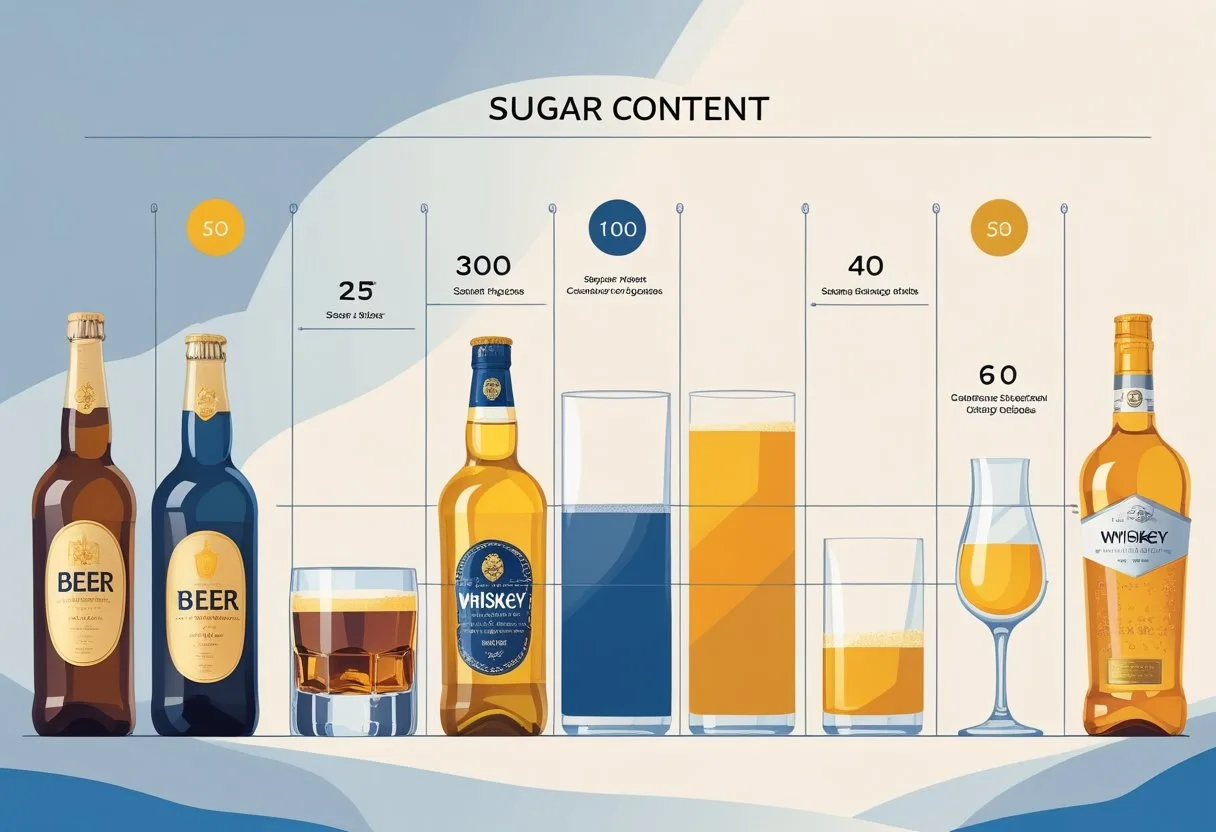
Beer contains little or no residual sugar, but it remains a significant source of carbohydrates. Other alcoholic beverages such as wine or cocktails have different profiles, often influenced by their production method or the addition of sweet ingredients.
Beer versus wine
Wine naturally contains sugar from grapes. The amount varies depending on the type of wine and the degree of fermentation.
- Dry wine: often less than 1 to 2 g of sugar per glass.
- Semi-dry wine: around 4 to 12 g.
- Sweet or dessert wine: sometimes more than 30 g per glass.
A regular beer contains 0 g of residual sugar, but around 10 to 13 g of carbohydrates per 33 cl can. Light beers contain less, around 5 to 6 g of carbohydrates, with less than 1 g of sugar.
Wine provides directly assimilable sugar. Beer mainly provides starch, which is converted into complex carbohydrates.
This can have a distinct effect on blood sugar levels. Both drinks remain caloric.
Differences from cocktails and other drinks
Cocktails and certain mixed alcoholic drinks often have a much higher sugar content. Fruit juices, syrups, soft drinks or liqueurs added to the mixture increase this content.
A classic cocktail such as a pina colada or mojito can contain 20 to 30 g of sugar per glass, which is equivalent to several sugar cubes. Pure spirits such as vodka or whisky do not contain any carbohydrates, but once mixed, the sugar content increases significantly.
For comparison:
- Blonde beer: 0 to 1 g of sugar.
- Sweet cocktail: 20 g and above.
In terms of sugar content, beer is closer to dry wines and remains well below sweet alcoholic beverages such as cocktails.
Effects of sugar in beer on health
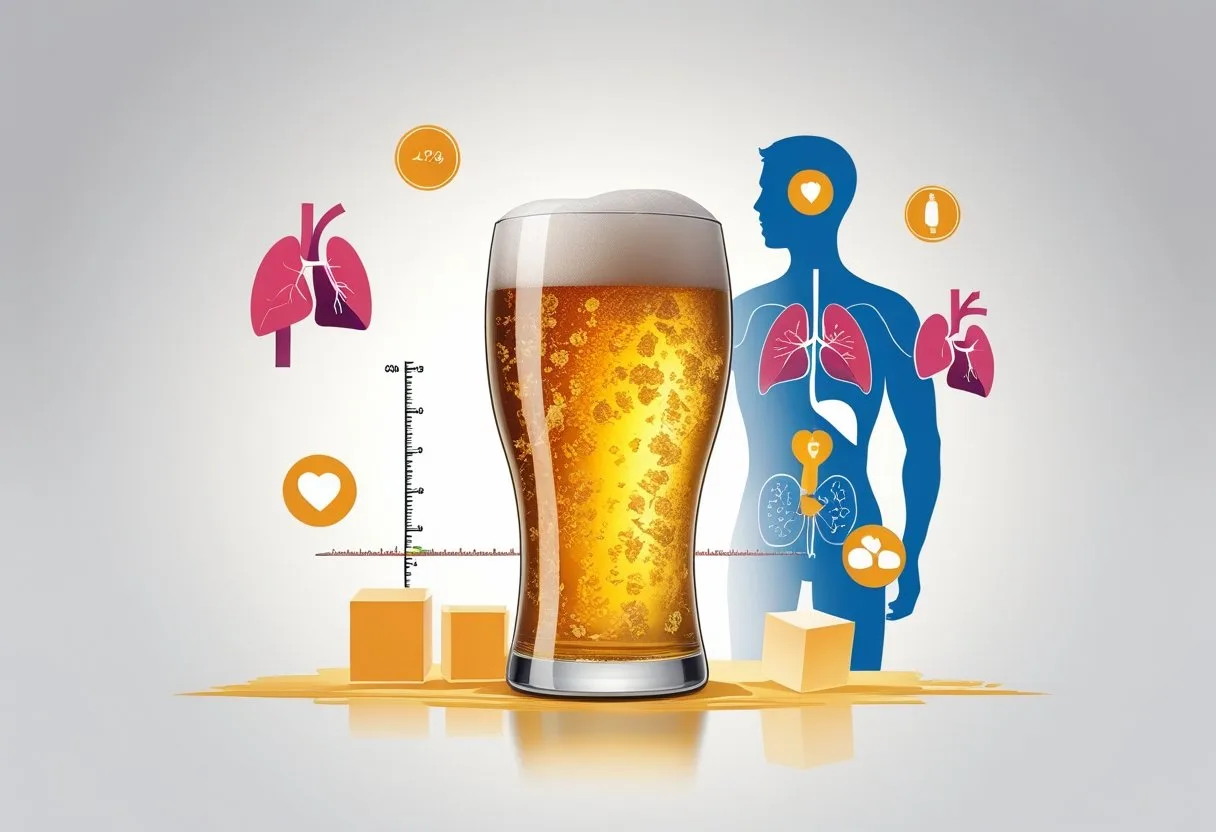
Beer contains carbohydrates from malt, some of which remain in the form of residual sugars. These sugars affect blood sugar levels, calorie intake and body weight.
Impact on blood sugar levels and the risk of diabetes
The sugar present in beer can cause a rise in blood sugar levels after consumption. The extent of this rise depends on the type of beer, its residual sugar content and its glycaemic index (GI).
High GI beers cause a rapid increase in blood sugar levels. This can be problematic for people with diabetes or those at risk.
Regular consumption can also contribute to insulin resistance. Sometimes, the alcohol in beer causes delayed hypoglycaemia, especially when consumed without sufficient food intake.
This risk particularly affects diabetics undergoing medical treatment. People who monitor their blood sugar levels must therefore remain vigilant.
Link between consumption and weight gain
Beer provides calories from both alcohol and carbohydrates. These calories are referred to as “empty” because they provide neither fibre nor essential nutrients.
Regular and excessive consumption can promote weight gain, particularly in the form of abdominal fat. This type of fat storage is associated with an increased risk of metabolic diseases such as type 2 diabetes and cardiovascular disorders.
Sweeter beers, such as certain flavoured or mild beers, contain more carbohydrates and therefore more calories. They increase the risk of energy imbalance if consumed frequently.
Limiting the frequency and quantity consumed reduces this risk.
Calories and diet
A standard 33cl beer contains on average 120 to 150 kcal, mainly from alcohol and carbohydrates. Strong or sweet beers may exceed these values, while light or non-alcoholic beers are often lower in calories.
| Type of beer | Average calories (33 cl) |
|---|---|
| Classic lager | 120–150 kcal |
| Strong beer | 180–250 kcal |
| Non-alcoholic beer | 60–90 kcal |
| Low-carb beer | 70–100 kcal |
In a balanced diet, these intakes must be taken into account to avoid excess calories. People on a controlled carbohydrate diet, such as diabetics, should opt for low-carbohydrate or non-alcoholic beers.
Incorporating beer into your diet requires moderation. You must also take into account other sources of calories and carbohydrates consumed throughout the day.
Tips for reducing your sugar intake through beer
The amount of sugar in beer depends on the style, fermentation process and choice of ingredients. By selecting certain types of beer and limiting consumption, everyone can reduce their sugar intake without giving up beer altogether.
Choosing low-sugar beers
Some beers contain very little residual sugar. Light beers often contain less than 1 g of sugar per standard glass, compared to several grams in non-alcoholic beers.
Brew styles known as brut or dry are designed to undergo almost complete fermentation, leaving very little sugar. These beers offer a drier taste and reduced carbohydrate content.
It is best to avoid beers flavoured with honey, fruit or syrups, as these additives increase the sugar content. Comparing the ranges offered by microbreweries can also be useful, as some produce drier, less sweet recipes.
A simple comparison table can help:
| Type of beer | Average sugar content (per 33 cl) | Special feature |
|---|---|---|
| Regular beer | ~0 g | Carbohydrates present but sugar fermented |
| Light beer | 0.3 g | Lower in calories, drier taste |
| Non-alcoholic beer | 20–28 g | Sugar not converted into alcohol |
Reading labels and understanding beer gravity
Labels rarely list sugar directly, but they do provide useful clues. The carbohydrate content indicates the total load, part of which corresponds to sugars.
The gravity of beer, measured before and after fermentation, reflects the sugar density. A high initial gravity means more sugars are available.
The difference between the initial and final gravity shows how much sugar has been converted into alcohol. A beer with a low final gravity will generally have less residual sugar.
Enthusiasts can consult the technical data sheets provided by certain breweries or look at the nutritional analyses available online. In practice, choosing a beer with low carbohydrate content remains a good guideline for limiting sugar intake.
Adopt responsible consumption
Even though beer contains little sugar, drinking several glasses quickly increases your overall carbohydrate and calorie intake. Moderation is therefore essential.
Current recommendations suggest not exceeding one standard glass per day for women and two for men. Sticking to these limits helps reduce calorie intake.
It is best to accompany beer with a balanced meal. This limits rapid fluctuations in blood sugar levels, especially in sensitive individuals or those with diabetes.
You can also alternate with water or choose a beer with a lower alcohol content. This will help you keep better control over your overall consumption and reduce your sugar and calorie intake.
Non-alcoholic vs regular beer: which has more sugar?
One of the most counterintuitive facts in the world of beer: a standard 5% lager contains under 1g of residual sugar per 100ml — fermentation has converted nearly all the sugar into alcohol and CO2. A non-alcoholic beer, with fermentation deliberately limited, can contain 4–7g per 100ml, six times as much.
Flavored non-alcoholic beers (lemon, berry variants) can reach 10–12g/100ml — comparable to a light soda. If you’re cutting back on alcohol for health reasons, reading the nutritional label on non-alcoholic beers matters just as much as with soft drinks.
Fermentable vs non-fermentable sugars: what it means in practice
Malt delivers two types of sugars into the wort. Fermentable sugars (maltose, glucose, sucrose) are consumed by yeast — they almost entirely disappear in a well-attenuated beer. Non-fermentable sugars (dextrins, complex maltotriose) remain in the finished beer and contribute to body, mouthfeel, and that subtle roundness you sense on the palate.
This is why a malty dark beer can taste “sweeter” than a dry lager without actually containing more sugar in analytical terms — it’s the dextrins and roasted malt character creating the perception, not residual simple sugars.
📊 Residual sugar in beer by style (fermentable + added)
| Beer type | Sugar /100 ml | Sugar /50 cl |
|---|---|---|
| Alcohol-free beer (Heineken 0.0) | 4-6 g | ~25 g |
| Classic lager 5% (Heineken) | 0.5-1 g | ~3.5 g |
| Pilsner | 0.2-0.8 g | ~2.5 g |
| Wheat beer (Hoegaarden) | 0.8-1.5 g | ~5 g |
| Stout (Guinness Draught) | 0.5-1 g | ~3.5 g |
| Tripel (Westmalle) | 2-4 g | ~15 g |
| Lambic / Geuze (no fruit) | 0.5-2 g | ~6 g |
| Fruit Lambic / Sweet Kriek | 5-10 g | ~35 g |
| Sweet Imperial Stout | 4-8 g | ~30 g |
| Radler / Shandy | 4-8 g | ~30 g |
| Dessert beer (Brut, milkshake) | 8-15 g | ~50 g |
Frequently Asked Questions
How much sugar in a classic beer?
Very little: 0.5-1 g residual sugar per 100 ml in a classic lager (Heineken, Budweiser). For a pint (50 cl / 17 oz), that’s 2.5-5 g — less than half a plain yogurt. Yeast ferments almost all the wort sugar into alcohol.
Why does alcohol-free beer contain more sugar?
Paradoxical but logical: fermentation is stopped early (or inhibited) to prevent alcohol production. Wort sugar therefore stays in the beer. A Heineken 0.0 contains 4-6 g sugar/100 ml vs 0.5-1 g for classic Heineken. That’s 25 g sugar per 50 cl — equivalent to a Coke. The comparison is not academic: mixing beer and cola is a drink in its own right, with its own sugar load.
Which beers contain the most sugar?
Artificially sweetened fruit beers (Kriek Mort Subite, Belle-Vue), radlers, dessert beers (milkshake IPA, pastry stout), modern lambics with fruit. They can exceed 10 g/100 ml. Conversely, traditional lambics (Cantillon, Drie Fonteinen) stay dry at 0.5-2 g.
Can diabetics drink beer?
A classic 5% beer in limited quantity is compatible with well-controlled diabetes: low sugar (< 1 g/100 ml), low glycaemic index. Avoid alcohol-free beers (paradoxically sugar-rich), sweet fruit beers and dessert beers. Always consult your doctor.
Fermentable vs residual sugars: what’s the difference?
Fermentable sugars (glucose, maltose) are converted to alcohol by yeast. Residual sugars (dextrins, added sugars) stay in the finished beer. That residual level is what nutrition labels show — the one that matters for diet and glycaemic index.
🍻 Explore our beers
Over 1,000 craft beers listed, with a comparator and nutritional info.
Browse the full catalogue →