 Beer Galaxy
Beer mixed with Coca-Cola is called “Diesel” in Germany, “Beer-Cola” in France and “Mazout” in Belgium. The standard recipe mixes 50 % blonde beer with 50 % cola in a cold mug. The result: less bitter than pure beer, refreshing, around 2.5 % alcohol. Very popular in Northern Europe.
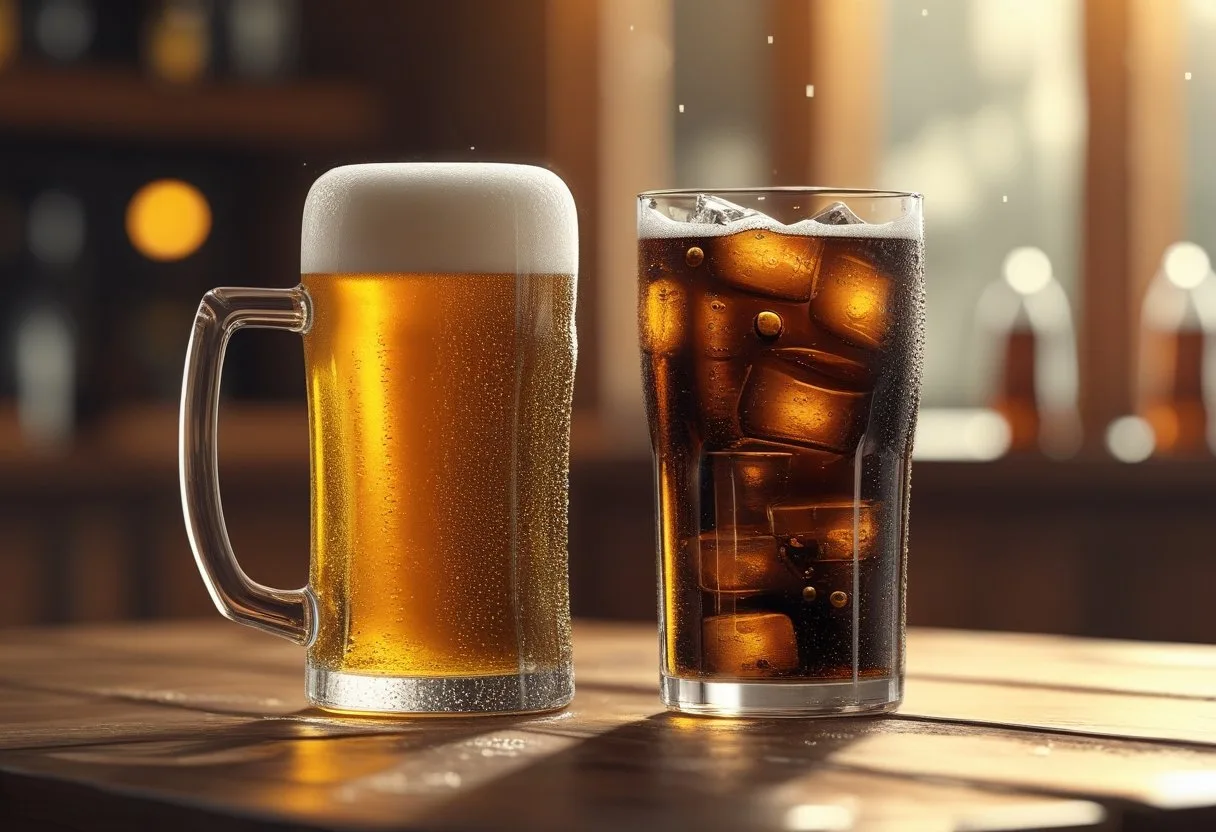
This cocktail attracts attention because it completely changes the classic taste of beer. Some people enjoy it for its refreshing and easy-to-drink qualities, while others find it surprising, even confusing.
This curiosity surrounding Coca-Cola beer raises questions about its recipe, its variations and its history.
Over time, this blend has found its place in various cultural and social contexts. Whether it is a discovery among friends or a local custom, Coca-Cola beer continues to arouse curiosity.
What is Coca-Cola beer?
Coca beer is a mixed alcoholic beverage that combines beer and cola, often Coca-Cola. It is distinguished by its multiple names, regional variations and sweet taste, which appeals to a diverse audience.
Definition and common names
A beer and cola drink, sometimes called a beer-cola, is made by mixing lager or stout with Coca-Cola or another cola. The mixture is usually made in equal parts, but the proportions vary according to preference.
This drink has several names depending on the country.
- In Germany, they refer to it as Diesel or Colabier.
- In Spain, it is known as Dreckiges.
- In Austria, it is called a Drecksack.
These names reflect local traditions, but they all refer to the same concept: a simple combination of beer and cola. The result is a drink that is sweeter than beer alone, with a fizziness and caramelised flavour provided by the cola.
Differences between beer-cola, calimocho and shandy
Beer and cola isn’t the only drink that mixes an alcoholic base with a sweet drink. Calimocho, popular in Spain and Latin America, combines red wine with cola, not beer.
Shandy, also known as radler or Alsterwasser, is a mixture of beer and lemonade. This drink is distinguished by its tangy and refreshing taste, which is very different from the caramelised sweetness of beer mixed with Coca-Cola.
Beer-cola retains the beer base like shandy, but uses cola like calimocho. The difference between them lies mainly in the base alcohol and the type of soft drink added.
Popularity and regions of consumption
Beer and coke is consumed in several European countries, notably Germany, Austria and Spain. In these regions, bars serve it as a milder, sweeter alternative to traditional beer.
In Germany, Diesel is particularly popular in local breweries. In Spain, Dreckiges appeals to a young audience for its light taste and affordable price.
In France, beer and cola remains less well known than half-peach or shandy. It is gaining visibility thanks to cultural exchanges and travel.
In some student bars, it is offered as a quick and easy option.
Recipe and preparation of Coca-Cola beer
Coca-Cola beer is made by combining a light lager with Coca-Cola to create a sweet, fizzy drink. The choice of glass, the proportions of the liquids and the pouring technique are key to achieving the perfect mix without excessive foam or loss of flavour.
Required ingredients
To make a Coca-Cola beer, you need just a few ingredients, but each one is important. The base is a lager, preferably light and not too bitter, so as not to mask the taste of the soda.
The second ingredient is Coca-Cola or another cola-type drink. It is best to use a freshly opened bottle to retain all the fizz.
A wide beer glass, such as a mug or a straight glass, allows you to mix well without spilling. Some people add a slice of lemon to give it a tangy and refreshing flavour.
In summary, the list includes:
- 1 bottle of lager (25 cl or 33 cl)
- 1 bottle or can of ice-cold Coca-Cola
- 1 suitable beer glass
- Option: ice cubes or lemon slice
Preparation steps
The preparation depends mainly on how you pour it. First, fill the beer glass halfway with lager.
Next, slowly pour the Coca-Cola down the side of the glass. This method reduces foaming and prevents the mixture from overflowing.
The most common proportions are half beer, half soda, but they can vary according to taste. Once filled, the mixture can be stirred gently with a spoon to homogenise it.
Some prefer not to stir in order to maintain a slight separation between the beer foam and the cola. Serve immediately, well chilled, to preserve the fizz and freshness of the drink.
Tips for successful mixing
The choice of beer greatly influences the result. A light lager is ideal, as a beer that is too bitter or too strong will mask the sweetness of the cola.
It is best to use well-chilled bottles. A warm drink produces more foam and alters the taste.
Pour the Coca-Cola in a thin stream to minimise loss of fizz. For variety, some people add a slice of lemon to the rim of the glass.
Others prefer a few ice cubes to accentuate the freshness. Try different proportions to find the perfect balance between the bitterness of the beer and the sweetness of the soda.
Taste, texture and variations
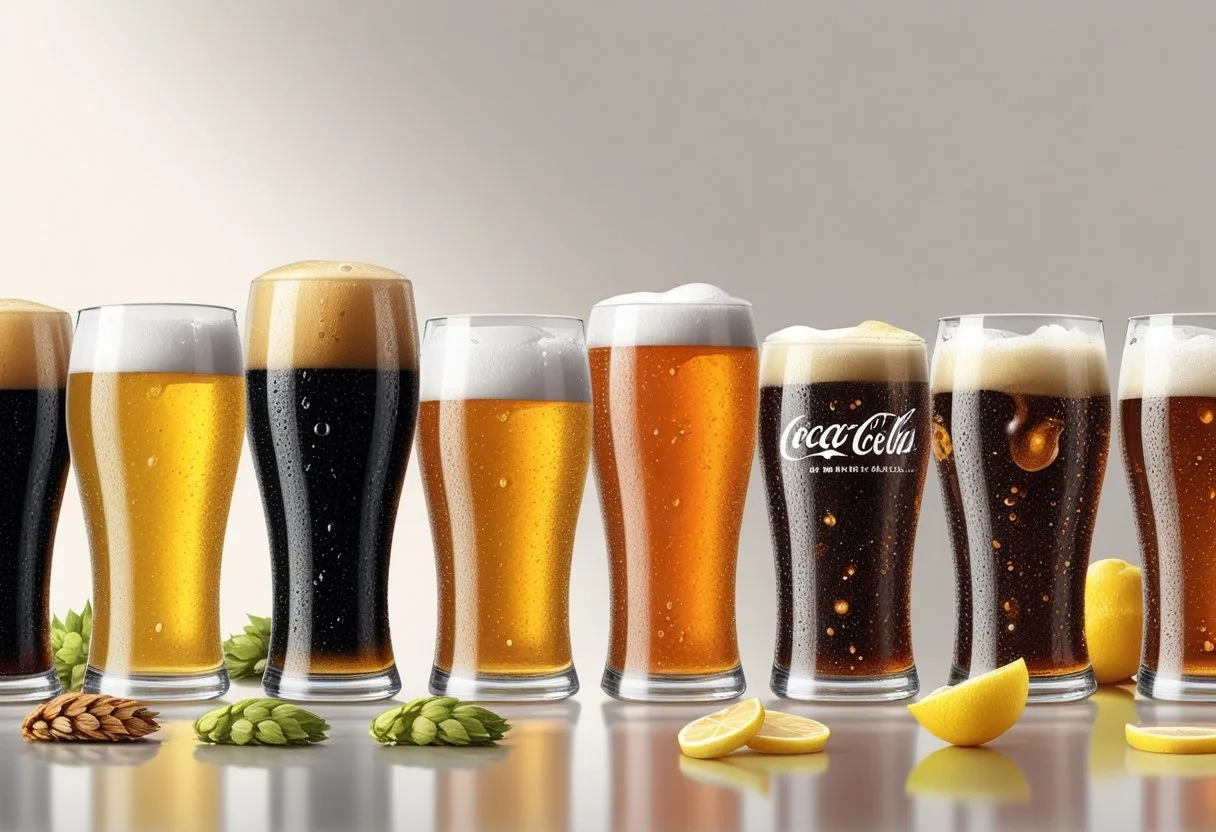
The combination of beer and cola creates a smooth, sparkling drink that softens the bitterness of the beer. The flavours vary depending on the type of beer used, the amount of sugar provided by the cola, and any additions such as a slice of lemon or a pinch of salt.
Taste profile and balance of flavours
The taste of Coca-Cola beer is based on the balance between the slight bitterness of hops and the sweetness of cola. Lager is often used because its neutral profile goes well with soda.
The texture is sparkling thanks to the carbon dioxide present in both drinks. This effervescence makes the drink lighter on the palate than beer alone.
The sugar in cola softens the dry notes of the beer and gives it a rounder finish. If the proportion of soda is too high, the mixture can become too sweet and completely mask the taste of the beer.
A good balance is often around a half-and-half ratio of beer to cola, but everyone can adjust it according to their preferences.
Variations with different types of beer
Each type of beer significantly alters the final result. With lager, the mixture remains smooth and easy to drink.
A dark beer adds more body and malty notes that combine with the caramel flavour of cola. This mixture results in a richer but also heavier drink.
An amber beer creates a middle ground, with a slightly toasty flavour that complements the sweetness of the soda well.
Some people also experiment with flavoured beers, such as fruity beers. In this case, the cola further accentuates the sweetness and can give an impression similar to a cocktail.
Possible additions and garnishes
Simple garnishes allow you to vary the experience. A slice of lemon or lime adds a touch of tartness that balances the sweetness of the cola.
A pinch of salt can reduce bitterness and give a more rounded flavour. This practice is common in some regions where beer is mixed with soda.
You can also add a few ice cubes to enhance the freshness, even though this will dilute the drink slightly.
Some people prefer to use other soft drinks instead of cola, such as lemonade or orange juice. This produces a drink similar to Radler.
This flexibility explains why the recipe varies depending on the country and local customs.
Origins and history of the beer and cola mix
The combination of beer and cola is part of a long tradition of mixed alcoholic beverages. It was created to offer new, milder and more accessible flavours, while drawing inspiration from practices already in place in several countries.
Birth of the beer-cola mix
The beer-cola mixture, known as Calimocho in Spain, first appeared in the 1970s at popular festivals. People came up with the idea of sweetening beer that was too sour or of poor quality with cola to make it more palatable.
In Germany, a similar variant exists under the name Cola-Bier. It can even be found in ready-to-drink bottles in some supermarkets.
This version fits in with local customs, alongside other mixtures such as Radler (beer and lemonade). These drinks are popular because of their sweet taste, low bitterness and ease of preparation.
They appeal mainly to a young audience or those curious to try a lighter alternative to traditional beer.
Trends in mixed alcoholic beverages
Alcoholic mixed drinks have been around since the 19th century. In the United Kingdom, Shandy, and in Germany, Radler, show that mixing beer and soda is an old practice.
The aim was often to reduce the strength of the beer and make it more refreshing. Adding soda, juice or lemonade also allowed people to drink for longer at festive events.
In the 20th century, these mixtures became more diverse. Variations with fruity soft drinks can be found.
Modern bars and breweries still offer ready-to-drink versions tailored to local tastes.
Influence of classic cocktails
The rise of the beer-cola mix follows the same logic as that of classic cocktails. In the 19th and 20th centuries, creations such as the Manhattan, Martini and Bloody Mary showed that mixing different spirits or non-alcoholic drinks was becoming commonplace.
These cocktails popularised the idea that mixing ingredients could transform the taste and balance the alcohol. Calimocho and Cola-Bier follow this logic with simple, accessible ingredients.
Health effects and nutritional values
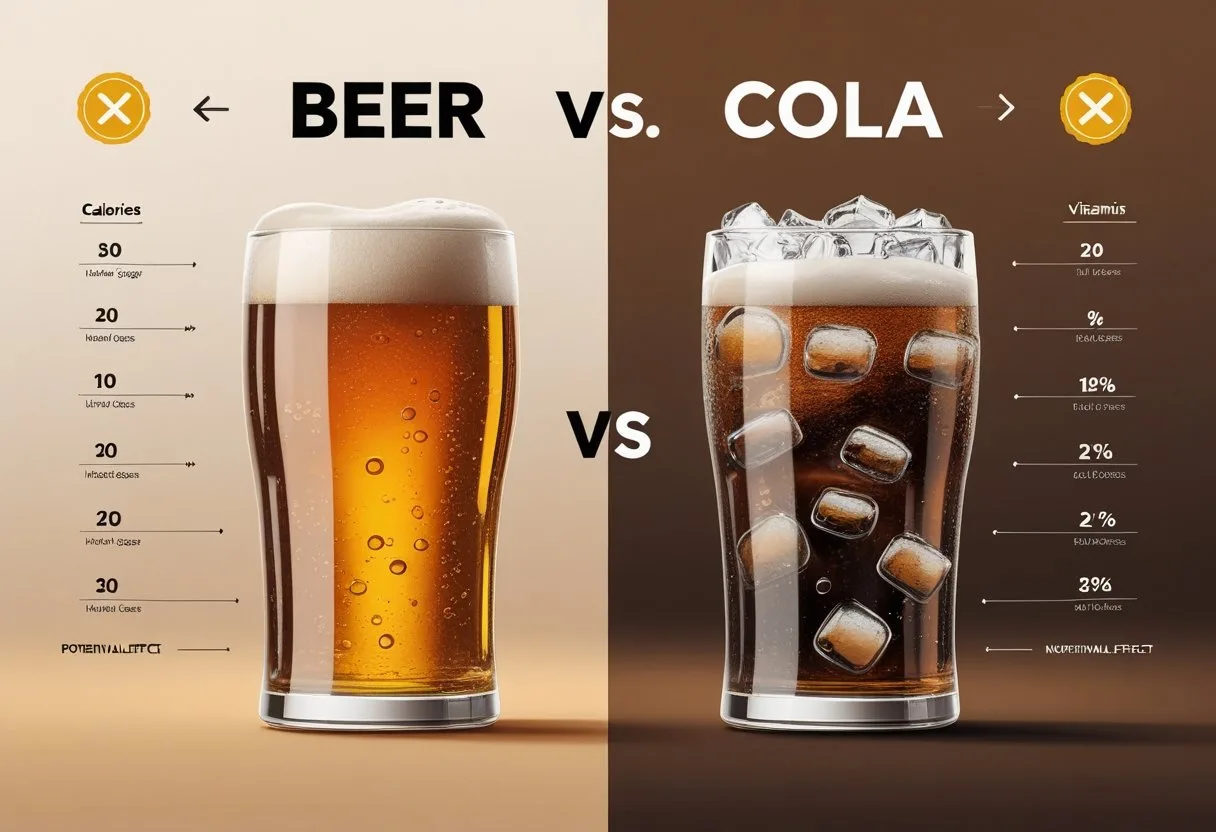
Beer and Coca-Cola have very different nutritional profiles. Beer contains alcohol and compounds derived from malt and hops, while Coca-Cola is mainly composed of water, sugar or sweeteners.
These differences influence blood alcohol levels, calorie intake, and health effects.
Alcohol content and blood alcohol level
Beer generally contains between 4% and 6% alcohol by volume. The body absorbs this alcohol quickly, which alters blood alcohol levels.
The rate of absorption depends on weight, gender, diet and speed of consumption. Moderate consumption is compatible with a healthy lifestyle, but beyond that, the risks increase: liver problems, addiction, negative effects on the nervous system.
Coca-Cola does not contain alcohol and therefore has no direct effect on blood alcohol levels. Some non-alcoholic beers still contain 0.3 to 0.5% ABV, which is low but not zero.
The absence of alcohol in Coca-Cola does not mean there are no risks, as sugar or sweeteners can cause other problems.
Calorie intake and sugar
Classic Coca-Cola contains approximately 10 to 11 g of sugar per 100 ml, or more than 35 g per 33 cl can. This represents nearly 7 teaspoons of sugar, which promotes weight gain and increases the risk of type 2 diabetes.
Beer contains less residual sugar, but provides calories through alcohol and carbohydrates from malt. On average, it provides 40 kcal per 100 ml, or about 140 kcal for a small 35 cl bottle.
Coca-Cola Zero or Light significantly reduces calorie intake thanks to sweeteners, but these additives are sometimes criticised for their possible effects on metabolism and appetite. Non-alcoholic beer still contains calories but often has less sugar than a traditional soft drink.
Comparison with other drinks
Here is a simple comparison:
| Drink (100 ml) | Average calories | Sugar | Alcohol |
|---|---|---|---|
| Beer (5%) | ~40 kcal | 0–1 g | 4–6 per cent |
| Coca | ~42 kcal | 10–11 g | 0% |
| Red wine | ~80 kcal | 0–2 g | 12–14 per cent |
| Whisky | ~260 kcal | 0 g | 40 per cent |
| Water | 0 kcal | 0 g | 0% |
Beer contains less sugar than Coca-Cola, but alcohol increases its effects on health. Coca-Cola, which is high in sugar, is more likely to cause weight gain and tooth decay.
Water remains the only beverage without calories or risks associated with alcohol or sugar.
Consumption recommendations
Health authorities recommend limiting alcohol consumption to a maximum of two standard drinks per day and having alcohol-free days during the week. For beer, this is equivalent to approximately 25 cl for a standard glass.
As for Coca-Cola, it is best to consume it occasionally. Sugary drinks should not exceed one glass per day, and water should remain the main source of hydration.
Alternatives such as non-alcoholic beer or sugar-free Coke can be useful, but they are no substitute for water. Drinking responsibly and in moderation remains essential to limit health risks.
Culture, trends and responsible consumption
Coca beer represents the meeting point between brewing traditions and modern beverages. It is part of a culture where experimentation, the search for new flavours and responsible consumption play a central role.
Coca-Cola beer in popular culture
Coca beer, sometimes called Coca Pola in Colombia, combines beer with extracts of coca, a plant traditionally used by certain Andean communities. This drink occupies a special place because it blends a local symbol with a globally recognised beverage.
In popular culture, it attracts attention due to its uniqueness. It represents an attempt to preserve regional identity while integrating into the mixed alcoholic beverage market.
It also stands out from traditional soft drinks and industrial beers. For some consumers, it represents a niche product that promotes local roots and artisanal innovation.
Current and alternative trends
The global beer market is becoming more diverse. Beers flavoured with fruit, herbs or spices have been growing in popularity for several years.
Coca beer is part of this trend, offering an original alternative to more common flavours. Consumers are increasingly looking for hybrid drinks that are a cross between soft drinks and beer.
These products meet the demand for novelty, but also the desire to limit alcohol content. Other alternatives are gaining popularity:
- Non-alcoholic beers with natural flavours
- Ready-to-drink cocktails made with beer and fruit juice
- Fermented drinks such as kombucha, perceived as healthier
Coca beer remains marginal on an international scale, but it demonstrates the brewing industry’s openness to unexpected recipes.
Moderate consumption and practical advice
Even though Coca-Cola beer stands out for its originality, it is still an alcoholic beverage. It should therefore be consumed in moderation.
Public health recommendations advise adults not to exceed two standard drinks per day. It is not recommended to drink every day.
To limit excess, you can alternate with water or unsweetened drinks. It is best to avoid mixing different types of alcohol.
Preferably consume alcohol with meals. Also choose low-alcohol versions or try alcohol-free alternatives.
How the beer-cola mix varies by country
The beer-cola combination takes different forms globally. In Spain, the “Calimocho” (or “Kalimotxo”) mixes red wine with cola in equal parts — not beer — popular since the 1970s in the Basque Country. Germany’s “Diesel” combines a pale lager with cola (typically 2/3 beer, 1/3 cola). In Belgium, the “Monaco” adds grenadine to beer and lemonade. Northern France has the “Panaché” (beer + lemonade) as a distinct tradition, alongside the Picon beer, an orange bitter poured into the glass before the beer.
The common denominator: the cola’s sugar softens the beer’s bitterness, and the final drink’s alcohol content is reduced by dilution. A 50/50 blend with a 5% beer yields a drink at roughly 2.5% — comparable to a glass of cider.
Why beer and cola work together chemically
Beer and cola share two key properties: carbonation and bitterness. Cola contains phosphoric acid (pH around 2.5) that reacts with malt tannins to round out their astringency. The sugar in cola (around 10g/100ml for regular cola) offsets hop bitterness and softens overall perception.
The practical rule: use a beer without dominant flavors — a blonde lager or wheat beer works better than an IPA or stout. Regular cola can be swapped for sugar-free varieties (drier result) or flavored versions (cherry, lime) for an additional layer of complexity.
Frequently Asked Questions
What is the beer + cola mix called?
‘Diesel’ in France, Belgium and Switzerland (most common). In Germany: ‘Colaweizen’ (cola + wheat) or ‘Bismarck’ (cola + pils). In the UK: ‘Lager and Black’ (with blackcurrant cordial, close variant). In Mexico: ‘Submarino’ with cola in a tequila shot dropped into beer.
What proportions for a good cola beer?
Classic: 50/50 (half blond beer, half cola). Variants: 60/40 (more beer) to mellow hop bitterness, or 40/60 (more cola) for a sweeter, dessert side. Always pour cola first in the glass, then beer slowly to preserve the head.
Which beer to choose for a Diesel?
A classic blond lager works best: Heineken, Kronenbourg, Budweiser, Stella Artois. Neutral profile doesn’t overwhelm the cola. Avoid IPAs (amplified bitterness), beers over 6% (unbalanced mix), and wheat beers which turn unpleasantly cloudy with cola.
Is beer-cola mixing popular?
Very popular in Germany (‘Colaweizen’ in almost every bar), popular in France with 18-30 year-olds, little known in Italy and Spain. In the US, ‘beer and coke’ remains marginal. Supermarkets even sell pre-mixed beer + cola cans (Karlsberg Mixery, Salitos).
How many calories in a beer-cola mix?
A 50/50 Diesel of 50 cl contains about 220 kcal: 105 kcal from beer side (lager 5%) + 115 kcal from classic cola side (10 g sugar/100 ml). About 50% more caloric than pure beer of same volume. With diet/zero cola, drops to 110-130 kcal per 50 cl.
🍻 Explore our beers
Over 1,000 craft beers listed, with a comparator and nutritional info.
Browse the full catalogue →