 Beer Galaxy
The Saint-Quentin Beer Festival marks the start of the new school year every year. It brings together locals and visitors alike for concerts, entertainment and a variety of tastings. In 2026 the festival moves to a new venue: Place du Marché.
The 2026 edition runs from Friday 4 to Monday 7 September 2026 at Place du Marché in Saint-Quentin. The organisers moved the festival to this new venue because the Place de l’Hôtel de Ville is unavailable this year. The 8th edition keeps its four-day format.
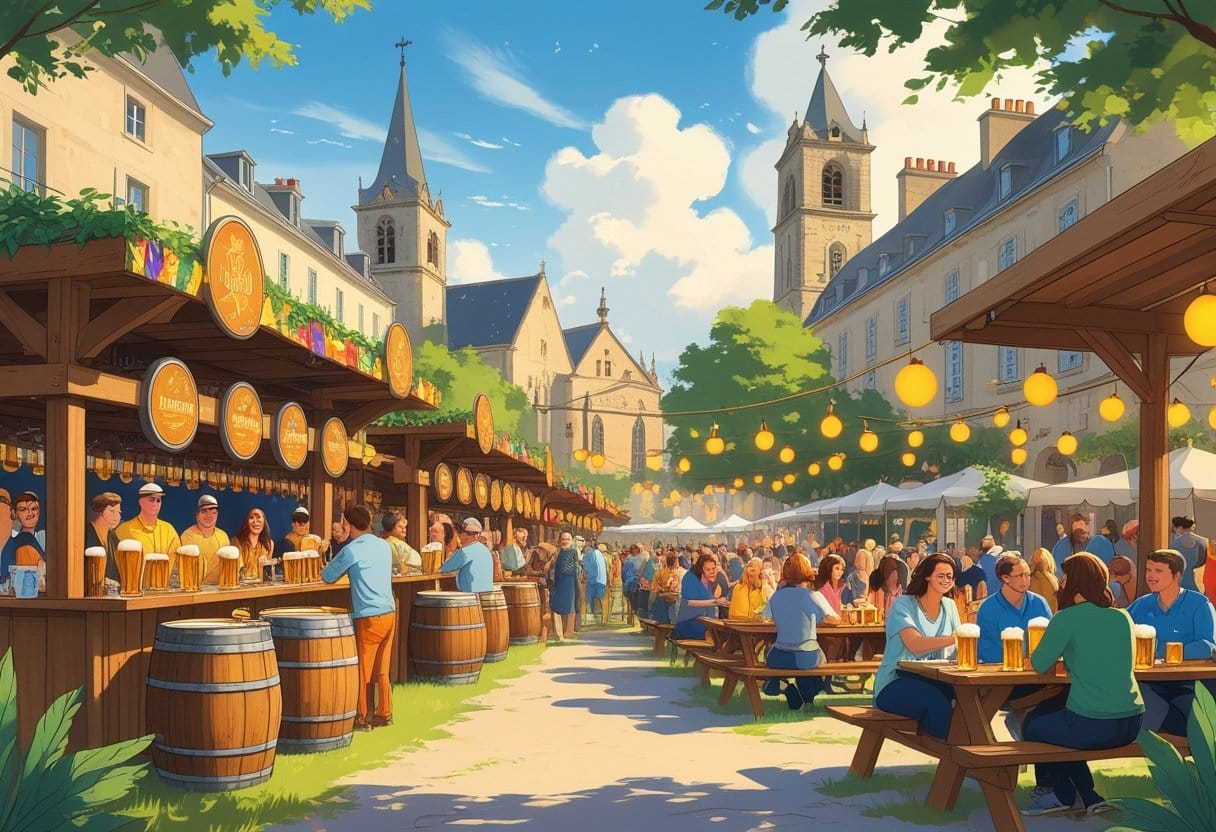
Over the years, the event has struck a balance between tradition and modernity. Regional breweries play a central role, and the music programme combines pop rock, jazz, variety and DJ sets.
This diversity attracts a wide audience and creates a unique festive atmosphere. The festival also promotes the expertise of producers and supports local trade.
Visitors discover quality beers and a warm atmosphere that reflects the identity of Saint-Quentin.
Presentation of the Saint-Quentin Beer Festival
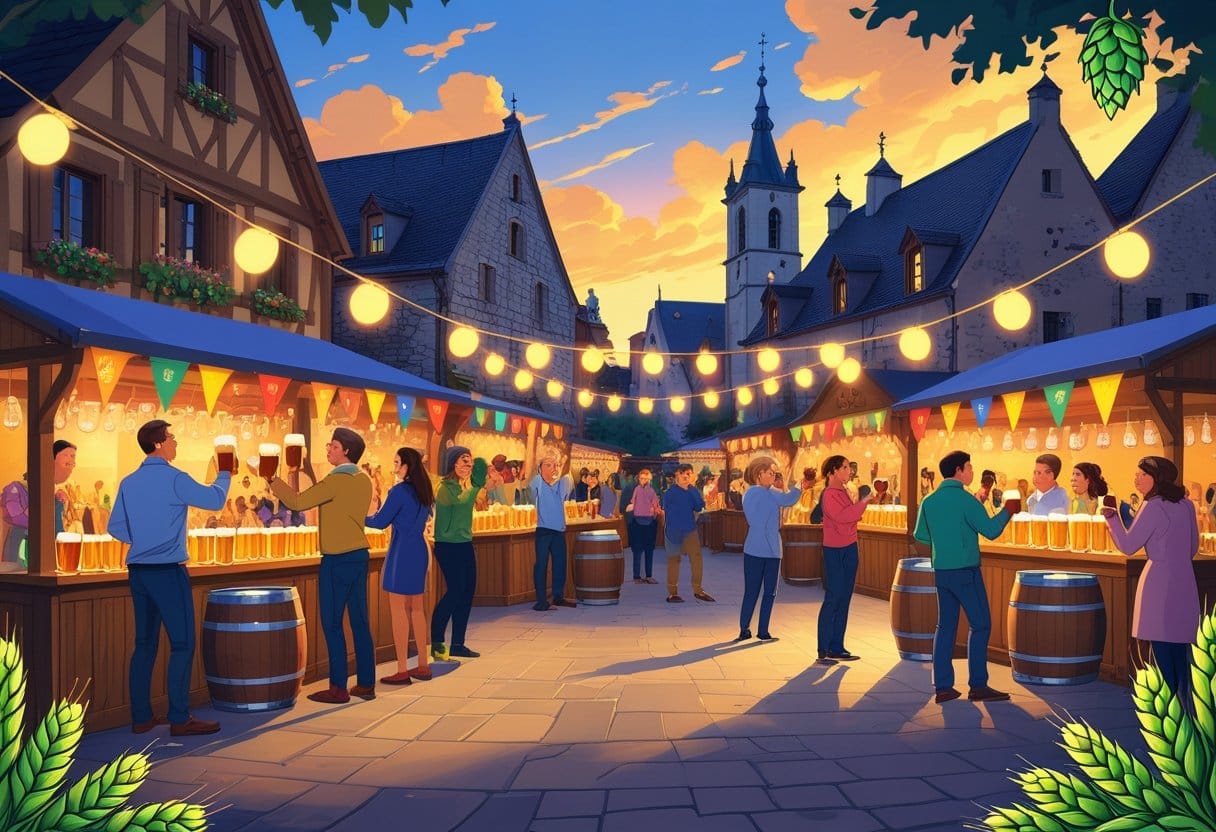
The Saint-Quentin Beer Festival is a highlight of the autumn season. It combines local tradition, festive entertainment and regional breweries, attracting a diverse audience every year.
History of the festival
The Saint-Quentin Beer Festival was created to complement the traditional back-to-school street market. This street market, already well established locally, served as the basis for an event focused on conviviality and sharing around beer.
Over the years, the city has added concerts, stalls and activities to energise this highlight. The aim was to revitalise an event focused on commerce.
Today, the festival brings together locals and visitors around a shared identity and promotes the region’s brewing culture.
Development and popularity
Since its inception, the festival has grown significantly. Attendance has steadily increased, reaching tens of thousands of visitors over four days.
The organisers have diversified the offering with a variety of concerts and entertainment for all audiences. This programme attracts a wider audience than just beer lovers.
The admission price remains affordable, often accompanied by a reusable cup. The event enjoys high visibility thanks to its central place in the city’s calendar and communication from local businesses.
Venue and organisation
In 2026 the festival takes place on the Place du Marché in Saint-Quentin (previous editions were held on the Place de l’Hôtel de Ville, unavailable this year). This space hosts a temporary village consisting of marquees, concert stages and stands run by brewers and restaurateurs.
The event runs from Friday evening to Monday afternoon. Each day offers a different atmosphere, suited to families, music lovers or regular visitors to the street market.
The local council, retailers and local associations are organising the event together. Security is being stepped up with access control and the presence of specialist officers.
Programme and dates for the 2025 edition
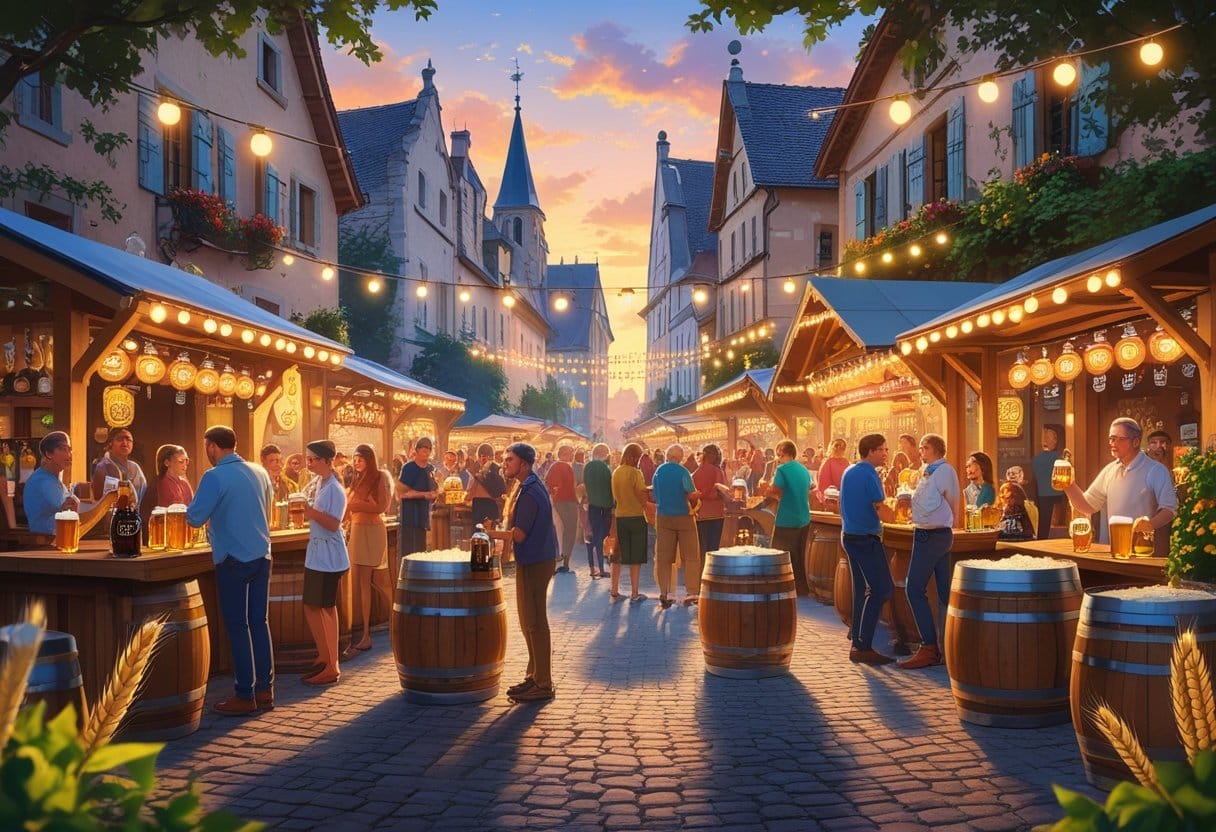
The 2025 edition of the Saint-Quentin Beer Festival will take place over four days in the heart of the city. The programme will include concerts, tastings and several new features, with different schedules for each day.
Events calendar
The 2025 festival was held from Friday 5 to Monday 8 September 2025 on the Place de l’Hôtel de Ville. That 7th edition brought together numerous regional breweries and offered a varied musical atmosphere. The 8th edition runs from Friday 4 to Monday 7 September 2026 at Place du Marché.
The concerts will cover several styles such as pop rock, jazz, variety and DJ sets. Each day will combine tastings and musical entertainment.
The big new feature of this edition will be the Premium Terrace, a 200 m² raised area offering a privileged view of the stage. This addition aims to improve visitor comfort and diversify the festival experience.
Opening hours
The timetable varies depending on the day:
- Friday, 5 September: 5 p.m. – 12:30 a.m.
- Saturday, 6 September: 2 p.m. – 12:30 a.m.
- Sunday, 7 September: 2 p.m. – 10:30 p.m.
- Monday, 8 September: 11 a.m. – 6 p.m.
The weekend favours festive evenings with late closing times. Mondays offer a more family-friendly and accessible daytime option.
Extended opening hours on Fridays and Saturdays encourage musical programming and evening attendance. Sundays and Mondays offer a more relaxed setting, ideal for families and visitors wishing to enjoy tastings during the day.
Prices and ticketing
Admission costs €6, including a cup. Teenagers aged 16 and over benefit from a reduced rate of €3 without a cup.
A Weekend Pass costing €15 gives you access to the festival over several days. On Monday, entry is free for everyone, unless you request a cup.
Online ticketing reduces queues and facilitates access upon arrival. This system helps visitors plan their visit and save time at the entrance.
Atmosphere and entertainment
The festival offers a friendly atmosphere combining tastings, music and dedicated areas. Visitors can enjoy a variety of concerts, special areas such as the premium terrace and activities for all.
Concerts and live music
The music programme remains a central part of the festival. Each day features pop rock, jazz, variety and DJ acts.
The concerts take place on the Place du Marché, which is transformed into an open-air stage. The schedule varies each day: extended evenings on Friday and Saturday, a family atmosphere on Sunday, and a relaxed closing on Monday afternoon.
Music accompanies the tastings and creates a balance between liveliness and conviviality.
Premium area and new features
In 2025, the festival introduced the Premium Terrace. This 200 m² space, set up high up, offers an unobstructed view of the stage and the crowd.
Participants reserve this access by telephone and enjoy additional comfort and a more exclusive experience. This new feature responds to the demand from visitors who wish to enjoy the festival in the best possible conditions.
The organisation also offers a variety of activities and improved logistics to facilitate movement around the square.
Activities for everyone
The festival is not limited to beer tasting. It also offers entertainment for different audiences.
Teenagers aged 16 and over benefit from a reduced rate. Street entertainment and stalls complement the concerts and create a lively atmosphere.
On Mondays, free admission attracts families. This day focuses on conviviality and discovery, with opening hours adapted to a wider audience.
Beers and exhibitors
The festival showcases local and regional products with a wide variety of beers. Visitors can discover classic beers and original creations, and chat directly with the brewers present.
Selection of craft beers
The stands offer a wide range of beers, from light lagers to full-bodied stouts. Hop enthusiasts will find aromatic IPAs.
Those who prefer milder flavours can opt for amber or fruity beers. Each edition also showcases seasonal brews.
Some brewers create special recipes for the festival. These beers are only available during these days.
Visitors can sample unique beers. They compare different styles according to their preferences.
Diversity is the strength of the event. There are filtered and unfiltered beers, traditional recipes and modern versions.
Some beers offer exotic notes such as mango or ginger. This variety appeals to a wide audience, from the curious to the seasoned connoisseur.
Participating breweries
The breweries are mainly from the Hauts-de-France region. Some editions also welcome producers from other departments.
This diversity highlights local expertise. It also opens the door to outside influences.
Among the exhibitors are independent microbreweries that produce small quantities. Their presence gives the festival a strong artisanal dimension.
They often share their stories. The brewers also explain their production methods.
More established breweries, capable of large-scale production, complete the offering. They provide well-known and recognised styles.
This combination makes the visit accessible to all visitor profiles.
Tastings and workshops
The festival is not limited to selling beer. Guided tastings help participants identify aromas and understand the differences between styles.
These educational moments allow you to appreciate the drink beyond simple consumption. Practical workshops are sometimes offered, such as an introduction to brewing.
The brewers explain the essential steps: choosing malts, using hops, fermentation. These activities provide a practical insight into the profession.
They strengthen the link between producers and the public. Some workshops focus on food and beer pairings.
Visitors learn how to pair an amber beer with grilled meat or a fruity beer with a light dessert. These experiences promote local brewing culture.
Practical advice for visitors
Visitors should plan their trip carefully to make the most of the Saint-Quentin Beer Festival. Transport, accommodation and catering are the key points to consider in advance to avoid any unexpected surprises.
Access and transport
Saint-Quentin is located in the Aisne department and is easily accessible by car via the A26 and A29 motorways. Public car parks surround the town centre, but they fill up quickly during the festival.
It is best to arrive early or use the parking areas on the outskirts. The Saint-Quentin SNCF railway station provides direct services to Paris (approximately 1 hour 40 minutes), Amiens, Lille and Reims.
Visitors arriving by train can walk to the Place du Marché in about fifteen minutes. Pastel buses provide regular connections between the main neighbourhoods and the centre.
Timetables are reinforced during certain events. It is still advisable to check the latest updates.
Motor vehicles are prohibited within the festival grounds for safety reasons. Visitors should therefore allow time to walk from their parking spot or arrival point.
Accommodation in Saint-Quentin
The city offers a wide range of accommodation to suit all budgets. There are several 2- to 4-star hotels close to the centre.
These hotels are within walking distance of the festival. Chains such as Ibis, Kyriad, and B&B offer convenient options for short stays.
For greater independence, furnished flats and guest rooms are available through rental platforms. These solutions are well suited to groups.
The municipal campsite, located about 10 minutes by car from the town centre, remains an economical alternative. It welcomes visitors with simple but functional facilities.
It is advisable to book early, as demand increases significantly during the festival and street market. Availability decreases rapidly as the event approaches.
On-site catering
The Place du Marché hosts numerous stalls run by local brewers and restaurateurs. Visitors can sample regional specialities, quick meals and craft beers.
Non-alcoholic options are also available, allowing everyone to participate. Prices vary depending on the size of the cup, generally between €4 and €6 at the entrance, including a reusable cup.
Many restaurants in the city centre are joining in the festivities. Some are offering special menus featuring traditional dishes such as mussels or tripe, which are very popular during the Monday street market.
To avoid waiting during peak hours, it is best to eat early or choose restaurants on adjacent streets. Families will also find options suitable for children.
Impact and significance for the city
The Saint-Quentin Beer Festival attracts a diverse crowd every year, from the town and surrounding areas. It generates significant economic benefits, mobilises local businesses and creates a friendly atmosphere that marks the start of the new school year.
Local economic benefits
The festival is an economic driver for Saint-Quentin. For several days, hotels, restaurants and cafés see an increase in visitors.
Visitors spend money on tastings, accommodation and food. Regional breweries also benefit from this visibility.
They present their products to a wider audience, which can boost their reputation and stimulate sales. This helps to enhance the vibrancy of the town centre.
Shopping streets are benefiting from increased footfall, leading to a rise in purchases across various sectors such as fashion, local products and souvenirs.
Commitment of retailers
The shopkeepers of Saint-Quentin play an active role in organising and running the festival. Many adjust their opening hours to accommodate visitors.
Others set up stalls or take part in the street market that runs alongside the event. Restaurants offer special menus or highlight food and beer pairings to promote the event.
Shopkeepers also contribute to the welcome and general atmosphere. They reinforce the image of a welcoming and festive city.
This partnership between the local council, brewers and local businesses remains essential to maintaining the festival’s appeal and ensuring its long-term future.
Atmosphere and conviviality in Saint-Quentin
The Beer Festival is not just about tasting beer. It transforms the Place du Marché into a place for people to meet and share experiences.
Concerts and musical entertainment enliven the evenings. The shows create a lively atmosphere.
Residents and visitors alike gather in a festive atmosphere. Admission remains affordable, and some days are free.
This encourages participation from a wide audience, including families and young people. The event brings together music, gastronomy and exchanges.
This festival contributes to the cultural identity of Saint-Quentin. It has established itself as an eagerly awaited annual event.
The history behind the Saint-Quentin Beer Festival
The Saint-Quentin Beer Festival has been running for over thirty years. It was born in a city with deep brewing roots: in the 19th century, Saint-Quentin was an active brewing center in the Hauts-de-France region, historically anchored in beer culture (bières de garde, northern-style ales). The festival reclaims that heritage in a modern, public format.
The event takes place in 2026 on the Place du Marché, after the organisers had to leave the Place de l’Hôtel de Ville — one of the largest town squares in France — which is unavailable this year. Its capacity (several thousand people) allows open-air concerts to run alongside the tastings. The four-day format in early September makes it one of the last major summer gatherings in the region before autumn.
Bières de garde: what to look for at the festival
The Hauts-de-France region produces a beer style found almost nowhere else: bière de garde. Unlike standard ales (warm fermentation) or lagers (cold fermentation), bières de garde are fermented at cool temperatures then conditioned in cellars for weeks to months. The result: a rounded, lightly carbonated beer with pronounced malt character and a subtle earthy note.
Key regional breweries (Ch’ti, Jenlain, La Choulette, Castelain) typically feature at or around the festival. If you’re encountering the style for the first time, start with an amber bière de garde (6–7% ABV): it’s the most typical expression of the northern brewing tradition.
Frequently Asked Questions
When is the Saint-Quentin Beer Festival?
Saint-Quentin Beer Festival (Aisne, Hauts-de-France, northern France) is traditionally held over four days in early September. The 2026 edition, the 8th, runs from Friday 4 to Monday 7 September 2026 at Place du Marché (not Place de l’Hôtel de Ville as in previous years, as that square is unavailable). Free admission, all ages welcome (concerts, food). One of Picardy’s largest brewing gatherings.
How many breweries attend Saint-Quentin Festival?
About 30-40 microbreweries each year, mainly from northern France, Picardy, Belgium, plus special guests (Alsace, Brittany). Over 200 different beers offered for tasting. Classic system: buy a deposit graduated glass + tokens for tasting.
How much does admission cost?
Admission is free. Only consumption is paid: budget €5 for a graduated glass (deposit, returned when given back), then €2-3 per tasting token (10-15 cl / 3-5 oz). Average evening budget: €25-35 to try 6-8 beers and eat on-site (food trucks).
Is there a music programme?
Yes, two stages offer rock / pop / brass bands / DJ sets on Friday and Saturday evenings. Free concerts draw as many people as the tasting. Detailed programme published on the city website in July/August each year. Noise curfew at 1 AM.
How to get to Saint-Quentin?
Train: Saint-Quentin station (TGV from Paris in 1h, or Intercités). Car: A26 motorway, Saint-Quentin exit. Free parking near the city centre for the event. Accommodation: book early (hotels and Airbnbs fully booked the event weekend).
🍻 Explore our beers
Over 1,000 craft beers listed, with a comparator and nutritional info.
Browse the full catalogue →