 Beer Galaxy
Beef bourguignon with beer replaces red wine with 75 cl of dark or amber beer, simmering 1.2 kg of beef with bacon, mushrooms, onions and carrots for 2.5 to 3 hours. The beer adds maltier, gentler notes than wine and a rich, creamy sauce. A comforting dish, perfect for fans of Northern French cuisine.
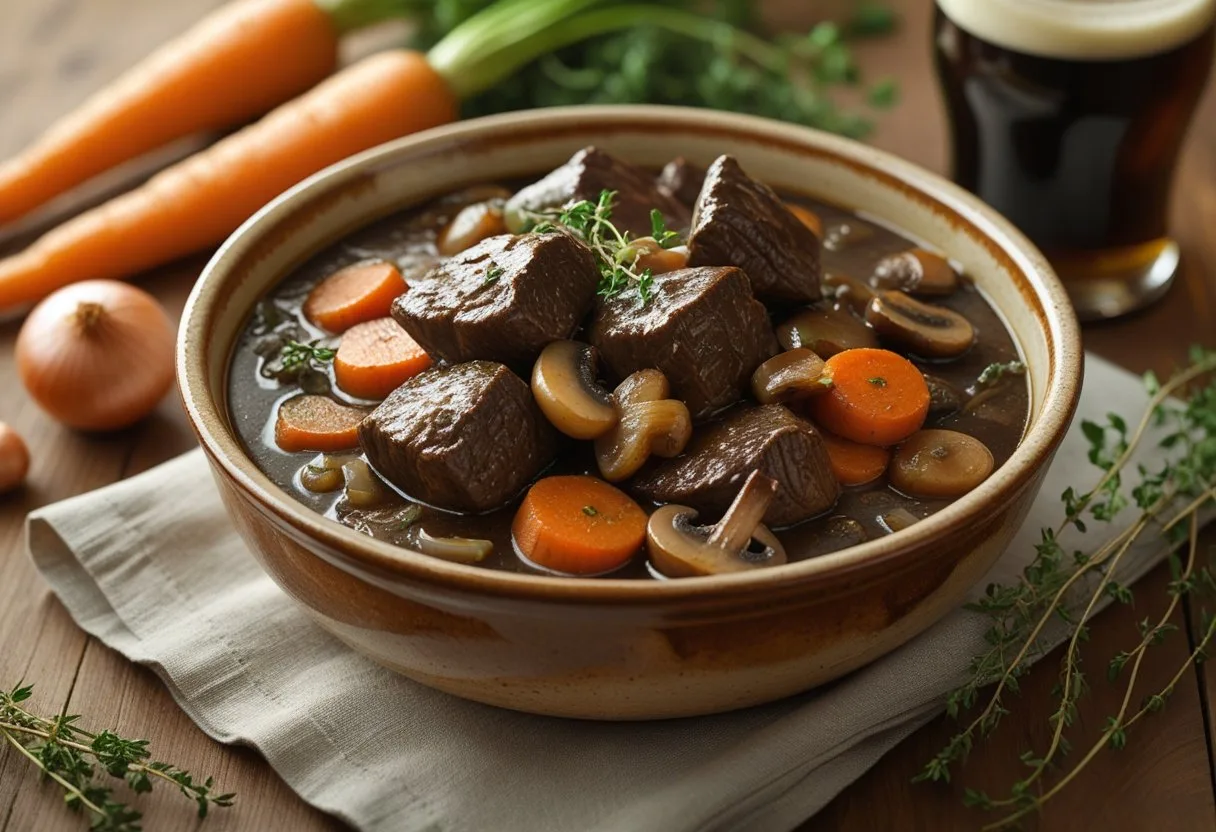
This dish is not just a simple variation, it adapts to the seasons and regional traditions. The vegetables, herbs and beer chosen directly influence the depth of flavour.
The preparation offers great freedom. Slow cooking emphasises each step, from marinating to slow cooking, to achieve melt-in-the-mouth meat and a rich sauce.
What is beef bourguignon with beer?
Beer-braised beef replaces red wine with beer. This choice alters the flavour and texture of the dish while retaining the essence of a long, flavourful stew.
Origins and history of the dish
Traditional beef bourguignon comes from Burgundy, a region renowned for its red wines. Originally, this peasant dish used tough cuts of meat that were tenderised by slow cooking.
In northern and eastern France, and in Belgium, dark or amber beer replaced wine. It was more affordable than Burgundy wines.
Where vines dominated, wine was used in cooking. Where barley and hops grew, beer became the basic ingredient.
Today, beef bourguignon with beer is a convivial speciality associated with home cooking in northern France and Belgium.
Differences from classic beef bourguignon
Classic beef bourguignon uses full-bodied red wine, such as Pinot Noir or a Burgundy wine. This produces a rich, tannic and fruity sauce.
Beer-braised beef uses dark, amber or lager beers, which add sweet or slightly bitter notes. The beer creates a creamier sauce that is often less acidic.
It goes well with ingredients such as mustard, honey or chestnuts. These ingredients rarely appear in the classic version.
Bourguignon au vin is deeply rooted in Burgundian cuisine. Bourguignon à la bière illustrates the influence of beer-producing regions, where beer is a staple ingredient in traditional recipes.
Even though the base remains similar — beef, carrots, onions, slow cooking — the choice of liquid changes the flavour profile and identity of the dish.
Why use beer?
Beer offers a different aromatic complexity to wine. A dark beer has roasted, caramel or coffee notes.
An amber beer adds malty flavours, while a light lager creates a smoother sauce. The residual sugars in some beers thicken the sauce and give it a pleasant roundness.
After several hours of cooking, the meat becomes even more tender. Beer goes well with bacon, mushrooms or root vegetables.
It balances the fat in the meat and adds a bitter touch that contrasts with the sweetness of the carrots or onions. In regions without vineyards, beer was a practical and economical alternative.
Essential ingredients for a successful beer bourguignon
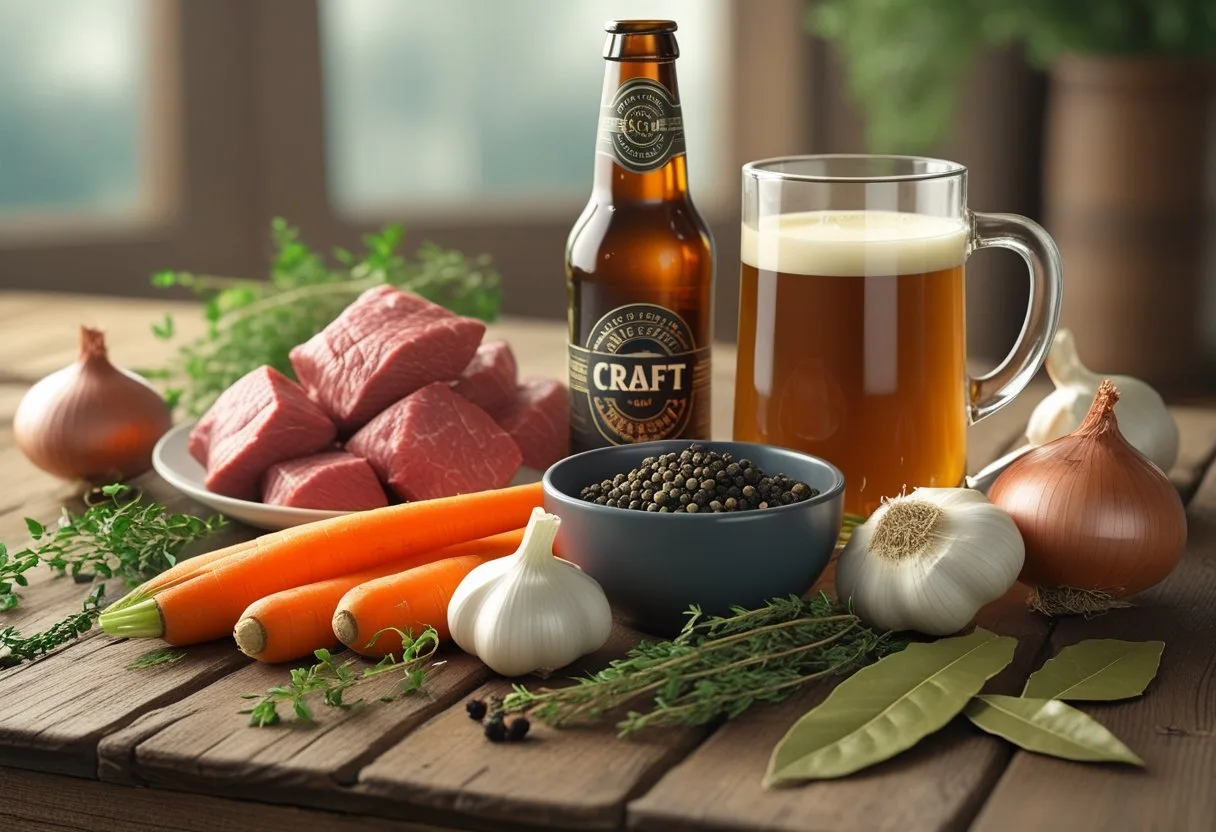
A good beer stew is based on three main elements: quality meat, a suitable beer and simple but aromatic vegetables. Each choice influences the texture and taste of the dish.
Choice of beef and cuts
Beer-braised beef requires cuts of beef that are rich in collagen. These cuts become tender after long, slow cooking.
The most commonly used pieces are:
- Chuck: gelatinous meat that melts well when cooked.
- Macreuse: leaner, with a firm texture.
- Walnut-flavoured gîte: ideal for stews, as it holds its shape well.
It is best to cut the meat into 3 to 4 cm cubes. This size ensures even cooking.
Browning the meat in a pan before simmering adds a brown colour and juices that enrich the sauce. The choice of cut influences the final texture: chuck gives a more tender result, while silverside offers a firmer bite.
Selecting the ideal beer
Beer defines the character of the dish. A dark beer brings notes of malt, caramel and a slight bitterness.
It is suitable for long cooking times and produces a dark, full-bodied sauce. A lager produces a milder result and brings out the flavour of meat and vegetables.
For a more rustic version, some choose an amber beer, which balances sweetness and bitterness. It is best to avoid overly hoppy beers, as they can become too bitter after long cooking.
The amount of beer should cover the meat without completely submerging it. This leaves room for other liquids such as stock.
Essential vegetables and herbs
Vegetables give the sauce structure and add natural sweetness. Onions and carrots are essential.
Onions provide a sweet and fragrant base. Carrots soften the bitterness of the beer.
Garlic adds a subtle aromatic depth. The bouquet garni (thyme, bay leaf, parsley) flavours the stew without weighing it down.
The herbs can be tied in a muslin bag or tied with string so that they can be easily removed. Celery, although optional, enhances the flavour of the stock.
The mushrooms, added at the end of cooking, complement the richness of the dish. These elements create a balanced base that accompanies the meat and beer.
Required equipment and utensils
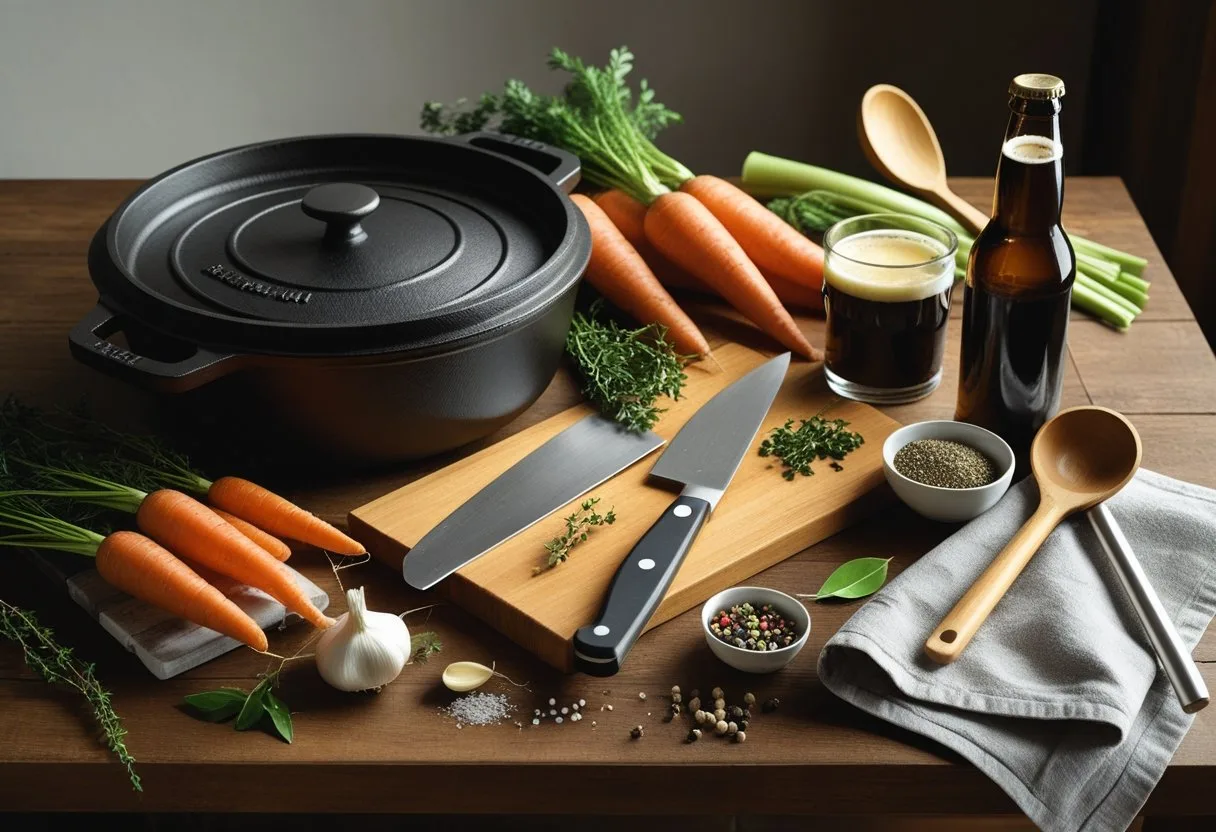
The success of a beer-based bourguignon also depends on the equipment used. The right utensils facilitate slow cooking and enhance the flavour.
The importance of the casserole dish
The casserole dish remains the key utensil for this simmered dish. An enamelled or uncoated cast iron casserole dish retains heat well and distributes it evenly.
This allows for slow, even cooking, ideal for tenderising beef. A casserole dish with a diameter of 24 to 28 cm is suitable for 4 to 6 people.
It must be deep enough to hold the meat, vegetables and cooking liquid. A well-fitting lid limits evaporation and keeps the flavours in the dish.
Some prefer a domed lid, which promotes condensation and keeps food moist. A thick stainless steel casserole dish can also be used, but it retains heat less well than cast iron.
For slow cooking, cast iron remains the best option.
Other recommended utensils
Several utensils complement the use of the casserole dish and make preparation easier. A sharp chef’s knife is essential for cutting meat and vegetables into even pieces.
A sturdy chopping board protects the blade and provides added safety. A large wooden spoon or heat-resistant spatula can be used to stir without scratching the inside of the casserole dish.
A skimmer helps remove excess fat or impurities that rise to the surface during cooking. A bowl or salad bowl is used to flour the pieces of meat before frying them.
A measuring jug or graduated jug helps to measure the quantity of beer or stock accurately. Having a separate frying pan can be useful for searing the bacon or mushrooms before adding them to the casserole dish.
This allows for better control over the cooking of each ingredient and enriches the final flavour of the dish.
Steps for preparing beef bourguignon with beer
The success of this dish depends on three essential points: precise cutting of the ingredients, a marinade that adds flavour, and slow cooking in a casserole dish. Each step requires attention to balance the flavours.
Preparing the ingredients
Cut the beef into large, even cubes, approximately 3 to 4 cm in size. Choose cuts such as chuck, shoulder or rib, which are suitable for slow cooking.
Prepare the onions and shallots by cutting them into quarters or slices. Cut the carrots into thick slices so that they retain their shape after several hours of cooking.
Add washed and halved button mushrooms, as well as bacon bits or smoked bacon. These ingredients enhance the flavour without masking that of the meat.
A small summary table helps to organise the quantities:
| Ingredient | Preparation | Approximate quantity |
|---|---|---|
| Beef | 3-4 cm cubes | 1 to 1.2 kg |
| Carrots | Washers | 4 to 6 |
| Onions | Quarters or discs | 2 |
| Garlic | Crushed | 2 cloves |
| Mushrooms | Cut in half | 300–400 g |
Marinade and seasoning
Prepare the marinade the day before so that the meat is well coated. Place the beef cubes in a dish with onions, crushed garlic, a bouquet garni (thyme, bay leaf) and a few black peppercorns.
Cover everything with a dark beer such as a porter or stout. This beer adds a mild bitterness and dark colour to the sauce.
Leave the meat to soak for around 24 hours in a cool place. Before cooking, drain the pieces, keeping the marinade liquid.
Season the meat with salt and pepper. Fry the vegetables from the marinade in the casserole dish to bring out their flavours.
Slow cooking and simmering tips
Heat a cast iron casserole dish. Sear the beef pieces until browned on all sides. This step seals in the juices and gives the dish depth of flavour.
Remove the meat, then fry the onions, carrots and bacon. Return the meat to the pan, sprinkle with flour, then deglaze with the strained marinade.
Bring the liquid to the boil before placing in the oven. Simmer the bourguignon in a low oven (around 150°C) for 3 to 4 hours.
The meat becomes tender and the sauce thickens naturally.
Some practical tips:
- Stir occasionally to prevent the sauce from sticking.
- Add a little grated dark chocolate at the end of cooking to soften the bitterness of the beer.
- Check the seasoning before serving and sprinkle with fresh parsley.
Regional variations and adaptations
The variations of beef bourguignon with beer reflect the diversity of local traditions and available ingredients. Some regions favour rich, malty dark beers, while others highlight original garnishes inspired by their terroir.
Beef bourguignon with dark beer
The dark beer version is most common in northern and eastern France, where brewing has a long history. These beers, often of the porter or dubbel type, add notes of caramel, coffee and sometimes chocolate to the sauce.
Use the same cuts of meat as in the traditional recipe, such as chuck or shoulder. Dark beer softens the bitterness and makes the sauce creamier, which enhances slightly fattier meats.
A simple table illustrates the differences:
| Region | Preferred beer | Main aromatic profile |
|---|---|---|
| North-Pas-de-Calais | Porter-style brown ale | Roasted notes and coffee |
| Alsace | Amber beer | Caramel and dried fruit |
| Border region of Belgium | Belgian dubbel | Sweet, spicy, slightly bitter |
Additions of original trimmings
Some regions enrich their beer-based bourguignon with specific garnishes from their local area. In Brittany, new potatoes are sometimes added and roasted to absorb the sauce.
In northern France, lightly toasted slices of gingerbread thicken and flavour the sauce. In Alsace, serve the dish with spätzle as a side dish, which replaces traditional pasta.
In other rural areas, root vegetables such as parsnips or rutabagas partially replace carrots and add a distinct sweetness.
Some common examples:
- Gingerbread: thickens and flavours the sauce.
- Spätzle: an alternative to potatoes.
- Root vegetables: add a sweet and rustic note.
Service advice and support
Beef bourguignon with beer tastes even better when served with care and the right accompaniments. The presentation and choice of drinks highlight the sauce and the tenderness of the meat.
Presentation of the dish
Serve the dish in a cast iron casserole dish or a deep dish that retains heat. Serve directly at the table to preserve the authenticity and emphasise the convivial nature of the recipe.
Choose side dishes that absorb or complement the sauce. Steamed potatoes, creamy mashed potatoes or gratin dauphinois remain classic choices.
For a modern twist, serve with short pasta such as coquillettes or roasted root vegetables. A contrast of textures enhances the experience.
For example:
- Caramelised vegetables (carrots, pearl onions) for a sweet note
- Mashed parsnips or celeriac for a slightly sweet flavour
- Toasted country bread for dipping in the sauce
Serve the sauce to coat the meat without overdoing it. Arrange the garnishes so that they do not obscure the main dish.
Food and beer pairings
The beer chosen for cooking can also accompany the meal. A dark beer with notes of caramel and roasted malt pairs well with the depth of the sauce.
It enhances the flavours and balances the slight bitterness of the dish.
For a lighter pairing, an amber beer or a malty lager brings freshness and smoothness.
These options are suitable for those who prefer a less robust drink.
You can also vary depending on the accompaniments.
For example:
- With mashed potatoes: dark beer for more roundness
- With roasted vegetables: amber beer with spicy notes
- With buttered pasta: light blonde to contrast the richness
Serve the beer at the correct temperature.
Dark and amber beers are best enjoyed slightly chilled, between 10 and 12°C.
Serve blondes colder, around 6 to 8°C.
The recipe: beef bourguignon with beer
⏱ Prep 30 min · 🔥 Cook 3 h · 🍽 Serves 6 servings · 🥩 Difficulty Medium
Ingredients
- 1.2 kg (2.5 lb) beef chuck or blade, cubed
- 500 ml Belgian dark beer (Leffe Brune, Chimay Bleue or abbey ale)
- 200 g smoked lardons
- 250 g brown button mushrooms
- 16 pearl onions (or shallots)
- 3 carrots, thick sliced
- 3 garlic cloves
- 2 tbsp tomato paste
- 2 tbsp flour
- 1 bouquet garni (thyme, bay, parsley)
- 50 g butter + 2 tbsp oil
- 200 ml beef stock
- Salt, black pepper
Steps
- Sear the beef. Pat dry, season, brown in batches in hot butter and oil. Reserve.
- Sauté the aromatic garnish. In the same pot, sauté pearl onions and lardons 8 min until golden. Add garlic and carrots.
- Singer. Return beef, sprinkle with flour, add tomato paste. Stir 2 min on high heat.
- Deglaze. Pour in dark beer, scrape bottom. Top with stock to cover. Add bouquet garni.
- Simmer. Cover and cook on very low heat 2h30 to 3h, or oven 150 °C. Meat should yield to a fork.
- Sauté mushrooms separately. 30 min before end, sauté mushrooms in a pan with butter until golden brown.
- Combine and finish. Add mushrooms to the pot 10 min before serving. Remove bouquet garni. Adjust seasoning.
- Serve. With steamed potatoes, fresh pasta or buttered tagliatelle. Even better reheated the next day.
Frequently Asked Questions
Which beer should replace red wine in bourguignon?
A Belgian dark abbey ale like Leffe Brune or Chimay Bleue works best. The malty, caramelised and roasted notes mimic the tannic profile of red wine. Avoid light lagers and IPAs.
Best beef cut for bourguignon with beer?
Choose collagen-rich braising cuts: chuck, blade, cheek, shin or shoulder. Avoid lean cuts like sirloin or tenderloin which dry out during long cooking. Collagen renders into gelatin and creates the signature tender texture.
Can I make bourguignon a day ahead?
Yes — it’s actually recommended. Flavours balance during rest, residual bitterness softens and the sauce deepens. Store in the covered pot in the fridge, reheat very gently for 15-20 min, adding stock if needed.
How does it differ from traditional red wine bourguignon?
The beer version produces a softer, slightly caramelised sauce with toasted bread notes from the malt. The wine version yields a more tannic, acidic and fruity sauce. The aromatic garnish (lardons, mushrooms, pearl onions) stays the same — that’s what defines a bourguignon.
🍻 Explore our beers
Over 1,000 craft beers listed, with a comparator and nutritional info.
Browse the full catalogue →