 Beer Galaxy
Homer Simpson’s favourite beer is Duff Beer, a fictional brand created by Matt Groening in 1989 for The Simpsons. Now iconic, Duff has been commercially produced in Germany (Eschweger Klosterbrauerei) and several other countries. Homer drinks an average of 8 cans per episode — over 5,000 cans across the show’s run.
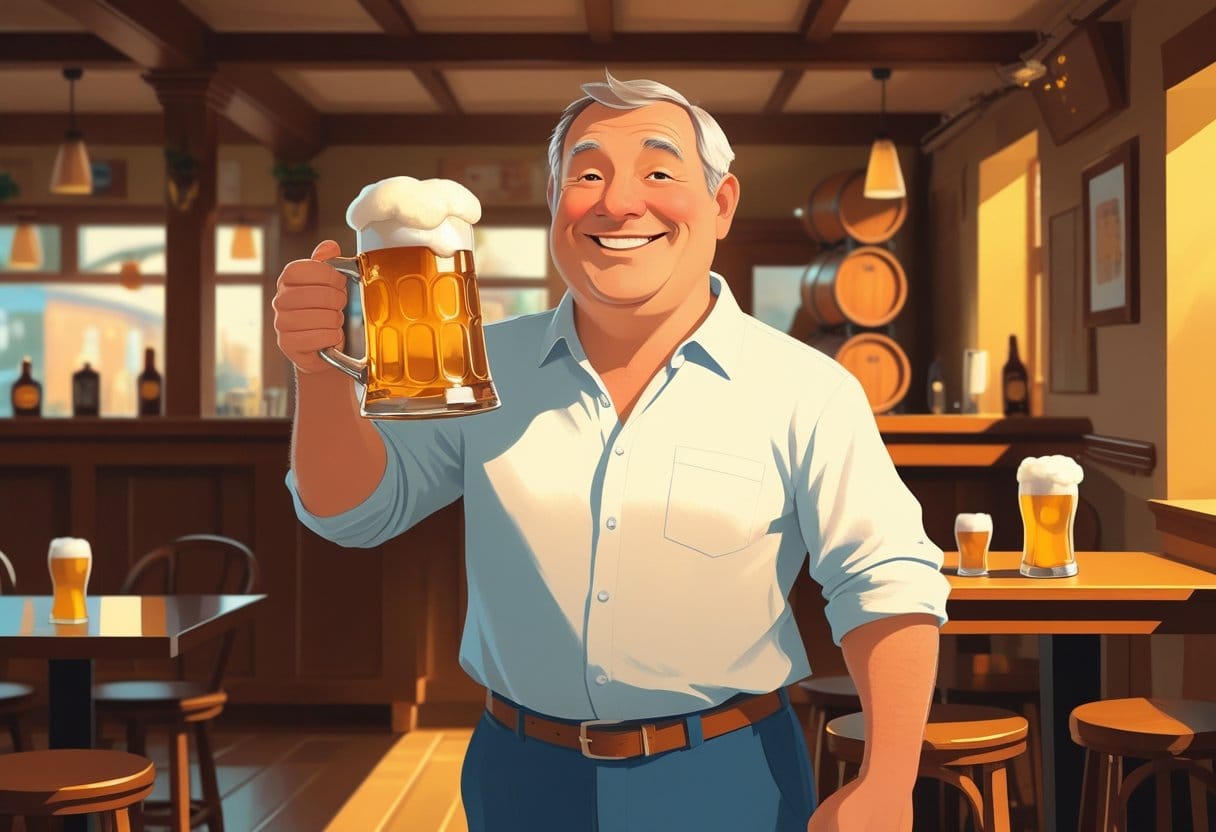
This drink plays a central role in the series. It accompanies moments spent at Moe’s tavern and serves as a source of humour in many scenes.
More than just a drink, Duff embodies a cultural element that connects fiction to everyday life.
The success of this beer does not stop at the screen. Over the years, Duff has gone from being a television gag to a product marketed in several countries.
This development has sparked both curiosity and debate. It shows how a humorous detail in a series can influence popular culture.
Homer Simpson’s passion for beer
Beer, and especially Duff, plays a central role in Homer Simpson’s daily life. It influences his behaviour and fuels some of the series’ most famous scenes.
The role of beer in Homer’s life
Homer Simpson associates beer with relaxation and escapism. After his days at the nuclear power plant, he almost always goes to Moe’s Tavern to drink a Duff with his friends Barney, Lenny, and Carl.
Beer acts as a narrative driver. It often triggers comical situations, but also family or social problems.
For example, in the episode Homer, the Beer Baron (season 8, episode 18), his attachment to alcohol drives him to become a bootlegger when Springfield reinstates prohibition.
This addiction illustrates his inability to control himself. The scriptwriters also use it as a mirror of his human weaknesses, making the character both ridiculous and endearing.
Homer’s iconic quotes about beer
Some of Homer’s beer-related quotes have become cult classics. They reflect his ambivalent relationship with alcohol, which is both a source of joy and a source of problems.
Notable examples:
- "To alcohol! The cause and solution of all our problems in life."
- His enthusiastic exclamations such as "Mmm… beer" underline his obsession.
These lines are often used in popular culture to sum up his philosophy of life. They convey a simple and sincere vision, where beer is both a refuge and a weakness.
The influence of beer on The Simpsons culture
Duff Beer is more than just a fictional drink: it has become a symbol of the series. It appears in numerous episodes, always associated with Homer and his friends.
The fictional brand made such an impression on viewers that real versions of Duff were produced in several countries. This shows the cultural impact of the series and the strength of its comic universe.
Beer also serves as a form of social criticism. It highlights the trivialisation of alcohol in American society and parodies advertising and mass consumption.
Duff Beer: The legendary drink from the series
Duff Beer occupies a central place in the lives of Homer Simpson and many Springfield residents. It symbolises a popular drink and a recurring comic element, while parodying the culture of major American beer brands.
Origins and creation of Duff Beer
Duff appeared in the early seasons of The Simpsons as a fictional beer brand. Matt Groening, the series’ creator, wanted to caricature mass-market brands such as Budweiser.
The word Duff means ‘worthless’ in English, reinforcing the idea of a basic, standardised product. The drink was designed to represent a cheap, ubiquitous beer with no particular taste.
It is most often sold in red cans with the Duff logo in white. Interestingly, Duff has ended up surpassing fiction.
Breweries in Mexico, Belgium and Germany produced and marketed it from 2006 onwards, despite Groening’s opposition. The creator feared that the association between a popular series and real beer would encourage young people to consume alcohol.
Duff Beer at Moe’s Tavern
Moe’s Tavern remains the iconic place where Homer Simpson drinks his Duff. In this dark and modest bar, beer becomes more than just a drink: it is a driving force behind the plot and a constant source of comedy.
Homer often meets Barney Gumble there, whose alcoholism is ridiculed. Duff fuels their discussions, arguments and moments of relaxation.
It is also served at community events, demonstrating its role as the ‘default’ beverage in Springfield. The mascot Duffman, a superhero caricature, regularly promotes the brand.
With his costume and slogans, he embodies the exaggerated advertising dimension of large breweries. This highlights the series’ social critique of mass consumption and advertising.
Comparison with Bud and other American beers
Duff is often seen as a direct parody of Budweiser, nicknamed “Bud”. Like Bud, it is presented as light, standardised and widely available.
Both share an image of accessible beer, intended for the general public. Unlike some craft beers, Duff does not emphasise quality or diversity of flavours.
It embodies the idea of an everyday beverage, almost interchangeable. In American culture, Bud occupies a leading position.
Duff transposes this role into the fictional world of Springfield. It thus becomes a humorous reflection of industrial beer and its omnipresence in American society.
From fiction to reality: The commercialisation of Duff
Duff beer, a fictional drink from The Simpsons, has finally been produced and sold in several countries. Its transition from television to supermarket shelves involved various brewers and gradual distribution across Europe.
The role of the German brewery
After initial production in Mexico in 2006, Duff Beer has been brewed in Europe since 2009. The German brewery Eschweger Klosterbrauerei played a central role in its commercialisation.
It produced beer until 2013, which enabled the brand to establish itself on the European market. The brewery offered a light pilsner, similar to standard mass-produced beers.
The packaging faithfully reproduced the red and black design seen in the series. This enhanced its appeal to consumers.
The choice of Germany was not insignificant. The country has a strong brewing tradition and an infrastructure suited to large-scale production.
Terms and conditions of sale
The marketing of Duff has encountered legal restrictions, particularly in France. The Évin law, which strictly regulates alcohol advertising, has resulted in the logo being blurred in episodes broadcast on French television.
This situation created a paradox. While beer was available in shops, its image was censored in the programme that had made it famous.
In addition, Matt Groening, creator of The Simpsons, opposed the actual sale of Duff. He feared that the association between a popular cartoon and an alcoholic beverage would target an audience that was too young.
Despite this opposition, the absence of an official trademark registration has allowed several companies to exploit it.
Deployment in France and Europe
Duff Beer quickly found its place on the shelves of several European countries. In Belgium, it was produced by the Haacht brewery.
The German version remained the most widely distributed. In France, the beer arrived in 2009.
It was sold in 33 cl cans individually or in packs of six bottles. This distribution attracted both beer lovers and fans of the series.
In other countries such as Denmark and Australia, Duff has also been marketed, often in limited quantities. This rollout has transformed a simple television parody into a real brand, present in several European markets.
Taste and characteristics of Duff Beer
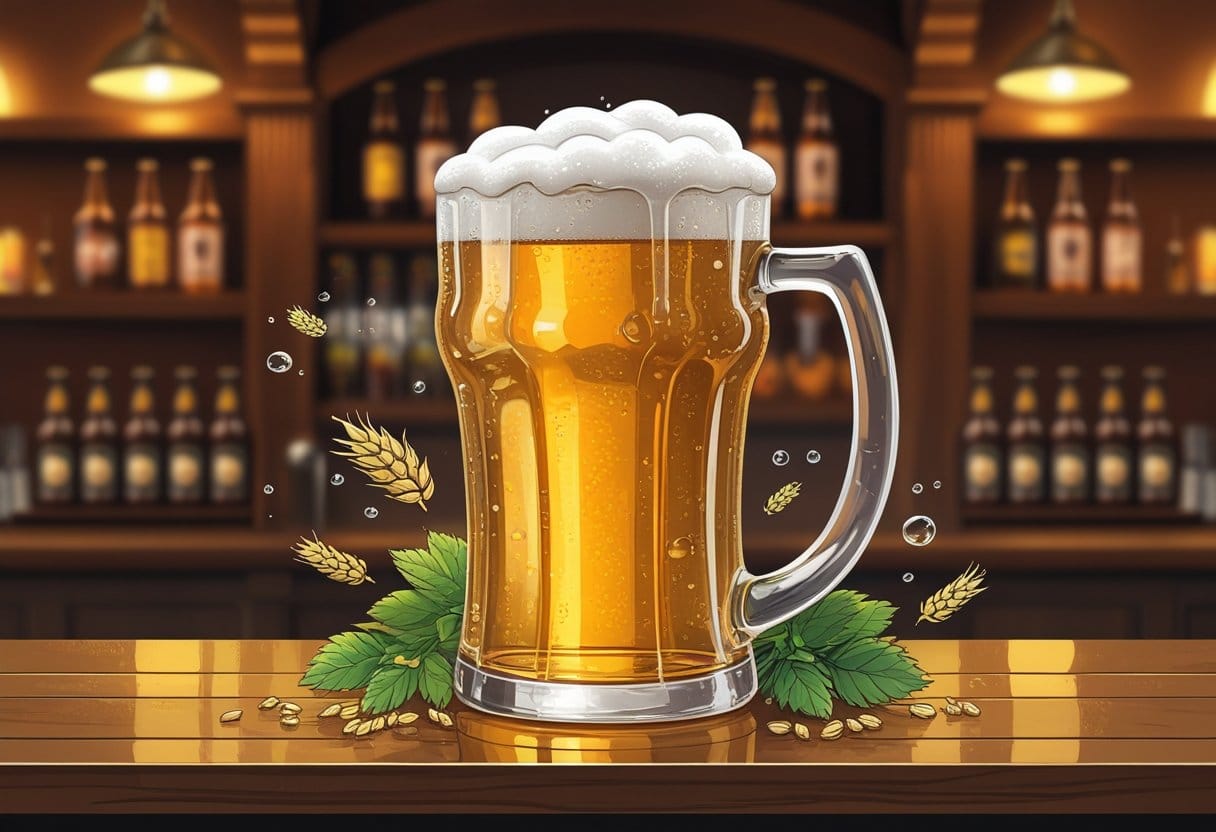
Duff Beer is an American pilsner-style beer with a moderate alcohol content. It is known for its cult status linked to The Simpsons, but its flavour profile remains more subdued.
Taste profile and style of the beer
Duff Beer belongs to the category of light lagers. Its alcohol content is approximately 4.9%.
It is drunk chilled, making it ideal for summer.
On the palate, it offers a mild flavour dominated by cereals. A slight fruity or caramelised note can sometimes be detected, but without any strong intensity.
The hops make a brief appearance in the finish. The beer leaves a fairly neutral impression.
Visually, it has a clear, golden colour, similar to American industrial lagers.
It recalls major mass-market brands such as Budweiser, staying true to the series’ parody.
Opinions of enthusiasts and critics
Craft beer enthusiasts find Duff Beer unremarkable. They note its lack of character and compare it to a standard mass-market lager.
A wider audience enjoys it in convivial settings. Its lightness and subtle flavour make it ideal for barbecues or occasional consumption.
Some consumers buy it mainly for its cultural and symbolic appeal. The red packaging with the Duff logo attracts Simpsons fans and contributes to its commercial success.
The cultural impact of beer in The Simpsons

Beer plays a central role in the world of The Simpsons, particularly through the fictional brand Duff and Homer’s relationship with it. It serves as a source of comedy and social commentary, and reflects American popular culture.
The Duff as a symbol of the series
Duff is not just a drink in The Simpsons. It is a recurring element that defines Homer Simpson.
Always presented as his favourite beer, it appears in almost every moment of relaxation, at Moe’s bar or during the character’s moments of weakness.
Breweries have launched real versions of Duff in Germany, Mexico and Europe. They have turned a television joke into a consumer product.
This broadcast demonstrates the impact of the series on global culture.
Duff also serves as satire. It criticises the mass alcohol industry by showing dubious production methods, sometimes in poorly maintained factories.
It highlights Homer’s addiction and the trivialisation of beer consumption in American society.
References and parodies in pop culture
Beer in The Simpsons is not limited to Duff. The writers use it to parody historical events and cultural references.
The episode Homer the Beer Baron provides an example of this, with a plot inspired by American prohibition and characters such as Eliot Ness.
Moe transforms his bar into a speakeasy, the police use weapons from the 1930s, and some scenes are reminiscent of films such as Once Upon a Time in America.
This blend of history and fiction anchors the series in popular culture.
Screenwriters play on cultural stereotypes, particularly during St Patrick’s Day celebrations where beer flows freely.
These scenes reinforce the image of the drink as a narrative driver and tool for satire.
Some of Homer’s lines about beer have become famous. They are often repeated in the media and are among the most memorable quotes from television.
This demonstrates the lasting impact of a simple comic device on popular culture.
Other American beers popular in French culture
American beers occupy a special place in the French market. Their image, conveyed by the media and popular culture, plays an important role.
Certain brands stand out due to their widespread distribution. They are associated with an accessible and user-friendly style of consumption.
The appeal of American beer in France
France remains committed to its brewing traditions. However, for several decades now, it has been opening up to imported beers.
American beers are popular because they are convenient, affordable and feature in films, television programmes and adverts.
Among them, Budweiser, often referred to as Bud, occupies an important place. It can be found in many bars, supermarkets and festivals.
Its reputation is based on its simple taste and global marketing strategy.
French consumers associate these beers with a relaxed atmosphere. They are easy to share at concerts, student parties or sporting events.
This aspect contributes to their success with a young, urban audience.
Other American brands such as Miller and Coors sometimes appear on the shelves. However, they remain less prominent than Bud.
Their presence broadens the choice and reinforces the image of American beer as a symbol of conviviality.
Comparison with other iconic brands
American beers such as Bud are distinguished by their industrial approach. Their mass distribution aims to appeal to the widest possible audience, with a mild taste and low bitterness.
This makes them very different from French or Belgian craft beers, which often offer more complex flavours.
In France, beer enthusiasts often compare Bud to popular European brands such as Heineken or Carlsberg. These beers adopt a similar strategy: large-scale production and high advertising visibility.
They also offer competitive prices.
A comparative table illustrates these differences:
| Brand | Origin | Main style | Popularity in France |
|---|---|---|---|
| Budweiser | United States of America | Blonde lager | Very widespread |
| Heineken | Netherlands | Blonde lager | Very widespread |
| Carlsberg | Denmark | Blonde lager | Common |
Is Duff Beer a real product today?
Yes — with some nuance. Several producers launched Duff-branded beers from the 1990s onward. The best-known official version was produced under 20th Century Fox license: launched in 2014 in Germany and Australia, it’s now available in roughly twenty countries. It’s a bottom-fermented lager at around 4.9% ABV — straightforward, with no great complexity, but consistent with the show’s populist image.
Unofficial versions existed before 2014 (notably in Chile and Brazil), leading Fox to pursue trademark infringement cases. The situation became a studied example in trademark law: can a fictional brand be registered and protected? Courts said yes, if the rights holder can demonstrate sufficient notoriety.
Why Homer Simpson changed how TV treated beer
Before The Simpsons, American television’s portrayal of beer was either neutral or tied to negative behavior. Homer introduced a character who drinks daily without being framed as an alcoholic — just someone who enjoys a beer after work. A 2001 University of Michigan study cited in several cultural studies papers noted that The Simpsons contributed to normalizing beer consumption as ordinary leisure, distinct from problem drinking.
Duff Beer appears in over 200 episodes across the first 35 seasons. Homer drinks in roughly 60% of episodes — a narrative consistency that embedded the beer/relaxation association for multiple generations of viewers.
Frequently Asked Questions
Does Duff Beer really exist?
Yes! Several official versions have existed since 2008. 20th Century Fox granted licences in Germany (Duff Beer Eichbaum), Mexico (Pacífico), the United States (notably for the Springfield opening at Universal Studios), and elsewhere. Product success remains limited to collector effect.
How many Simpsons episodes mention Duff?
More than 300 episodes contain a Duff Beer reference, out of 750+ episodes since 1989. It’s the most-cited recurring element after the family itself. Duff even has an official mascot, Duffman, first appearing in Season 5 (1993).
What real brand inspired Duff?
None officially. Matt Groening (Simpsons creator) said he was inspired by a fictional beer from the film Repo Man (1984) where all cans were simply marked ‘BEER’. The name ‘Duff’ is intentionally generic. Visual designs (red and white can) evoke Budweiser and Coors without imitating one specifically.
Can you visit Moe’s Tavern in real life?
Yes, at Universal Studios Florida and Hollywood. The Springfield area faithfully reproduces Moe’s Tavern with menu, atmosphere and Duff Beer served. At Florida, you can taste three versions: Duff Lite, Duff Dry and classic Duff. It’s the most immersive official Simpsons experience.
Is there a real Duff Beer in stores?
Sporadically. Various retailers have sold official Duff in limited editions (collector). Distribution remains irregular. The sought-after item is often new vintage on resale platforms like eBay.
🍻 Explore our beers
Over 1,000 craft beers listed, with a comparator and nutritional info.
Browse the full catalogue →