 Beer Galaxy
Wild boar in beer is prepared by marinating 1.5 kg of boar shoulder for 24 hours in 1 L of dark beer with carrots, onions, juniper berries and thyme, then slow-cooking for 3 hours. The beer softens the strong taste of game and brings roundness and light bitterness. A traditional hunter’s dish, served with spätzle or celeriac purée.
This is a tasty stew where the marinade and slow cooking transform the meat into a tender and fragrant dish.
This dish is ideal for lovers of local cuisine and those who want to discover a simple way to prepare game. The beer adds an aromatic depth that varies depending on the type chosen: lager, amber or stout.
Every detail, from the marinade to the spices to the slow cooking, plays an essential role in creating a delicious dish.
Essential ingredients for wild boar in beer
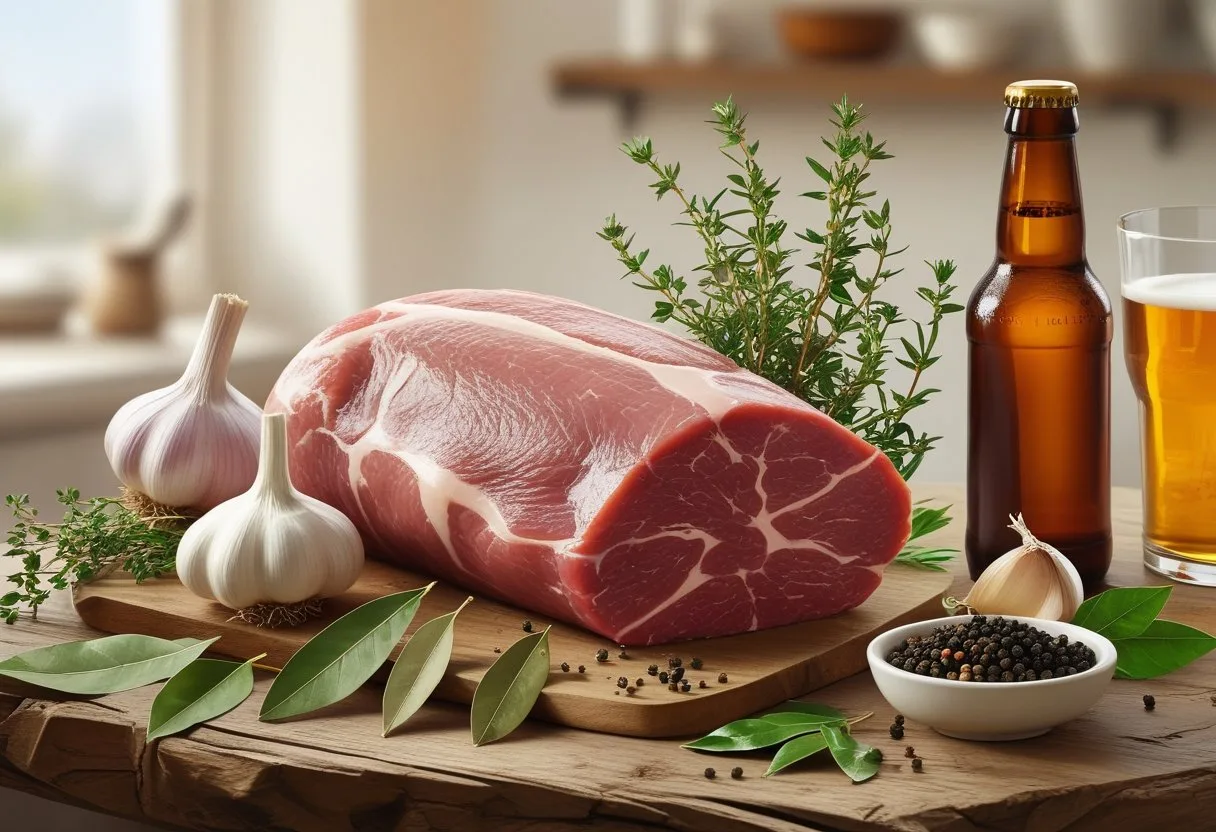
The success of wild boar cooked in beer depends on the quality of the meat, the choice of beer, the vegetables used and the spices. Each ingredient has its own function: tenderness, flavour or aromatic depth.
Selection of wild boar
The choice of cut of meat influences the texture and flavour. Shoulder and roast are the most common, as they offer a good balance between lean and fat.
The shoulder is well suited to slow cooking methods such as stews. A young wild boar, known as a marcassin, produces meat that is more tender and less strong in flavour.
Older animals offer a more pronounced flavour, ideal for those who enjoy hearty dishes. Cut the meat into even pieces for even cooking.
Before cooking, marinate the meat in beer, onion and a bouquet garni to tenderise it and reduce any bitterness.
Choice of beer
Beer acts as a tenderiser and flavour enhancer. A dark beer adds notes of caramel and roasted flavours, perfect for balancing the strength of game.
An amber beer offers a compromise between sweetness and bitterness. Use enough beer to cover the meat and allow for slow cooking.
In general, allow between 70 cl and 1.5 l depending on the size of the dish. Avoid beers that are too hoppy, as they may add too much bitterness.
A local craft beer, slightly malty, goes well with this recipe.
Main vegetables and herbs
The vegetables give the sauce structure and add sweetness. The carrots add a sweet note that balances the meat.
Onions and garlic add depth and enhance the rustic character of the dish. The bouquet garni (thyme, bay leaf, parsley) remains essential for infusing subtle aromas.
These herbs flavour the sauce without masking the beer. Fry the vegetables in olive oil or butter before adding the meat.
This step develops more rounded flavours and gives the sauce a solid aromatic base.
Spices and seasonings
Seasonings should remain simple. Salt and pepper form the basis, to be adjusted during cooking.
Add a touch of nutmeg or cloves to enhance the aromatic complexity. Some thicken the sauce with a little flour at the beginning of cooking.
This method gives a creamier texture. Taste regularly and adjust at the end of cooking.
A balanced blend highlights each ingredient without masking the subtlety of the game.
Preparation of the marinade
The marinade gives the wild boar a more tender texture and a balanced flavour. It combines beer with vegetables and spices to flavour the meat and soften its strength.
Steps for marinating
Start by cutting the wild boar meat into even pieces. This allows for better absorption of the flavours.
Place the pieces in a large non-metallic container. Add vegetables such as quartered onions, sliced carrots and a few crushed garlic cloves.
These ingredients add sweetness and balance. Then add the spices and herbs: cloves, bouquet garni, salt and pepper.
Pour in the beer until the meat is completely covered. Choose a dark or amber beer for its rich aroma.
Add a dash of olive oil to soften the flavours. Cover and refrigerate.
Optimal rest time
Leave the meat to marinate for at least 12 hours so that the beer and herbs can soak into the flesh. For a more pronounced flavour, leave it in the marinade for 24 to 48 hours.
This time allows the fibres to relax and makes cooking more even. Always keep the mixture in the refrigerator to avoid any health risks.
Cover the container tightly to preserve the flavours and prevent oxidation. Before cooking, drain the meat and strain the marinade.
Reuse the vegetables and herbs, then heat the liquid to incorporate it into the sauce.
Role of ingredients in the marinade
Each ingredient has its own function. Beer tenderises thanks to its slight acidity and provides a malty base.
Onions and carrots soften the strength of game with their natural sugar. Garlic adds a lively, fragrant note.
The bouquet garni structures the whole with herbaceous notes. Cloves reinforce the aromatic depth.
Salt and pepper balance the flavour. Olive oil softens and coats the flavours.
These ingredients combined create a complete marinade to prepare the meat for slow, flavourful cooking.
Cooking wild boar in beer
Cooking wild boar in beer requires slow preparation to tenderise the meat and develop the flavours. Master the casserole dish, sear the meat and work on the sauce to achieve a balanced dish.
Using the casserole dish
A cast iron casserole dish is the ideal utensil. It distributes heat evenly and retains moisture.
This helps to keep the meat tender and prevents it from drying out. Fry the onions in butter or olive oil to create an aromatic base.
This base will then flavour the beer and meat. Next, place the pieces of wild boar in the casserole dish.
Add the beer to cover at least half of the meat. Keep the lid closed during cooking.
This method limits evaporation and concentrates the flavours. Cook for at least 1½ hours on a low heat for a soft texture.
Techniques for searing and simmering
Searing is a key step before simmering. Brown the pieces of wild boar in butter or oil.
This reaction caramelises the surface and intensifies the flavour. After searing, deglaze with a little beer to loosen the juices.
Simmering is done over a low, constant heat. The beer tenderises the meat thanks to its bitterness and bubbles.
The meat gradually absorbs the flavours while becoming more tender. Add the carrots after the initial cooking phase.
This ensures that the vegetables retain a pleasant texture without turning into purée.
Thickening the sauce
After cooking the meat, the sauce may seem too runny. You can thicken it by adding a little flour or cornflour.
Mix the flour or cornflour with a little cold water, then add it to the casserole dish.
You can also remove the lid at the end of cooking. Evaporation reduces the sauce and concentrates the flavours of beer, onions and meat.
Some people add a knob of butter at the end. This adds shine and softens the bitterness of the beer.
The balance between creaminess and aromatic intensity depends on the reduction time. The longer the sauce simmers gently, the more depth it gains without masking the flavour of the wild boar.
Variations on wild boar recipes with beer
These dishes are distinguished by their cooking method and the presence of aromatic ingredients such as onion, garlic or carrot. The beer tenderises the meat and adds a slightly bitter note.
Wild boar stew with beer
The wild boar stew with beer begins with a marinade prepared the day before. Cut the meat into pieces, cover it with sliced onions, sliced carrots, garlic and a bouquet garni.
Pour beer over everything. Sometimes mustard or honey is added to soften the bitterness.
The next day, drain the meat and brown it in a casserole dish. Fry the vegetables from the marinade in a little fat, then add the meat and the reserved liquid.
Cook over low heat for several hours. The meat will become tender.
Choose an amber or brown beer for more depth. Serve this dish with steamed potatoes or fresh pasta.
Roast wild boar with beer
Beer-roasted wild boar is best prepared using a whole cut, such as a leg or boneless shoulder. The meat can be marinated with onions, garlic, carrots and bouquet garni, then basted with beer.
This step adds flavour and tenderises the roast. Cook the meat in the oven or in a casserole dish.
Start by searing the meat to form a crust. Continue cooking over low or moderate heat, basting regularly with the beer and juices.
The meat becomes tender, flavourful and easy to slice. Serve it with a reduced sauce obtained by straining and thickening the cooking juices.
Wild boar stew with beer
Wild boar stew with beer resembles a ragout, but blood or, more commonly today, flour is added to achieve a creamy sauce. Cut the meat into pieces and simmer it for a long time with onions, carrots, garlic and a bouquet garni.
Beer replaces or complements red wine in classic stew recipes. It adds a milder, slightly caramelised flavour after reduction.
Cooking often takes more than two hours to achieve a melt-in-the-mouth texture. Serve this dish hot with fresh pasta, mashed potatoes or braised red cabbage.
Tips for enhancing the dish
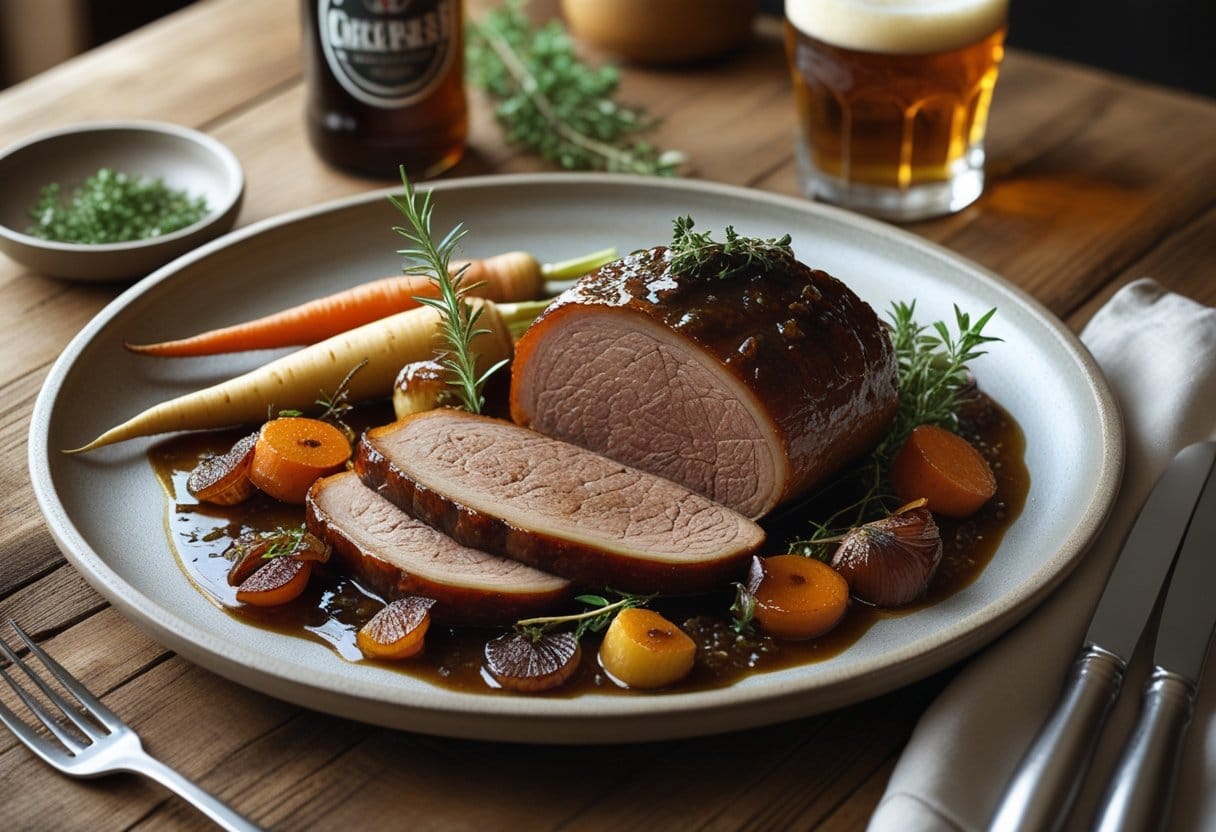
The success of a wild boar cooked in beer depends on precise techniques and the right ingredients. It is important to balance the strength of the meat with the mildness of the accompaniments.
Chef’s tips
Prepare the meat carefully before cooking. Marinate it for several hours or overnight in beer with herbs and spices to tenderise it and add flavour.
Sear the meat in a little olive oil or butter to develop rich juices. Then deglaze with beer to enhance the sauce and add a caramelised note.
Season gradually with salt and pepper, especially if the marinade already contains salty ingredients. Add vegetables such as onions, carrots or mushrooms at the beginning of cooking to create a solid aromatic base.
Simmer gently over low heat for several hours to obtain tender, flavourful meat. Let rest for a few minutes before serving so that the meat retains its juices.
Food and wine pairings
Wild boar cooked in beer pairs well with full-bodied yet supple red wines. Wines from south-western France, such as Cahors or Madiran, are ideal, as their tannins complement the richness of the game.
A wine that is too light will be overwhelmed by the strength of the dish. A wine that is too tannic can make the flavours harsh.
Go for a balance between structure and roundness. To stay in the world of beer, choose a dark or amber beer, slightly malty, which complements the sauce.
Recommended accompaniments
Serve the beer-braised wild boar with simple but tasty accompaniments. Butter-roasted potatoes, root vegetable purées or fresh pasta absorb the sauce well and soften the strength of the game.
Seasonal vegetables also provide a good balance. Serve glazed carrots, braised cabbage or mushrooms sautéed in olive oil to add freshness and contrast.
For a rustic touch, serve the dish with lightly toasted country bread. This bread allows you to enjoy the sauce without making the dish too heavy.
Storage and reheating
Wild boar cooked in beer keeps well if stored correctly. Reheating it properly preserves the tenderness of the meat and the richness of the sauce.
Storage of the dish
Allow the dish to cool before placing it in the refrigerator. Transfer the meat and sauce to an airtight glass or stainless steel container.
This type of container limits oxidation and prevents the absorption of external odours. Wild boar can be stored in the refrigerator for 3 to 4 days without any loss of quality.
For longer storage, freeze the dish. Divide it into portions before freezing to make it easier to defrost.
Use vacuum bags or boxes suitable for freezing. The shelf life is then 2 to 3 months.
Label each container with the date to better manage your stock.
Tips for reheating without altering flavours
Slow reheating preserves the texture of the meat. Return the dish to a casserole dish over a low heat with a lid on.
Add a little stock or water if the sauce has thickened. This method keeps the meat tender and prevents it from drying out.
Place the covered dish in the oven at 140–150°C for 20 to 30 minutes. This will ensure that the heat remains uniform.
For small portions, use a saucepan. This option is quick and efficient.
The microwave can help out. Use it on low power and in short bursts, stirring regularly.
This will help you avoid areas that are too hot or too cold. Leave to rest for a few minutes before serving to allow the flavours to settle.
Which beer works best for wild boar?
Wild boar has firm, dark, intensely flavored meat — bolder than pork or beef. It can handle beers with real character. A dark malty ale (Chimay Blue, Rochefort 8, Westmalle Dubbel) brings caramel, dried fruit, and a slight bitterness that balances the gamey depth. A strong amber ale (7–9% ABV) produces a less complex but well-balanced result.
Avoid light lagers (too neutral — they disappear against the boar’s intensity) and aggressively hopped IPAs (bitterness concentrates over a 3-hour braise and can become harsh). The principle is the same as with other strong-flavored meats: the beer needs at least as much personality as the meat.
To marinate or not?
Marinating wild boar is a genuine question. Traditionally, game is marinated 12–48 hours in red wine, herbs, and aromatic vegetables to tenderize the meat and soften the gamey flavor. The same logic applies with beer: a 12–24 hour marinade in a dark ale with onions, carrots, juniper berries, and thyme works well for young or strong-tasting boar.
For farmed wild boar or marcassin (young boar, paler and milder), you can skip the marinade. The practical test: if the raw meat has a strong, pungent smell, marinate it. If it smells like wild pork but not ammoniacal, cook it directly.
The recipe: wild boar in beer
⏱ Prep 45 min (+ 24h marinade) · 🔥 Cook 3h30 · 🍽 Serves 6 servings · 🥩 Difficulty Hard
Ingredients
- 1.5 kg wild boar shoulder or leg, cubed
- 750 ml Belgian dark abbey ale (Chimay Bleue)
- 200 ml red wine vinegar
- Mirepoix: 2 onions, 2 carrots, 2 celery sticks
- 5 juniper berries
- 10 black peppercorns
- 2 cloves
- 1 bouquet garni (thyme, bay, rosemary)
- 200 g smoked lardons
- 300 g forest mushrooms
- 100 g cooked chestnuts
- 1 tbsp brown sugar
- 2 tbsp flour
- 50 g dark chocolate 70% (optional finish)
- 50 g butter + 3 tbsp oil
- Salt, pepper
Steps
- Marinate 24 hours. Place boar cubes in a large bowl with beer, vinegar, mirepoix, spices and bouquet garni. Cover and refrigerate 24 hours.
- Drain and dry. Strain the marinade, reserving liquid and vegetables separately. Dry the meat thoroughly.
- Sear the meat. Brown boar cubes in butter and oil. Season. Reserve.
- Sweat marinade vegetables. Sauté reserved mirepoix 10 minutes with lardons.
- Singer. Return meat, sprinkle with flour and brown sugar. Caramelise 3 minutes.
- Add liquid. Pour strained marinade. Top with water if needed to cover.
- Simmer. Cover and cook on very low heat 3 hours (or oven at 140 °C / 285 °F).
- Sauté mushrooms. 30 min before end, sauté forest mushrooms in butter. Add to pot with chestnuts.
- Finish. Off heat, stir in grated dark chocolate to enrich the sauce (optional but traditional). Adjust seasoning.
- Serve. With celeriac purée, spätzle or fresh tagliatelle. A dark beer alongside.
Frequently Asked Questions
Why marinate boar for 24 hours?
Wild boar flesh is firm with a pronounced gamey flavour. A long marinade (24h) tenderises the fibres, softens the wild bitterness and allows beer, spice and herb aromas to penetrate deeply.
Which cut of wild boar is best?
Shoulder, leg or neck are ideal: firm cuts with collagen that hold up to long cooking and become tender. Avoid the tenderloin — too lean and delicate for a stew.
Which dark beer should I use?
A strong Belgian dark abbey ale (8-10% ABV) like Chimay Bleue, Rochefort 8 or Westmalle Dubbel. Its strength balances the game and brings intense malty, roasted notes.
What does dark chocolate do at the end?
Dark 70% chocolate is a traditional finish for game civets. It doesn’t sweeten the dish: it binds the sauce, deepens roasted notes and softens residual marinade acidity. Plan 50-80 g for 1.5 kg of meat.
🍻 Explore our beers
Over 1,000 craft beers listed, with a comparator and nutritional info.
Browse the full catalogue →