 Beer Galaxy
Yes, most beers contain gluten, as they are brewed from grains such as barley, wheat or rye. A regular beer typically contains 1,000 to 40,000 ppm of gluten, far above the 20 ppm threshold (EU standard) that defines a “gluten-free” product. People with coeliac disease should therefore choose beers specifically labelled gluten-free — either brewed from gluten-free grains (sorghum, rice, millet) or de-glutenised with enzymes.
People who need to limit or avoid gluten due to coeliac disease or sensitivity should be careful with beer. The gluten content varies depending on the type of beer and brewing methods, which can sometimes make it difficult to choose.
Some beers are made with gluten-free grains. Others use specific processes to reduce the amount of this protein.
What is gluten in beer?
Gluten is a natural protein found in certain cereals used for brewing. Beer often contains gluten because it is produced from grains such as barley or wheat.
These grains release specific proteins during fermentation.
Definition of gluten
Gluten is a group of proteins found in wheat, barley and rye. These proteins ensure the elasticity and cohesion of pasta.
It consists mainly of two families: gliadins and glutenins in wheat, and equivalents such as hordein in barley or secalin in rye.
In food, gluten retains gas during fermentation. This gives products volume and a distinctive texture.
For people who are sensitive or suffer from coeliac disease, even small traces of gluten can trigger reactions. The presence of gluten in beer therefore requires particular vigilance. Gluten is not the only compound worth checking: sulfites in beer raise the same kind of question for sensitive drinkers.
Origin of gluten in beer
Beer is mainly made from barley malt. Some recipes also use wheat, particularly for white beers.
These cereals are naturally rich in gluten.
During brewing, the malt becomes wort, which is then fermented by yeast. Fermentation modifies certain proteins, but does not completely destroy gluten.
Some beers labelled as gluten-free use naturally gluten-free grains such as sorghum, rice or maize. Others reduce the gluten content through enzymatic processes.
Analyses show that some beers labelled “gluten-free” still contain detectable traces. This can be a problem for people who are strictly intolerant.
Responsible proteins and affected cereals
The proteins at risk belong to the prolamin family. Each cereal contains a variant:
- Wheat → gliadin
- Barley → hordein
- Rye → secalin
These proteins are partially resistant to mashing and fermentation. They therefore remain present in traditional beer.
Wheat is mainly used in wheat beers. Barley remains the basis for most traditional beers.
Rye, which is less common, is used to produce certain craft beers.
Beers made from alternative grains such as corn, rice or buckwheat do not contain gluten. They offer a safer option for people with sensitivities.
Gluten content according to beer type
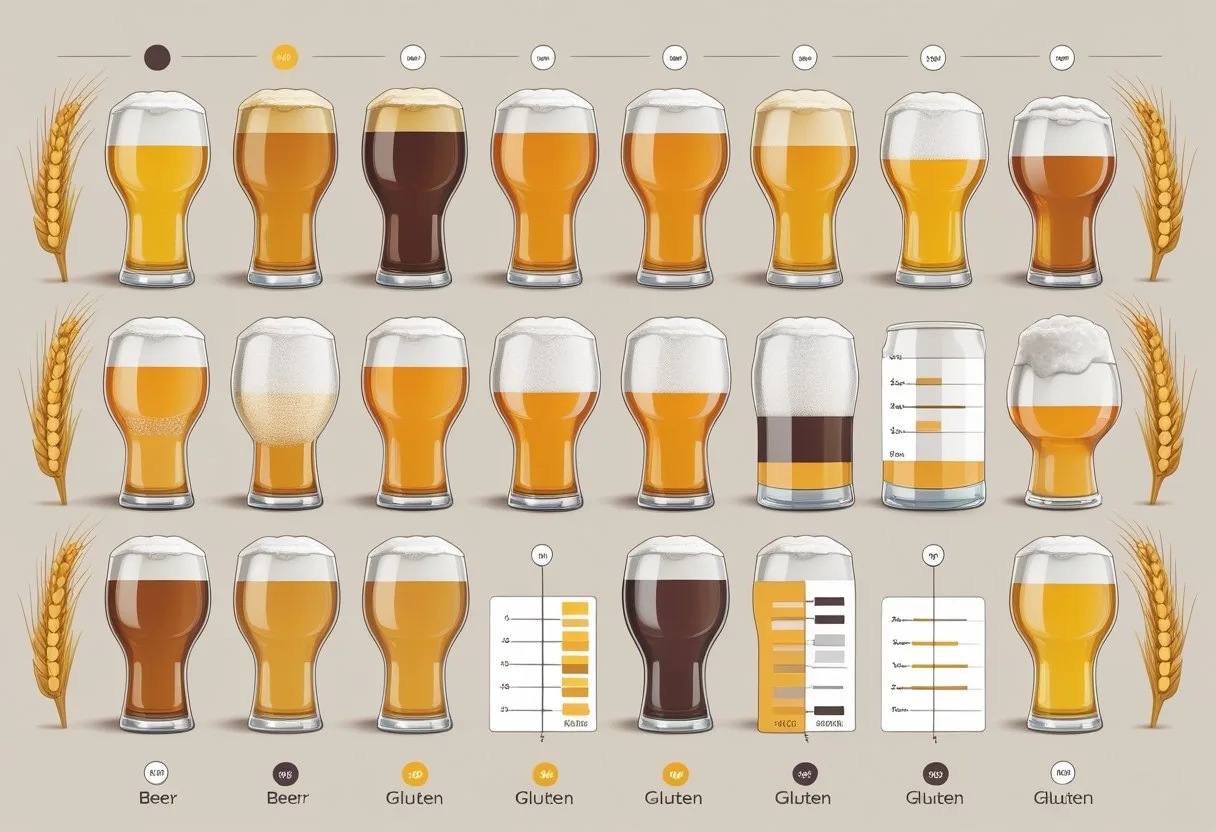
The amount of gluten varies depending on the style of beer. Some types have low levels, while others far exceed the thresholds tolerated by people who are sensitive or have coeliac disease.
Lager and its gluten levels
Lagers are among the most widely consumed beers in the world. They are usually brewed from malted barley, which gives them gluten.
On average, lager contains around 60 ppm of gluten. This level exceeds the 20 ppm limit set for a drink to be considered gluten-free in Europe.
Some “gluten-free” versions exist thanks to the addition of enzymes or the use of alternative cereals such as rice or maize.
Bores and their composition
Ales often use a high proportion of malted barley. This increases the gluten concentration.
Measurements indicate an average of approximately 3,000 ppm for certain traditional ales. This figure far exceeds safety thresholds.
Some craft ales use alternative grains, but the majority remain very high in gluten. The only suitable options are ales specifically brewed without gluten, often made from sorghum or buckwheat.
Stout: characteristics and risks
Stouts are dark beers made from heavily roasted malt. This process gives them a distinctive coffee and chocolate flavour.
A classic stout contains an average of 300 to 400 ppm of gluten. This level remains very high for anyone who is sensitive to gluten.
Stouts often use large quantities of roasted barley. This explains the high content.
Some breweries offer “de-glutenised” stouts, but they are less common than blonde or light versions.
Wheat beer and gluten concentration
Wheat beer, or Weissbier, generally combines wheat and barley, two major sources of gluten. Analyses show extremely high levels, reaching over 25,000 ppm.
Wheat provides a soft texture and fruity aromas, but it significantly increases the gluten content.
Even a small amount of this type of beer can cause severe symptoms in sensitive individuals.
There are very few gluten-free versions of wheat beer, as replacing the main grain completely changes the nature of the drink.
Health risk: coeliac disease and intolerance
Consuming beer containing gluten can cause serious health problems in some people. Reactions vary depending on whether it is an autoimmune disease such as coeliac disease or a non-coeliac sensitivity.
Coeliac disease and gluten reactions
Coeliac disease is an autoimmune disorder triggered by the ingestion of gluten. Wheat, barley and rye contain this gluten.
When these proteins reach the small intestine, they trigger an abnormal immune response. This damages the intestinal lining and reduces the ability to absorb nutrients.
Those affected must follow a strict gluten-free diet. Even a small amount, such as that found in a sip of traditional beer, can cause intestinal damage.
Coeliac disease involves a specific and lasting immune response. Long-term consequences include chronic malabsorption, unintentional weight loss, persistent anaemia and sometimes bone complications such as osteoporosis.
Non-coeliac gluten sensitivity
Some people experience symptoms related to gluten consumption without having coeliac disease. This is referred to as non-coeliac gluten sensitivity.
Blood tests and intestinal biopsies do not show the lesions characteristic of coeliac disease. The symptoms disappear when gluten is removed from the diet.
The exact mechanisms remain poorly understood. It is not an autoimmune reaction, but rather a response by the body that causes digestive discomfort and sometimes extra-digestive effects.
Those affected can tolerate small amounts of gluten, but many choose to avoid barley-based beer. The risks of serious long-term complications appear to be low, but quality of life can be significantly affected.
Symptoms and health effects
Gluten-related symptoms vary depending on the condition. In coeliac disease, they include:
In non-coeliac sensitivity, the signs are often similar but less severe. They may also include headaches, joint pain or a feeling of mental fogginess.
The severity of symptoms depends on the amount of gluten consumed. Individual sensitivity also plays a role.
A single beer containing gluten may be enough to trigger a reaction. This remains true even if the beer contains less gluten than other foods.
Beer brewing and its impact on gluten
The brewing process influences the presence and transformation of gluten. The cereals, fermentation stages and production conditions determine whether the final beverage still contains proteins that are problematic for sensitive individuals.
Traditional brewing process
Traditional brewing involves malting, mashing, fermentation and maturation. In most cases, malted barley is used as the base.
Soaking and germination activate enzymes. Drying fixes the aromas.
During mashing, enzymes break down the starch into fermentable sugars. The gluten proteins from barley or wheat do not disappear entirely.
They break down into smaller peptides, but these fragments remain present in the beer.
Yeast converts sugars into alcohol and carbon dioxide during fermentation. This step does not remove gluten.
Even after clarification and filtration, traces of gluten remain. Traditional beer is therefore not suitable for people with coeliac disease.
Role of ingredients: barley, wheat, rye, hops, yeast
Barley, wheat and rye all contain gluten. Their use in brewing explains the presence of this protein in most beers.
Barley is the most common. Wheat is used in certain wheat beers and rye in more specific recipes.
Hops add bitterness and aroma. They do not contain gluten.
Yeast plays an essential role in fermentation. It converts sugars into alcohol and influences the taste, but it does not add gluten.
The problem therefore stems solely from the cereals used.
| Ingredient | Does it contain gluten? | Main role |
|---|---|---|
| Barley | Yes | Malt base |
| Wheat | Yes | Body, texture |
| Rye | Yes | Spicy flavour |
| Hops | No | Bitterness |
| Yeast | No | Fermentation |
Cross-contamination during brewing
Even when a beer is designed to be gluten-free, the risk of cross-contamination remains high. This occurs when equipment or storage areas are used for both gluten-containing grains and gluten-free alternatives.
Residues of malt or flour may remain in vats, pipes or packaging systems. Incomplete cleaning is enough to contaminate a new production run.
Some breweries use separate facilities to limit this risk. Others apply strict protocols for cleaning and separating raw materials.
Storage and transport must also be monitored to prevent any contact between products.
Even a small amount of gluten can cause problems for people with coeliac disease.
Gluten-free beers: alternatives and production
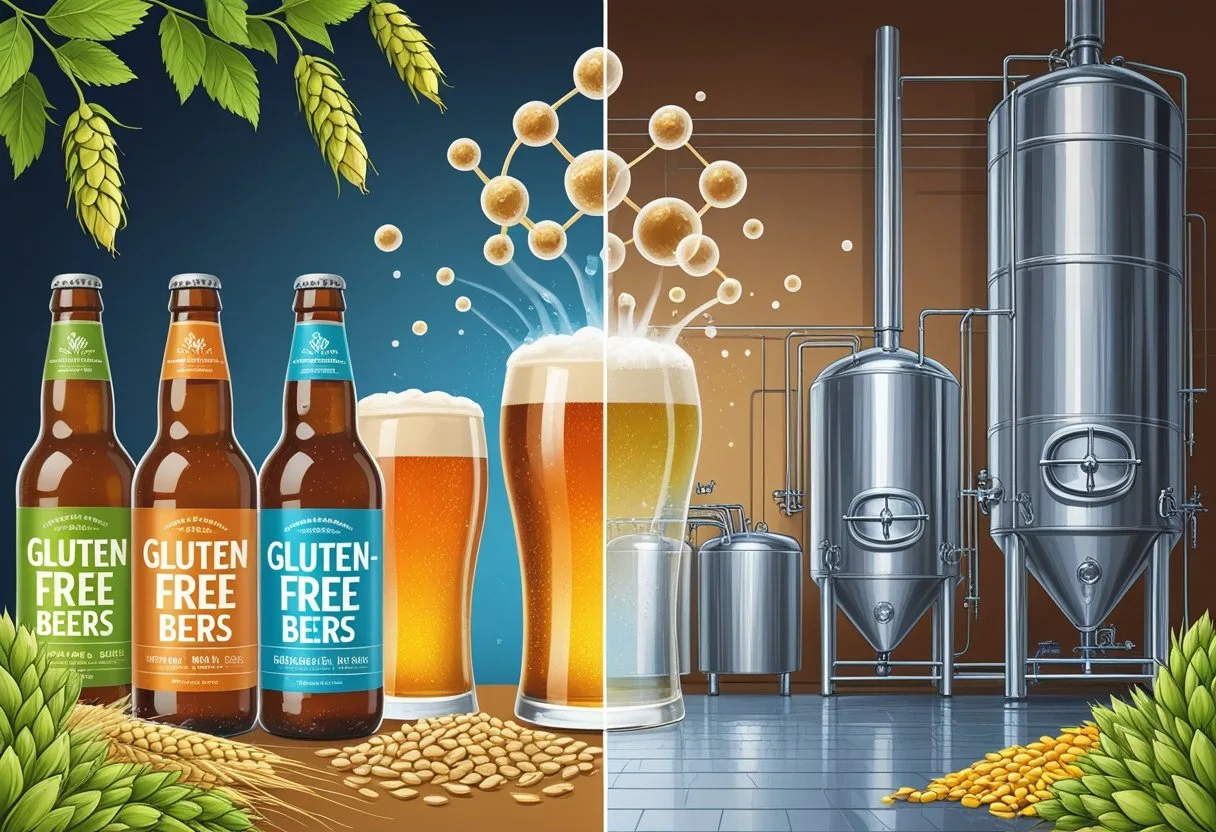
Brewers can produce gluten-free beers by choosing naturally gluten-free grains. They can also remove gluten after brewing.
The safety of these beers is based on precise laboratory controls. These controls guarantee levels below regulatory thresholds.
Gluten-free cereals used
Brewers are replacing barley and wheat with gluten-free grains. The most common are rice, maize, millet, buckwheat, sorghum and quinoa.
These cereals offer different flavour profiles. For example:
- Rice produces a light, neutral beer.
- Corn adds sweetness.
- Buckwheat offers more rustic notes.
- Sorghum has a slightly tart flavour and is often used in Africa.
The choice of grain influences the colour, foam and taste. Some craft breweries combine several grains to balance texture and aromas.
This method produces a beer that is 100% gluten-free. It is suitable for people with coeliac disease.
Methods of deglutenisation
Another approach involves brewing with barley or wheat and then reducing the gluten during fermentation. Brewers add specific enzymes to break down the gluten proteins into smaller components.
This technique preserves the traditional flavour of barley-based beers. It does not always guarantee a total absence of gluten.
Residues may vary depending on the process and the precision of the treatment.
These beers are sometimes labelled as low-gluten beers. They are suitable for people who limit their gluten intake but are not always safe for people with coeliac disease.
Safety and controls in the laboratory
European regulations set the threshold at 20 mg of gluten per kilogram for a beer to be considered gluten-free. Specialised laboratories use tests such as ELISA to measure the presence of gluten.
Breweries regularly analyse their batches to ensure compliance. Checks are carried out on raw materials, the finished product and sometimes even equipment to prevent cross-contamination.
How to choose a reliable gluten-free beer
To find a suitable gluten-free beer, you need to check the information on the label. It is also important to know which brands offer safe products — Estrella Damm Daura, brewed in Barcelona, is one of the best-known examples.
Limiting the risk of cross-contamination when purchasing or serving beer remains essential. These points help people who are sensitive or intolerant to consume beer safely.
Labelling and certifications
A beer is considered gluten-free when it contains less than 20 mg of gluten per litre. People with coeliac disease should rely on this information to avoid any risk.
Reliable labels often display the crossed-grain symbol, certified by the Coeliac Association. This symbol guarantees that the product has been tested and complies with official limits.
Some beers also mention “gluten removed” or “gluten-free de-alcoholised beer”. In this case, caution is advised, as the method used to reduce gluten can vary and does not always ensure perfect tolerance for those who are most sensitive.
Carefully reading the list of ingredients remains essential. If barley malt or wheat appears without any mention of specific processing, the beer is not safe for a gluten-free diet.
Brands and examples of gluten-free beers
Several breweries now offer certified gluten-free beers. Among the best known, Estrella Daura (Spain), Daas Blond (Belgium) and Green’s (United Kingdom) are often included in the selections.
Independent tests have shown that beers such as Corona Extra and Bishops Finger have undetectable gluten levels (<10 mg/L). These results offer an interesting alternative, even if they do not always carry official certification.
Some non-alcoholic beers are also available in gluten-free versions, such as Ambar Especial Sin Gluten. They are suitable for consumers who want to limit both alcohol and gluten.
It is advisable to consult specialised databases or test guides. Gluten content may vary from one brand to another, and even from one batch to another.
Tips for avoiding cross-contamination
Cross-contamination remains a significant risk, especially in bars and restaurants. Beer served in a poorly rinsed glass or from a keg shared with regular beer may contain traces of gluten.
It is better to choose sealed bottles or cans rather than draught beer. This limits contact with contaminated equipment.
At home, use clean glasses reserved for gluten-free beers. Even small amounts of gluten can cause problems for someone with coeliac disease.
When purchasing, check that the beer is stored separately from products containing wheat or barley. Distributors specialising in gluten-free products generally take these precautions.
EU gluten thresholds explained
EU Regulation (EC) No 41/2009 sets two thresholds: below 20 mg/kg for a “gluten-free” label and below 100 mg/kg for “very low gluten.” These apply to the finished product, not the raw ingredients.
One important nuance: a beer brewed from barley can still carry a “gluten-free” label if the enzyme prolyl endoprotease is added during fermentation to break down residual gluten. These “de-glutenized” beers are accepted by most gluten-intolerant people, but not recommended for those with severe celiac disease, for whom only beers brewed entirely from gluten-free grains (rice, millet, buckwheat, quinoa, sorghum) are truly safe.
Practical guide to gluten-free beer choices
Rice and corn-based beers (Corona, Budweiser) are naturally low in gluten — often under 5 ppm — but are not certified gluten-free. Beers specifically formulated without gluten-containing grains offer the highest safety margin for celiac disease.
When a craft beer label says “gluten-free,” it means the product has been tested and confirmed below 20 mg/kg. Serious breweries publish their lab results on request — that level of transparency is a useful quality signal if you’re managing a severe intolerance.
Frequently Asked Questions
Do all beers contain gluten?
No. Traditional barley and wheat beers contain gluten (20-200 ppm). Certified ‘gluten-free’ beers are below 20 ppm (EU/FDA standard). Two types exist: (1) naturally gluten-free beers made from sorghum, millet, rice, buckwheat; (2) classic beers treated with enzymes (Brewers Clarex) to break gluten down.
What’s the legal threshold for ‘gluten-free’?
20 ppm (20 mg/kg) under EU regulation (828/2014) and US FDA. Between 20 and 100 ppm, ‘low gluten’ can be used. Above that, the beer contains standard gluten.
Can a coeliac person drink beer?
Only certified gluten-free beers (< 20 ppm). Enzyme-treated beers (Daura Damm, Brewdog Vagabond Pilsner) remain debated: coeliac medicine recommends caution as residual peptides can trigger a reaction even below threshold. For NCGS (non-coeliac gluten sensitivity), these beers are better tolerated.
Which brands make gluten-free beer?
Daura Damm (Spain, barley + enzymes), New Grist (USA, sorghum and rice), Brunehaut (Belgium, buckwheat), Glutenberg (Canada, multigrain), Greens (UK, sorghum), Bauernhof (Bavaria, millet). Always check the label: ‘gluten free certified’ (< 20 ppm).
Does fermentation destroy gluten?
Partially. Yeast consumes some amino acids but doesn’t degrade complete gluten proteins. That’s why fermented barley beer always contains residual gluten. Enzyme treatment (Clarex) is necessary to break these proteins below the detectable threshold.
🍻 Explore our beers
Over 1,000 craft beers listed, with a comparator and nutritional info.
Browse the full catalogue →