 Beer Galaxy
Coq à la bière is a traditional Northern French dish: a 2 kg rooster slow-cooked for 2 hours in 75 cl of bière de garde or dark beer with bacon, mushrooms, onions, garlic and a bouquet garni. The beer replaces the wine of coq au vin and brings roundness and malty notes. An emblematic dish of the Hauts-de-France and Flanders.
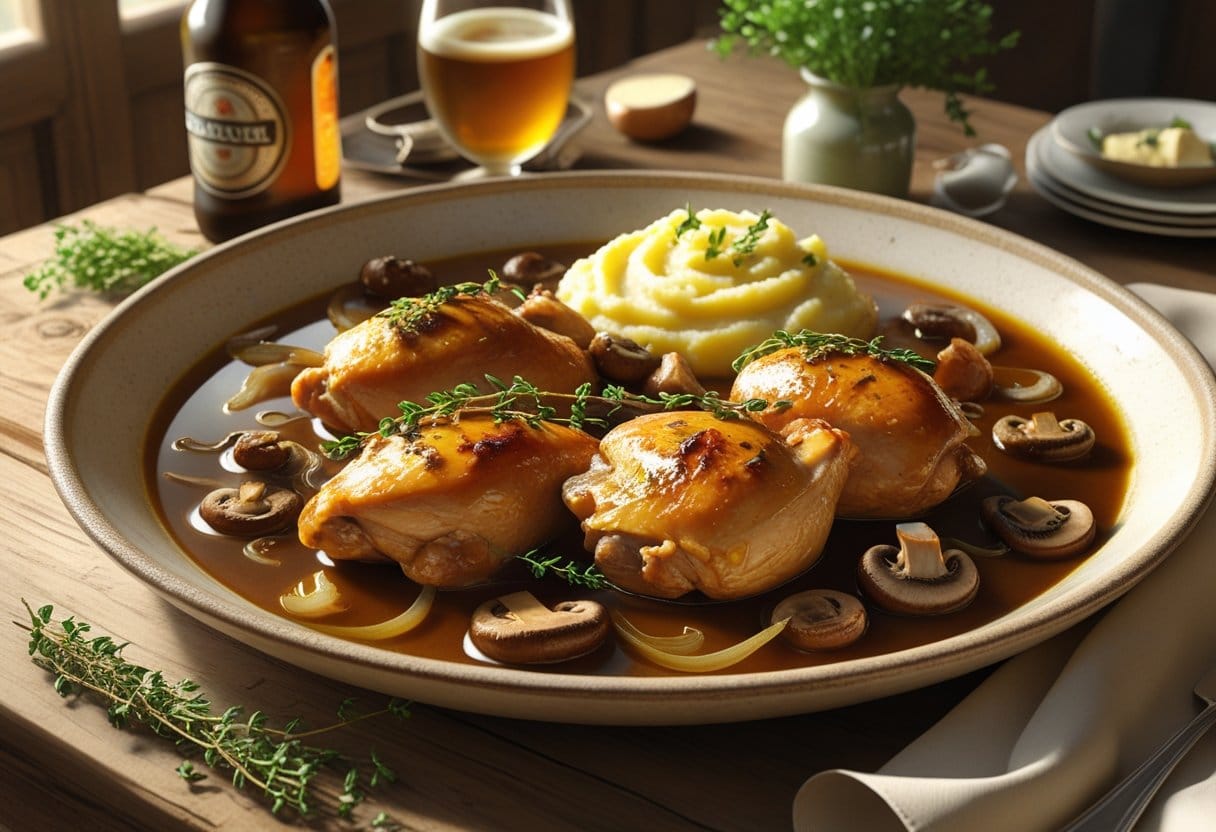
Over time, this recipe has been passed down from generation to generation. Today, it symbolises conviviality and appeals for its simplicity.
Coq à la bière adapts to the seasons and to everyone’s tastes. It can be found on family tables and at festive meals.
Discovering its origins, key ingredients and preparation methods transforms this classic dish into a moment of sharing. Tips and ideas for accompaniments enrich this culinary journey around an authentic northern speciality.
What is coq à la bière?
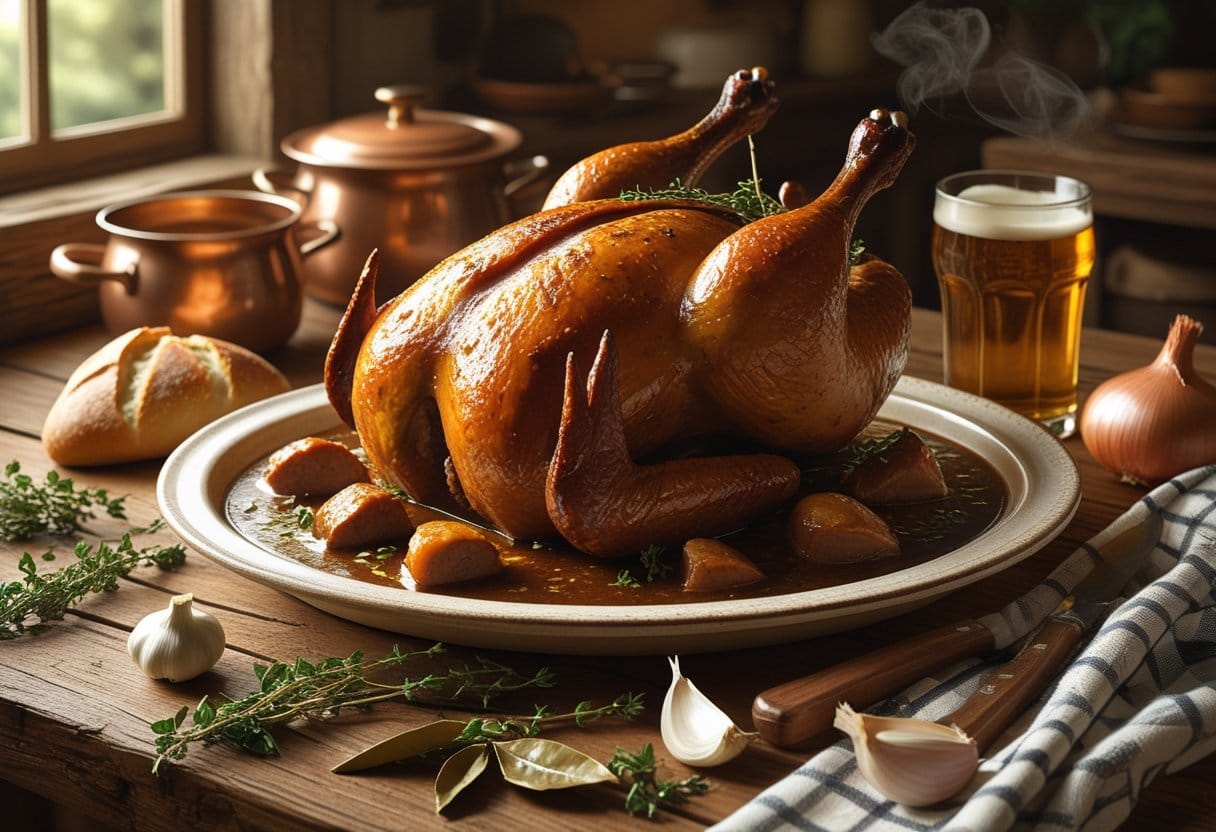
Coq à la bière is a stew from northern France and Belgium. It combines poultry, beer and aromatic vegetables.
This dish exemplifies regional cuisine where beer replaces wine as a cooking base. Recipes vary according to local traditions.
Origins and history of the dish
Coq à la bière has its roots in the beer-brewing regions of northern France and Flanders. The locals used local beer to tenderise tougher poultry meats such as cockerel.
Historically, rural families often cooked older poultry. They preferred to cook it slowly over a long period of time.
Beer, rich in yeast and aromas, flavoured and tenderised the meat. This dish was part of a domestic economy approach.
Sources indicate that this is a Flemish variation on coq au vin. In the north, vineyards were rare, but breweries flourished.
Today, coq à la bière is still associated with convivial meals and local festivals. It is often served with chips or potatoes.
Differences with coq au vin
Coq à la bière and coq au vin use a common base: chopped poultry simmered with herbs and bacon. The main difference lies in the cooking liquid.
Coq au vin uses red wine for a dark, full-bodied sauce. Coq à la bière favours lager or amber beer for a lighter, maltier sauce.
The garnishes also vary. Coq au vin is served with mushrooms and pearl onions, while coq à la bière may include gingerbread, mustard or juniper berries, depending on the recipe.
Place in regional cuisine
Coq à la bière (beer-braised cockerel) occupies an important place in the cuisine of Nord-Pas-de-Calais and Flemish Belgium. This dish is considered a typical Ch’ti dish.
It often appears in estaminets, traditional inns where home-style cooking reigns supreme. It is served with crispy chips or homemade mashed potatoes.
At local festivals, he showcases local products. Regional breweries supply the beer used in the recipe.
Essential ingredients for beer-braised cockerel
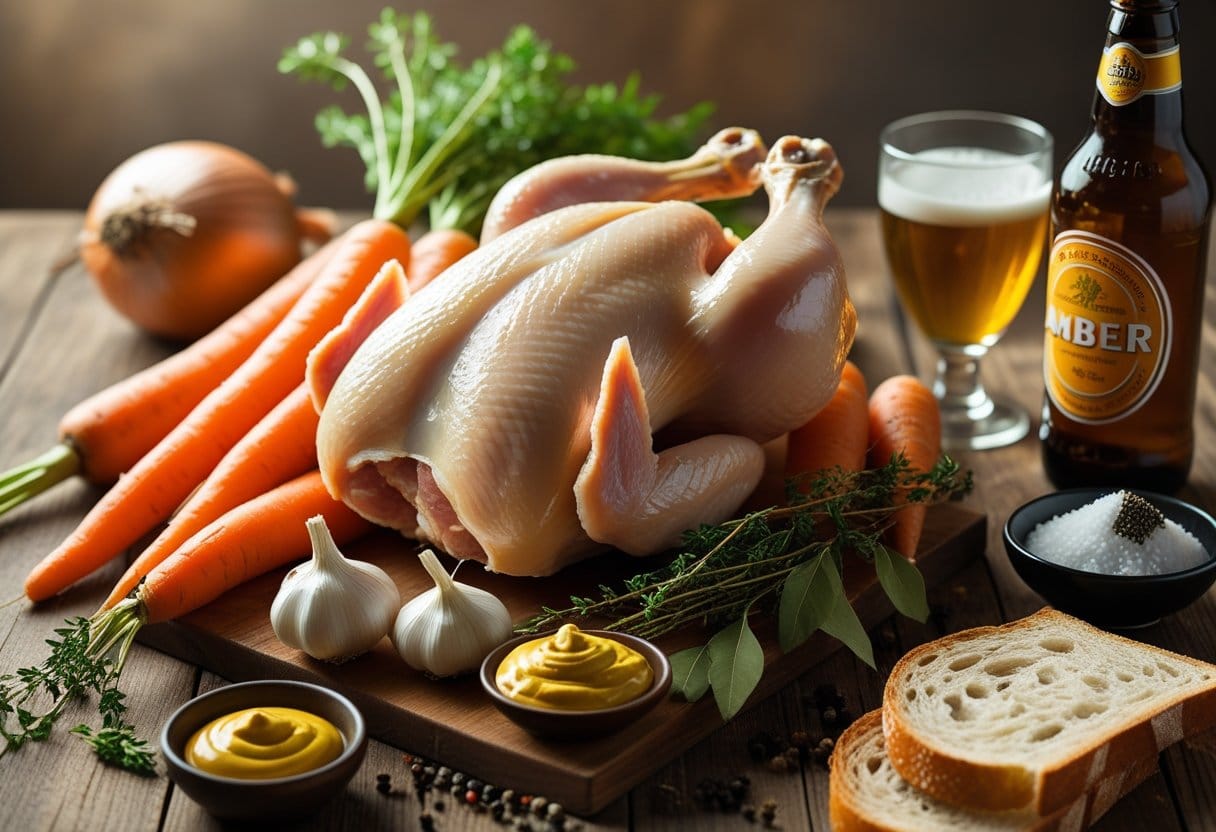
The success of this dish depends on the quality of the ingredients. Careful selection of the meat, beer, herbs and seasonings is essential.
Choice of cockerel or chicken
Traditionally, a free-range cockerel is used. Its firmer flesh holds up better to long cooking times.
This texture allows the meat to absorb the flavours of the beer and herbs. Free-range chicken is a common alternative.
Chicken, which is easier to find, reduces cooking time. It is still important to choose free-range poultry.
A cockerel weighing 1.5 to 2 kg is suitable for a family casserole. For a chicken, a weight of around 1.5 kg is sufficient.
Cutting the poultry into even pieces ensures even cooking. It also allows for better distribution of flavours.
Beer selection
Beer forms the aromatic base of the dish. Recipes from northern France favour dark beer or mature beer.
A beer that is too bitter dominates the sauce. A beer that is too light lacks depth.
Choose a balanced drink, with body but without excessive bitterness. Some people use amber beers for a smoother touch.
Avoid flavoured or overly sweet beers. They throw the dish off balance.
Role of the bouquet garni
The bouquet garni gives structure to the sauce. It usually consists of thyme, bay leaf and sometimes parsley.
These herbs release their aromas during cooking. They bind the flavours of the beer and meat together.
Tie the herbs together so that they can be easily removed at the end of cooking. This prevents pieces from ending up in the sauce.
Importance of garlic and button mushrooms
Garlic adds aromatic depth. It balances the sweetness of the onions.
Sauté lightly to release the flavours without burning. Button mushrooms complement the dish with their texture and subtle taste.
Add them at the end of cooking to preserve their texture. They absorb the sauce and make the dish more complete.
Traditional preparation
The success of beer-braised chicken depends on careful preparation, starting with the marinade. Slow, even cooking and attention to the sauce are essential.
Each step tenderises the meat and develops the flavours. The final texture must remain balanced.
Steps for marinating
Marinating allows the meat to absorb flavours before cooking. Use a dark or aged beer for its rounded, slightly bitter taste.
Place the chicken pieces in a large dish. Add the sliced onions, chopped garlic cloves, and a bouquet garni of thyme and bay leaves.
Cover with beer. Leave to rest for several hours, ideally overnight in the refrigerator.
This step tenderises the meat fibres. The longer the marinade, the more the flavours penetrate.
Cooking techniques
Begin cooking by browning the meat. Sear the pieces of cockerel in a casserole dish with a little butter or oil.
Brown them to enhance the flavour. Remove the meat, then fry the onions and garlic.
Return the cockerel to the casserole dish. Add the strained marinade, a little chicken stock, and the bouquet garni.
Cook over low heat, covered, for about two hours. Stir occasionally to prevent the mixture from sticking.
Tips for a creamy sauce
Once the meat is cooked, remove the pieces of cockerel. Leave the sauce to simmer uncovered so that it thickens.
For a creamier texture, add a spoonful of crème fraîche or a knob of butter at the end of cooking. Some people prefer to sprinkle in a little flour or cornflour at the beginning to thicken the sauce.
Taste and adjust the seasoning with salt and pepper. The sauce should balance the bitterness of the beer, the sweetness of the onions and the strength of the garlic.
Modern variations and adaptations
Coq à la bière has evolved with current culinary habits. The choice of beer influences the taste of the dish.
Certain meats can be used as a substitute for the traditional cockerel. Vegetarian alternatives allow the recipe to be adapted to other diets.
Using different beers
The type of beer changes the colour, aroma and texture of the sauce. A lager beer brings a light and mild flavour.
Amber beer adds notes of caramel and dried fruit. Dark beer gives a rich, slightly sweet sauce.
In Alsace, bière de garde is often used. In Belgium, some people add gingerbread to dark beer to make a thicker, more flavourful sauce.
In northern France, a light blonde beer remains the benchmark. Today, craft beers offer new possibilities.
Fruity beers (cherry, raspberry) or beers aged in oak barrels give original flavours. They should be used with caution so as not to mask the taste of the poultry.
Substitutes for cockerel
Free-range cockerel, which is often difficult to find, is frequently replaced by other poultry. Free-range chicken is the most common substitute due to its availability and quick cooking time.
Guinea fowl meat is more delicate and has a slightly gamey flavour. It goes well with dark beer sauces.
Some people also choose duck, especially in the south-west, for a fattier and more flavourful dish. In this case, the cooking time must be adjusted to keep the meat tender.
The choice of poultry influences the result: a mild sauce with chicken, a more pronounced flavour with guinea fowl, or a richer taste with duck.
Vegetarian adaptations
Vegetarian versions use the same aromatic base but replace meat with vegetables or plant-based proteins. Mushrooms (shiitake, oyster, button) are chosen for their firm texture and ability to absorb the sauce.
Firm tofu or seitan can also be used as substitutes. They are marinated in beer with the vegetables before cooking.
To thicken the sauce, some people add pulses such as chickpeas or lentils. Beer remains the key ingredient in the recipe and allows the dish to be adapted to a meat-free diet.
Accompaniments and serving suggestions
Coq à la bière gains flavour with simple accompaniments. The choice of vegetables, drink and presentation influence the balance of the meal.
Traditional vegetables
Vegetables lighten the richness of the dish. Potatoes remain the most common accompaniment.
They can be served mashed, steamed, or as homemade chips. Their neutral texture absorbs beer sauce well.
Seasonal vegetables add colour and freshness. Glazed carrots, braised leeks or steamed broccoli are easy to incorporate into meals.
Braised endives are also popular in the North. Their slight bitterness complements the sweetness of the sauce.
A simple table can help you choose:
| Vegetable | Recommended cooking method | Key advantage |
|---|---|---|
| Potatoes | Steamed, mashed, chips | Absorb the sauce |
| Carrots | Iced | Softness and colour |
| Leeks | Braised | Melt-in-the-mouth flavour |
| Chicory | Braised | Balancing bitterness |
Pairings with wines and beers
The choice of drink depends on the cooking style. A dark beer or a mature beer goes well with this dish.
Those who prefer lighter flavours may prefer a lager. As for wine, smooth reds such as Pinot Noir or Beaujolais are a good match.
Some dry white wines, such as a lightly oaked Chardonnay or a dry Riesling, also offer good balance thanks to their acidity. Serving the beverage used in cooking creates continuity of flavour.
Table presentation
The presentation should be simple but neat. Coq à la bière is usually served in a casserole dish at the table, which keeps it warm.
The pieces of poultry can be arranged on a deep dish, covered with sauce, with the vegetables around them. This method highlights the golden colour of the meat and the shine of the sauce.
Serve on warm plates to maintain the temperature. Provide a small bowl of extra sauce so that everyone can adjust it to their liking.
Rustic bread complements the dish well. It allows you to enjoy the sauce right to the last bite.
Tips for making a successful beer-braised cockerel
The choice of ingredients and mastery of cooking techniques are essential. Beer, sauce management and the preparation of herbs and spices all influence the taste and texture.
Tips for enhancing flavours
The choice of beer is key. A dark or amber beer adds depth and brings out the malty notes.
A lager beer gives a milder result. It is best to marinate the meat for several hours, ideally overnight, with thyme, bay leaves, garlic and a few juniper berries.
This step tenderises the meat and adds flavour to the dish. To enrich the sauce, add fresh mushrooms, bacon bits or shallots.
These ingredients complement the flavours of the beer. Add a spoonful of crème fraîche at the end of cooking to make the sauce creamier.
A light flambéing with brandy, such as gin, adds an extra flavour. This reinforces the regional identity of the recipe.
Mistakes to avoid
A common mistake is to use beer that is too sweet or too bitter. This throws the dish off balance and can mask the other ingredients.
It is best to choose a craft beer with character, but not too strong in alcohol.
You should also avoid cooking it too quickly. Rooster meat, which is firmer than chicken, requires long, gentle simmering to become tender.
Cooking too quickly makes the meat dry and the sauce incomplete.
Do not neglect the seasoning. Too much salt or pepper can overpower the beer.
A lack of seasoning results in a bland dish. Taste and adjust at the end of cooking.
Do not drown the meat in too much liquid. The juice should just cover the pieces to allow for gradual reduction and a concentrated sauce.
Bière de garde: the key ingredient in northern-style coq à la bière
Coq à la bière is a dish from northern France and Flanders. Its traditional version uses bière de garde — fermented at low temperatures and conditioned in cellars for several weeks. This regional style contributes a malty roundness and gentle bitterness that balances the richness of the bird and the cream. An amber bière de garde (Jenlain Ambrée, Ch’ti Ambrée) is the classic choice.
A light lager produces a more delicate result — a good option if you replace the cream with stock. A wheat beer adds spiced notes (coriander, orange peel) that feel unexpected in this traditional recipe but work well with a young free-range chicken.
Cast iron or stainless: what actually changes
Cast iron is the traditional choice here, for good reason. It distributes heat evenly and retains it well — once at temperature, you can turn the heat down to minimum. The braise holds at a constant 85–90°C, which slowly dissolves collagen and tenderizes the meat without drying it out. Stainless or aluminum pots lose heat faster and require more active management.
If you don’t have a cast iron pot, the oven is a solid alternative: 150°C for 90 minutes. The advantage: encircling heat, no risk of scorching the bottom, and you’re free while it cooks.
The recipe: rooster in beer
⏱ Prep 30 min · 🔥 Cook 2h30 · 🍽 Serves 6 servings · 🥩 Difficulty Medium
Ingredients
- 1 rooster, 2 kg, cut into pieces (or free-range chicken)
- 750 ml dark beer (Leffe Brune or Northern French dark ale)
- 200 g smoked lardons
- 250 g button mushrooms
- 16 pearl onions
- 3 shallots, sliced
- 3 garlic cloves
- 2 tbsp flour
- 1 bouquet garni
- 50 ml cognac (optional)
- 1 tbsp brown sugar
- 50 g butter + 2 tbsp oil
- Salt, pepper
Steps
- Marinate (day before). Place rooster pieces in a bowl with beer, shallots, crushed garlic and bouquet garni. Cover and refrigerate 12 hours.
- Drain and dry. Next day, remove pieces and dry thoroughly. Reserve the strained marinade.
- Sear the meat. Brown pieces in butter and oil. Season. Reserve.
- Sauté lardons and onions. In the same pot, cook lardons and pearl onions 8 min.
- Singer. Return meat, sprinkle with flour. Stir 2 min on high heat.
- Deglaze. Pour cognac and flambé (optional). Add strained marinade and brown sugar. Liquid should cover the meat.
- Simmer. Cover and cook on very low heat 2 hours (or 2h30 if true rooster).
- Add mushrooms. Sauté mushrooms separately in butter, add to the pot 20 min before end.
- Serve. With steamed potatoes, fresh pasta or mashed potato. Even better reheated.
Frequently Asked Questions
What’s the difference between coq à la bière and coq au vin?
Coq à la bière is the Northern French / Belgian specialty: red wine is replaced with dark beer. The sauce is softer, slightly caramelised with malty notes. The rest of the garnish (lardons, mushrooms, pearl onions) stays the same as coq au vin.
Do I really need a rooster or can I use chicken?
A true rooster gives more flavour thanks to its firmer, more flavourful flesh, but needs 2h30 cooking. A free-range chicken of 1.8-2 kg works perfectly in modern cooking — reduce cooking to 1h30.
Is marinating really necessary?
Yes, it’s the key to a successful coq à la bière. The 12-hour marinade tenderises the meat, infuses beer aromas deep into the flesh and ensures more even cooking. At minimum, marinate 2 hours.
Which dark beer should I use?
A Belgian dark beer like Leffe Brune, or a Northern French dark ale such as Pelforth Brune or 3 Monts (depending on availability). Avoid heavily roasted stouts and aggressively hopped beers.
🍻 Explore our beers
Over 1,000 craft beers listed, with a comparator and nutritional info.
Browse the full catalogue →