 Beer Galaxy
The EBC (European Brewery Convention) is the European scale that measures beer colour, from 4 (very pale) to 200+ (very dark). A blonde sits around 4-12 EBC, an amber 14-25 EBC, a brown 30-50 EBC, and a stout 50-200 EBC. The measurement is taken by spectrophotometry. The US equivalent is SRM (1 SRM ≈ 1.97 EBC).
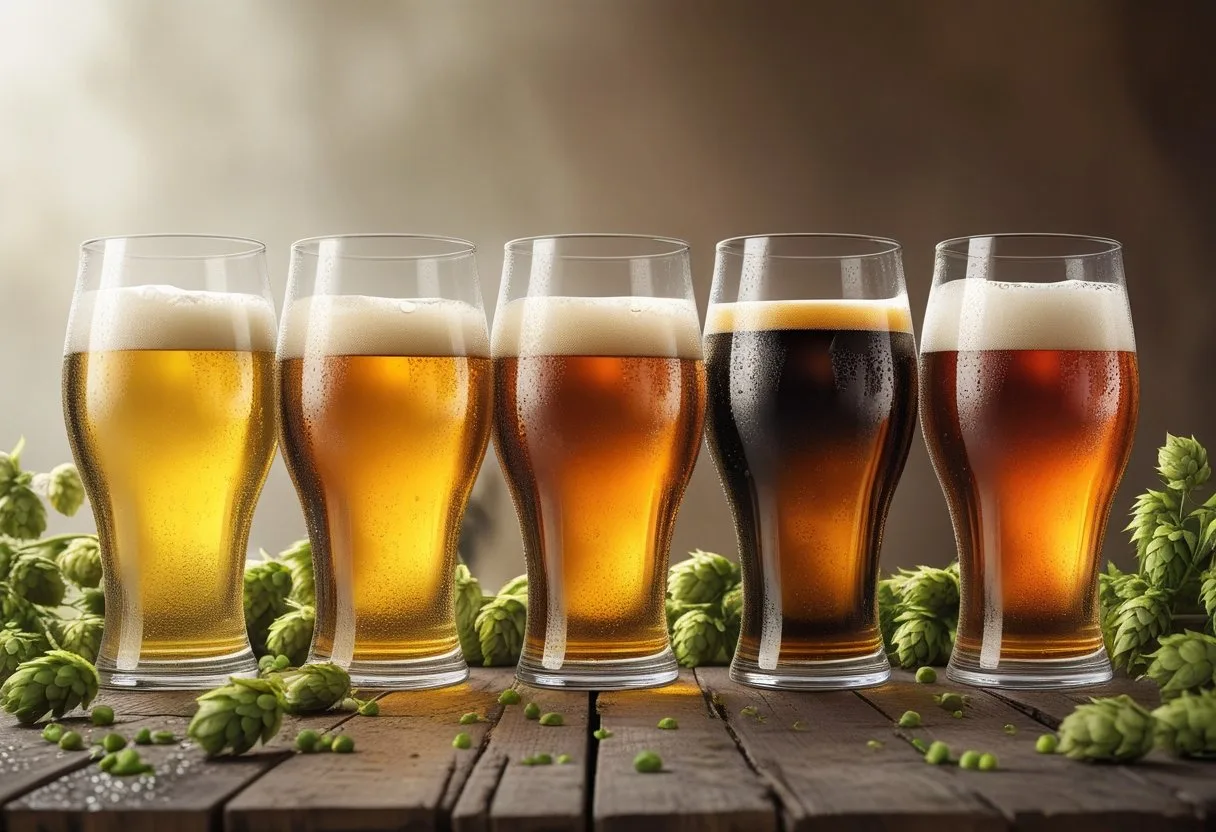
Understanding EBC helps to better grasp what lies behind a simple appearance. This measurement reflects the choice of malts, influences the perception of taste and plays a key role in how a beer is presented.
The EBC applies specifically to beer styles. Brewers also use it as a communication tool.
Each EBC value tells a story about beer and its identity.
What is EBC?
EBC is a unit of measurement used by brewers to describe the colour of beer. It is based on a scientific method created by a European brewing organisation.
This system differs from other systems such as SRM, which is more common in North America.
Definition of EBC
EBC stands for European Brewery Convention. It is a scale that measures the colour intensity of beer.
A spectrophotometer analyses the light passing through a sample of beer at 430 nanometres. The higher the EBC value, the darker the beer appears.
For example:
- 1 to 8 EBC: very light lager beers
- 9 to 20 EBC: light golden and amber lagers
- 21 to 35 EBC: deeper amber colours
- 36 to 80 EBC: brown
- 80+ EBC: stouts and dark beers, like the classic Beamish Irish Stout
This classification helps brewers reproduce styles accurately. Consumers can thus easily identify the expected colour.
History of the European Brewery Convention
The European Brewery Convention was founded in 1946. Its aim was to create common standards for beer research and production in Europe.
The organisation has developed methods of analysis covering colour, bitterness, density and other parameters. The EBC scale remains one of its most widely used contributions.
Before this standardisation, each country used its own references. This complicated exchanges between brewers.
The introduction of the EBC has made it possible to define a single, reproducible method. Today, although the EBC remains a European unit, it is recognised and used in many countries outside Europe.
Craft breweries are also adopting it for precise measurement.
Differences between EBC and SRM
The SRM (Standard Reference Method) is the North American equivalent of the EBC. Both systems measure the colour of beer but use slightly different formulas.
In practice, an EBC value is approximately 1.97 times higher than an SRM value. For example, a beer with an SRM value of 10 corresponds to approximately 19.7 EBC.
| Colour of beer | EBC | SRM |
|---|---|---|
| Light blonde | 6 | 3 |
| Amber | 20 | 10 |
| Brunette | 40 | 20 |
| Black | 80 | 40 |
This distinction helps to compare recipes or styles between Europe and North America. Brewers convert the values when adapting recipes from one system to another.
The EBC scale and the colour of beer
The EBC scale accurately measures the colour of a beer, ranging from very light lagers to the darkest stouts. It is used to compare styles and ensure consistency in production.
This gives consumers a clear idea of what a beer looks like before tasting it.
How the EBC scale works
The EBC measures the colour of a beer by analysing the light absorbed by a sample. A spectrophotometer performs this measurement at a wavelength of 430 nanometres.
The more light beer absorbs, the higher its EBC value. Blonde beers have very low values, while stouts and porters have much higher values.
The scale ranges from 1 to approximately 140 EBC units.
The calculation formula is based on the measured absorbance and a dilution factor:
EBC = 25 × D × A430
- D = dilution factor
- A430 = absorbance measured at 430 nm
This method ensures a reliable comparison between breweries and styles.
Examples of EBC values for different styles
Each style of beer corresponds to a specific EBC range. These benchmarks help brewers achieve the right colour and allow beer lovers to quickly identify the type of beer.
Typical examples:
| Beer style | Approximate EBC range | Perceived colour |
|---|---|---|
| Pilsner / Light lager | 4 – 6 | Very pale yellow |
| Pale Ale / Blonde | 8 – 20 | Golden to light amber |
| Amber Ale / Märzen | 21–45 | Amber to coppery |
| Brown Ale / Dark Ale | 46–75 | Medium to dark brown |
| Porter / Stout | 76–140 | Very dark brown to black |
Visual impact and consumer perception
Colour influences the first impression of a beer. Consumers associate a light lager with a light and refreshing drink.
Conversely, a dark stout evokes a richer and more intense character. This perception shapes expectations even before tasting.
The EBC helps to create consistency between appearance and expected style. Brewers adjust their recipes to remain faithful to the standards.
A significant difference may surprise the consumer and alter their judgement, even if the taste remains the same.
The role of malts in colour
The malt used and its degree of processing largely determine the colour of a beer. The choice and combination of malts directly determine the EBC value.
Types of malt and their influence on EBC
Light malts, such as Pilsner malt or Pale malt, produce beers with low EBC, often between 2 and 10. These malts are dried at low temperatures and retain a pale colour.
Dark malts such as chocolate malt or black malt reach high EBCs, sometimes exceeding 60. They are roasted for longer and produce colours ranging from deep brown to black.
The table below provides some examples:
| Type of malt | Approximate EBC | Effect on beer |
|---|---|---|
| Pilsner | 2 – 5 | Blonde, light |
| Pale Ale | 7 – 12 | Golden, more malty |
| Caramel/Crystal | 20 – 60 | Amber, sweet notes |
| Chocolate / Dark | 60 – 120+ | Brown to black, roasted |
The selection of malt sets the visual basis and also guides sensory expectations.
Colour recipe adjustment
Brewers modify the proportion and variety of malts to achieve the desired colour. An amber beer, for example, combines a light base malt with a small amount of caramelised malt, which increases the EBC without masking the main malty profile.
Adding very dark malts in small quantities darkens a beer by several EBC points without significantly altering the taste. An excess of these malts brings out coffee or cocoa aromas that dominate the recipe.
Brewers often use calculations or specialised software to predict the final value. This allows them to maintain consistency between batches and adhere to styles defined by well-established EBC ranges.
EBC and popular beer styles
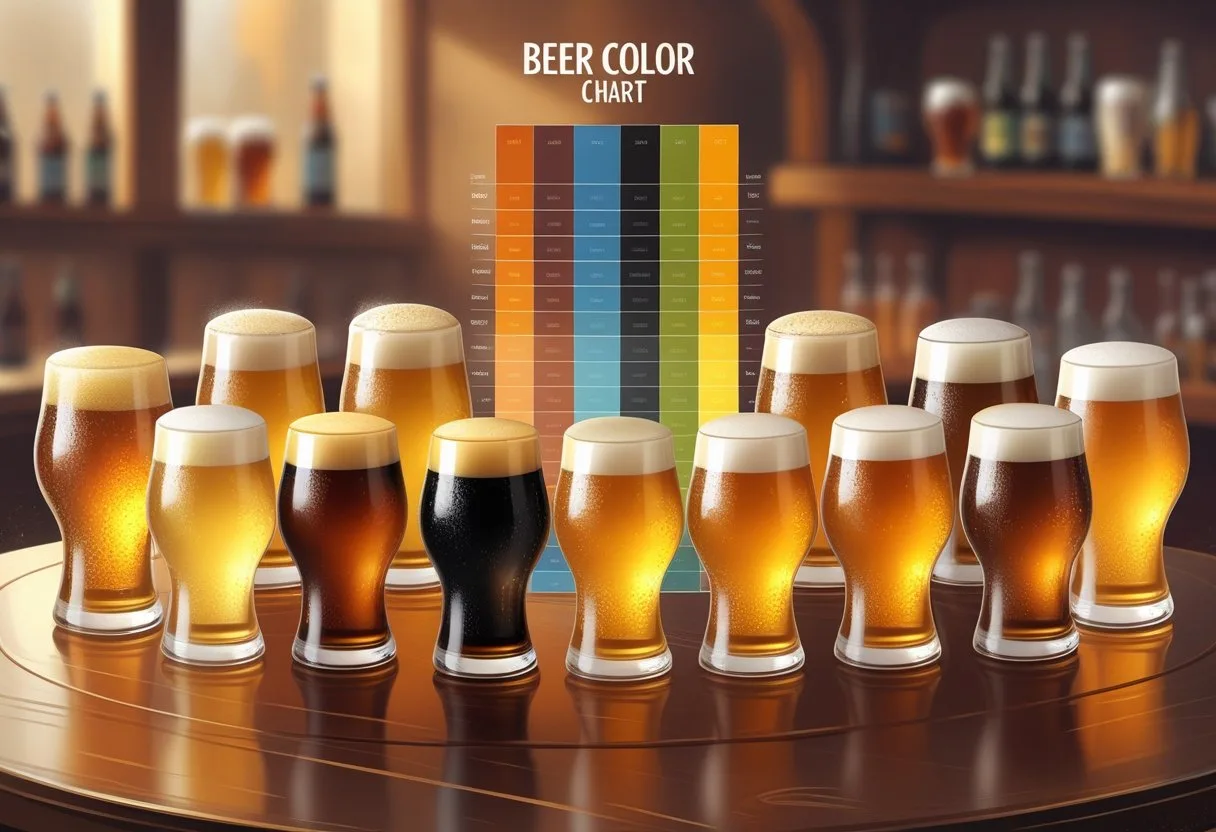
The EBC makes it easy to compare the colour of beers, ranging from very light lagers to almost black stouts. Each style has a range of typical values that provides a visual indication even before tasting.
Blonde beer and Pilsner
Blonde beers and pilsners have the lowest EBC values. They often have a very light golden colour ranging from 4 to 12 EBC.
Brewers use pale malts for these beers, giving them a bright, clear colour. Clarity remains a sought-after characteristic, especially in Czech or German-inspired pilsners.
A simple table can help to situate these styles:
| Style | EBC Beach | Typical colour |
|---|---|---|
| Light blonde | 4 – 6 | Pale yellow |
| Pilsner | 6 – 12 | Light gold |
This colour range often corresponds to a dry and refreshing profile. The light colour allows the delicate aromas of the hops to express themselves.
Pale Ale and IPA
Pale Ales and IPAs have more intense colours, generally between 10 and 30 EBC. This results in shades ranging from deep gold to light amber.
The malts used in these styles add visual and flavour richness. In a modern IPA, the colour remains light to amber, but hops dominate the perception.
Some useful pointers:
- English Pale Ale: 12 to 20 EBC, soft amber colour
- American IPA: 10 to 20 EBC, golden to light copper
- More malty IPA: up to 30 EBC, coppery highlights
These values help distinguish a light Pale Ale from a more robust IPA. Colour does not reflect bitterness.
Porter and Stout
Porters and stouts are found at the darkest end of the scale. They often range between 60 and 140 EBC, varying from deep brown to opaque black.
Brewers use roasted malts to achieve these dark colours. These malts give the beer coffee, chocolate or liquorice notes.
In a stout, the visual density makes the beer appear almost black, even under bright light.
Examples of benchmarks:
| Style | EBC Beach | Typical colour |
|---|---|---|
| Carry | 40 – 80 | Dark brown |
| Stout | 80 – 140 | Opaque black |
Other beer parameters: IBU and ABV
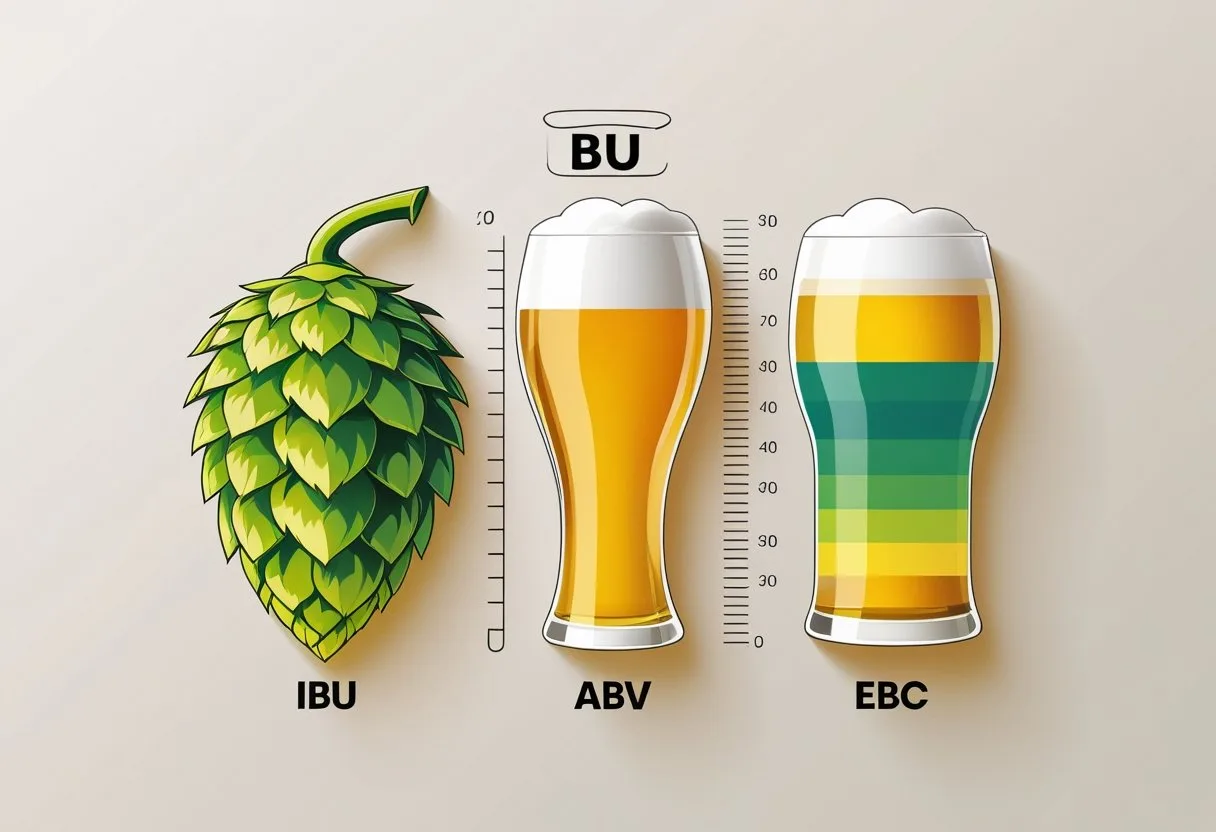
Beer is not defined solely by its colour. Its bitterness and alcohol content also play an essential role in tasting and consumer choice.
These two indicators are measured in a standardised manner and often appear on labels.
Understanding IBU (International Bitterness Unit)
The IBU (International Bitterness Unit) measures the bitterness of a beer. This unit mainly takes into account the alpha acids in hops, which are released when the wort is boiled.
The higher the value, the more bitter the beer tastes. The scale generally ranges from 1 to 150 IBU.
A light lager often has between 10 and 20 IBU. An IPA can reach 60 to 90 IBU.
Beyond 90 IBU, the difference becomes difficult to perceive on the palate.
The IBU provides a technical value rather than an absolute sensation. Roasted malts, fruity or sweet aromas can soften the perception of bitterness, even if the index remains high.
Thus, a dark stout may have a high IBU but taste sweet on the palate.
Meaning of ABV (Alcohol By Volume)
ABV (Alcohol By Volume) indicates the percentage of alcohol in a beer. It is expressed as % vol., which means the proportion of pure alcohol in relation to the total volume.
A beer with 5% ABV contains 5 ml of pure alcohol per 100 ml of beverage. Light beers such as certain lagers often have an ABV of around 3 to 4%.
Stronger ales or double IPAs frequently exceed 7 to 8% ABV. Some speciality beers can even reach 10% or more.
The alcohol content influences the flavour intensity and mouthfeel. A beer with a high ABV seems warmer, rounder and sometimes sweeter.
Relationship between colour, bitterness and alcohol
Colour (EBC), bitterness (IBU) and alcohol (ABV) are not mechanically linked. Their combination defines the style of a beer.
A very pale beer can be strongly hopped and therefore very bitter, like some blonde IPAs. Conversely, a dark beer can seem sweet if the malts dominate over the bitterness.
A dark beer is not necessarily stronger in alcohol. Some light stouts have less than 5% ABV, while Belgian triple blondes often exceed 8%.
These three parameters provide a more accurate picture of the flavour profile. They help to anticipate the tasting experience.
Using EBC in communication and marketing
The EBC also serves to inform consumers and position a beer within a specific style. It plays a key role in communicating and promoting a brewing product.
Labelling and transparency for consumers
Indicating the EBC value on a label helps consumers immediately understand the colour of the beer. For example, a value of 8 EBC corresponds to a light lager. A value of 40 EBC indicates a darker ale.
This information complements other indicators such as IBU (bitterness) or alcohol content. Together, they provide a clear picture of the beer’s profile even before the bottle is opened.
Craft breweries often use EBC to enhance transparency and build trust. By providing accurate data, they demonstrate their technical expertise and help buyers choose a beer that meets their expectations.
A simple table can illustrate this usefulness:
| EBC | Approximate colour | Style example |
|---|---|---|
| 5 | Light yellow | Pilsner |
| 15 | Golden | Pale Ale |
| 30 | Amber | Amber Ale |
| 60 | Dark brown | Stout |
Importance for competitions and categorisation
In beer competitions, colour is an essential judging criterion. The EBC allows you to check whether a beer meets the standards of a given style.
A Pilsner that is too dark or a Stout that is too light may lose points, even if the taste is acceptable. The organisers use EBC as a standardised reference.
This avoids subjective interpretations. The EBC guarantees a common basis for comparing samples.
This allows judges to rank beers more fairly. For brewers, displaying the EBC in a competition entry demonstrates their rigour and professionalism.
This also facilitates communication with distributors and wine merchants. They often rely on these values to organise their range by style or visual intensity.
In practice, the EBC becomes a categorisation tool. It helps to place a beer in a specific family and distinguish it from others.
This visual reference remains useful in a market where the diversity of styles can be confusing.
EBC, SRM, Lovibond: the three color scales explained
Beer color is measured differently depending on the region. EBC (European Brewery Convention) is the European standard. SRM (Standard Reference Method) is used in the United States. Lovibond (°L) is the older scale still used in homebrewing and malt descriptions. Approximate conversions: 1 SRM ≈ 2 EBC, and 1 Lovibond ≈ 1.97 SRM. A pale blonde at 8 EBC is roughly 4 SRM or 4 Lovibond.
Measurement is done by spectrophotometry: a beam of light at 430 nm wavelength passes through a beer sample, and the light absorption is converted to an EBC or SRM value. A digital photometer for beer costs €200–800 — standard in commercial breweries, rare in homebrewing setups.
EBC reference values by style
A quick guide to what EBC values mean in the glass. 4–6 EBC: wheat beers, Berliner Weisse — very pale yellow, often hazy. 8–12 EBC: pilsner, classic pale lager — golden. 14–20 EBC: Belgian blonde, pale ale — golden to light amber. 25–40 EBC: amber ale, Märzen, bière de garde — amber to reddish-brown. 50–80 EBC: brown ale, Belgian dubbel — dark brown. 100 EBC and above: stout, porter, Schwarzbier — very dark brown to opaque black.
These are descriptive guidelines, not rules — a brewery can produce a “blonde” at 16 EBC if the style calls for it. EBC describes, it doesn’t prescribe.
📊 EBC scale (European Brewery Convention) by beer style
| Beer style | EBC | Visual colour | Examples |
|---|---|---|---|
| Pilsner / Pale lager | 4-8 EBC | Straw yellow | Heineken, Stella Artois, Pilsner Urquell |
| Blond / Witbier | 6-12 EBC | Golden yellow | Hoegaarden, Leffe Blonde |
| Pale Ale / IPA | 10-20 EBC | Amber gold | Brewdog Punk IPA, Sierra Nevada Pale Ale |
| Amber Ale | 20-35 EBC | Copper amber | Fischer Amber, Pelforth Amber |
| Brown Ale / Bock | 35-50 EBC | Mahogany brown | Newcastle Brown, Paulaner Bock |
| Porter | 50-80 EBC | Dark brown | Founders Porter, Sierra Nevada Porter |
| Stout / Dry Stout | 70-120 EBC | Opaque black | Guinness Draught, Murphy’s Stout |
| Imperial Stout | 100-200 EBC | Intense black | Founders KBS, Bell’s Expedition |
Frequently Asked Questions
What is the EBC of a beer?
EBC (European Brewery Convention) is the European unit for measuring beer colour. It ranges from 4 (very pale) to 200+ (opaque black). The higher the number, the darker the beer. The US uses SRM, which equals approximately EBC ÷ 1.97.
How is EBC measured?
By spectrophotometry: measuring light absorbance at 430 nm through a 1 cm sample. Formula: EBC = 25 × absorbance. Home brewers estimate visually using a standardised EBC colour card.
What’s the relationship between EBC and flavour?
Indirect. High EBC indicates roasted malt use (dark colour) which brings coffee, chocolate, toasted bread, dried fruit aromas. But a dark beer can be sweet (Schwarzbier) or bitter and roasted (Imperial Stout). EBC tells you the colour, not the taste.
Is a darker beer stronger?
Not necessarily. A 4.8% Schwarzbier and 4.2% Guinness are very dark but light. A 9.5% Westmalle Tripel is golden. Colour depends on malts used; ABV depends on total fermented sugar.
How to choose a beer by its colour?
Pale beers (EBC 4-15): light, refreshing, easy-drinking. Amber (EBC 15-35): balanced, caramel and bread notes. Brown/dark (EBC 35-200): roasted, chocolate, coffee, dried fruit. For apéritif, prefer pale; for digestif, choose dark malty styles.
🍻 Explore our beers
Over 1,000 craft beers listed, with a comparator and nutritional info.
Browse the full catalogue →