 Beer Galaxy
Beer sauerkraut is made with 1.5 kg of raw sauerkraut simmered for 1 h 30 with 50 cl of Alsatian blonde beer, sausages (Strasbourg, Montbéliard), smoked bacon, pork shoulder, potatoes and juniper berries. The beer replaces the traditional white wine and gives a rounder, maltier flavour. An emblematic Alsatian dish, best served with a chilled beer.
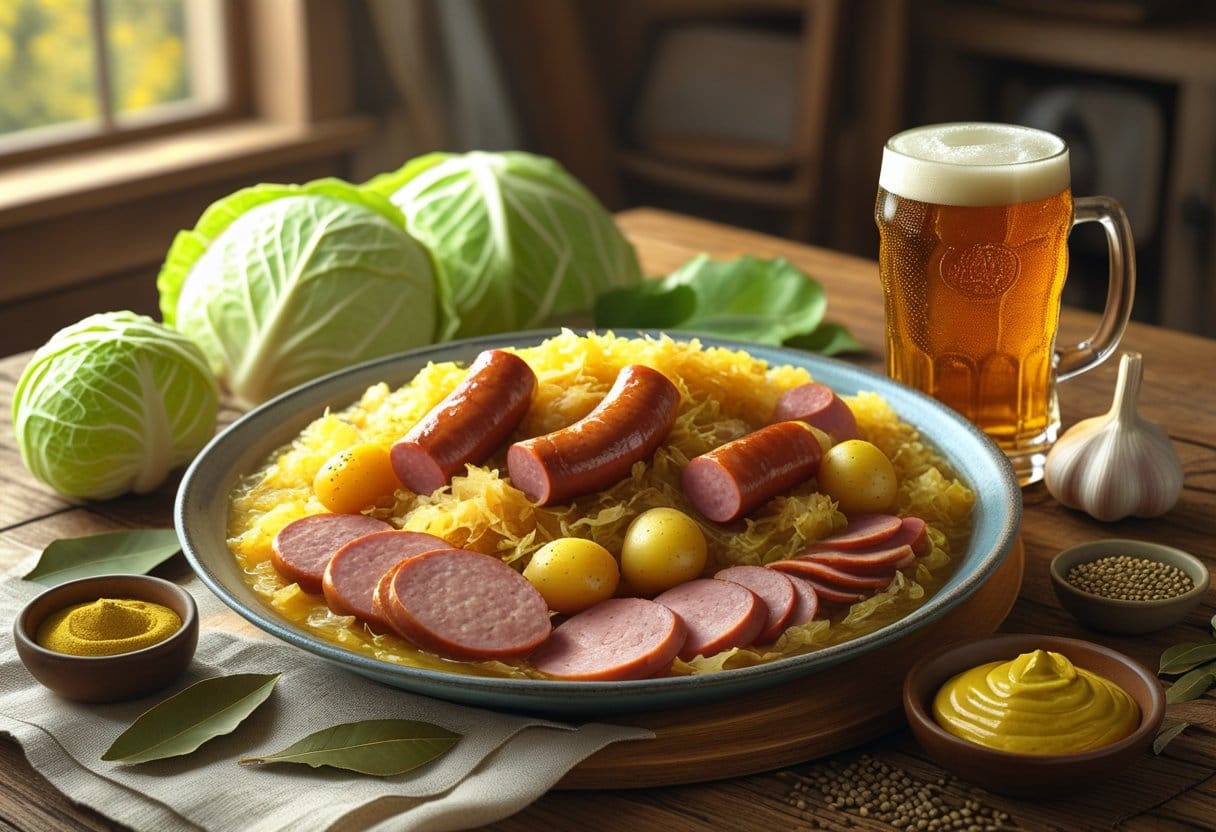
This convivial dish is easily adapted for large gatherings. It can be prepared in advance, allowing the flavours to develop better.
Key ingredients such as pork shoulder, smoked bacon, sausages and spices combine with the smoothness of beer to create a balanced and generous result.
Every step of the preparation is important, from choosing the beer to adding the herbs and spices.
The article details the essential ingredients, explains the importance of beer, offers tips for varying the recipe, and describes how to serve sauerkraut according to Alsatian tradition.
Essential ingredients for successful beer sauerkraut
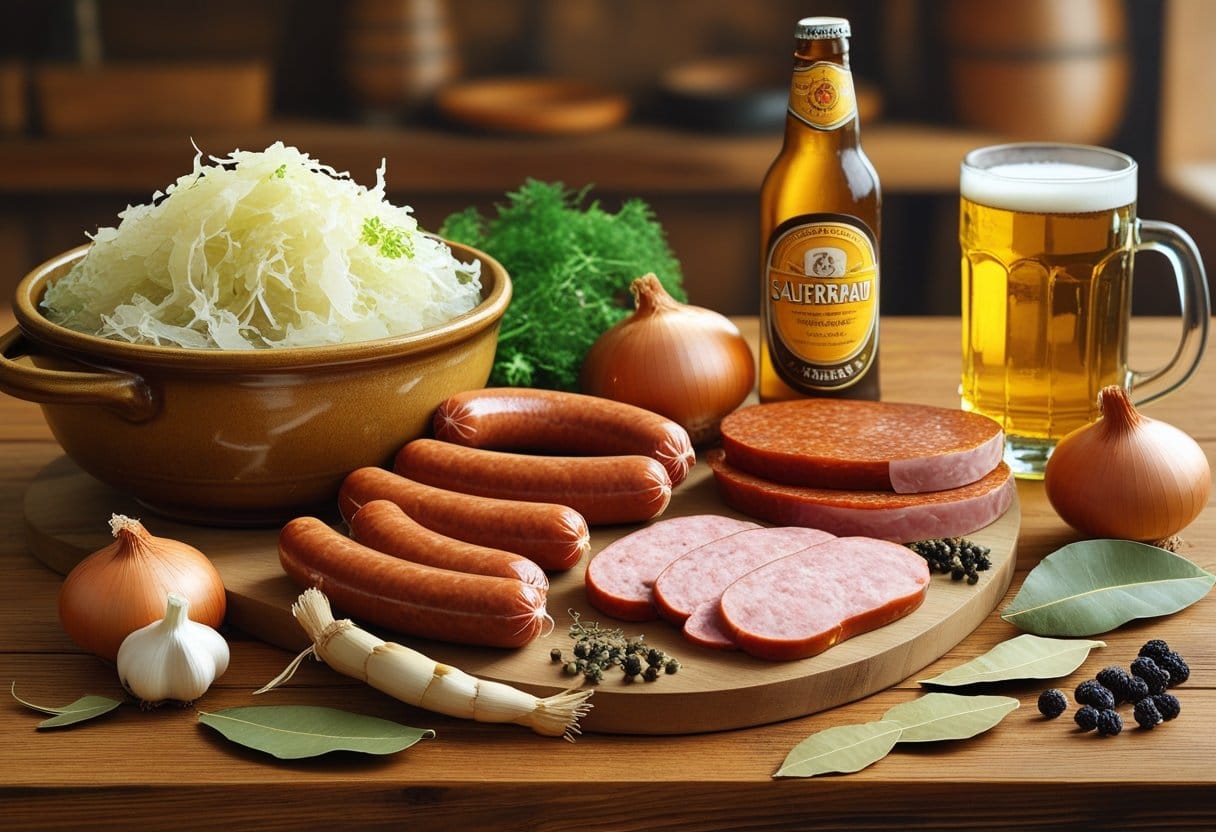
The success of a beer sauerkraut dish depends mainly on the quality of the raw sauerkraut, the choice of meats and cold cuts, and the vegetables that accompany the dish. Each ingredient must be carefully selected to achieve a good balance of flavours and textures.
Selection of raw sauerkraut
The base of the dish is well-prepared raw sauerkraut. It is best to rinse it under cold water to reduce its excess salt and acidity, then squeeze it well.
Some people quickly blanch it in boiling water, but this is optional depending on the desired intensity. Good quality sauerkraut should be firm, slightly tart and without any strong unpleasant odour.
You can buy it fresh from a butcher or in a tray from the deli counter. Before cooking, mix it with chopped onions and sometimes sliced carrots to add sweetness.
These vegetables provide an aromatic base that balances the bitterness of the beer used for cooking.
Essential meats and charcuterie
Beer sauerkraut is distinguished by the combination of several cuts of pork and charcuterie. The most common cuts include:
- Smoked pork belly or smoked bacon, which give a distinctive flavour.
- Pork shoulder, leaner but tasty.
Add Strasbourg sausages or cervelas sausages at the end of cooking to prevent them from drying out. Sometimes, a ham hock or a piece of shank is added to enhance the richness of the dish.
Cook each meat slowly with the sauerkraut to release their juices. The balance between smoked meats and milder meats prevents any one flavour from dominating.
Choice of potatoes and accompanying vegetables
Potatoes complement the dish and must be firm to withstand cooking. Varieties such as Charlotte or Belle de Fontenay hold up well when steamed and absorb flavours without falling apart.
Cook them separately in water or steam, then add them at the end to reheat them in the casserole dish. This helps to keep their texture intact.
In addition to potatoes, some people add whole carrots or onions to enrich the garnish. These vegetables enhance the sweetness of the dish without masking the taste of the sauerkraut.
The role of beer in the recipe
Beer gives sauerkraut a different flavour to wine and changes the texture of the dish. The choice of beer directly influences the balance between the acidity of the cabbage, the richness of the meat and the sweetness of the potatoes.
The quantity used and the type of beer selected determine the final character of the dish.
Recommended types of beer
Blonde beer remains the most commonly used. It is balanced, slightly bitter, and goes well with fermented cabbage without masking the taste of the meat.
An Alsatian or German blonde is often preferred to remain faithful to tradition. A dark beer gives a more robust result.
Its malty and caramelised notes add roundness and a deeper flavour. This option is ideal for those who enjoy rich dishes.
White beer offers a lighter profile. Its citrus aromas and freshness reduce the acidity of the cabbage and add a fruity touch.
| Type of beer | Features | Effect on sauerkraut |
|---|---|---|
| Blonde | Balanced, slightly bitter | Enhances meat and cabbage |
| Brunette | Malty, caramelised | Accentuates richness and depth |
| White | Fresh, citrus notes | Lightens the dish and softens the acidity |
Impact of beer on flavours
Beer alters the perception of cabbage aromas. A lager enhances the natural fermentation while leaving a dry finish.
A brown ale brings a slightly sweet note that balances out the acidity. A white ale reduces the intensity of the cabbage and adds a hint of tartness.
Smoked meats also benefit from this cooking method. Paired with a lager, they retain their salty and smoky flavour.
With a dark beer, they gain complexity. A light beer makes the whole thing more palatable.
Long cooking allows the flavours to blend together. The beer evaporates partially but leaves its aromas in the cabbage and meat.
Quantity and usage advice
In general, use 40 to 50 cl of beer for a serving of 4 to 6 people. This amount flavours the sauerkraut without overpowering it.
The liquid should just partially cover the cabbage for slow, even cooking. Pour in the beer after arranging the layers of cabbage, meat and spices.
Cook over low heat for several hours. The alcohol evaporates, leaving only the aromas.
To reduce the acidity, you can add a small pinch of sugar at the same time as the beer. Some people mix part lager with a little stout to balance sweetness and intensity.
Choose the beer that best suits your desired flavour.
Spices and herbs to enhance sauerkraut
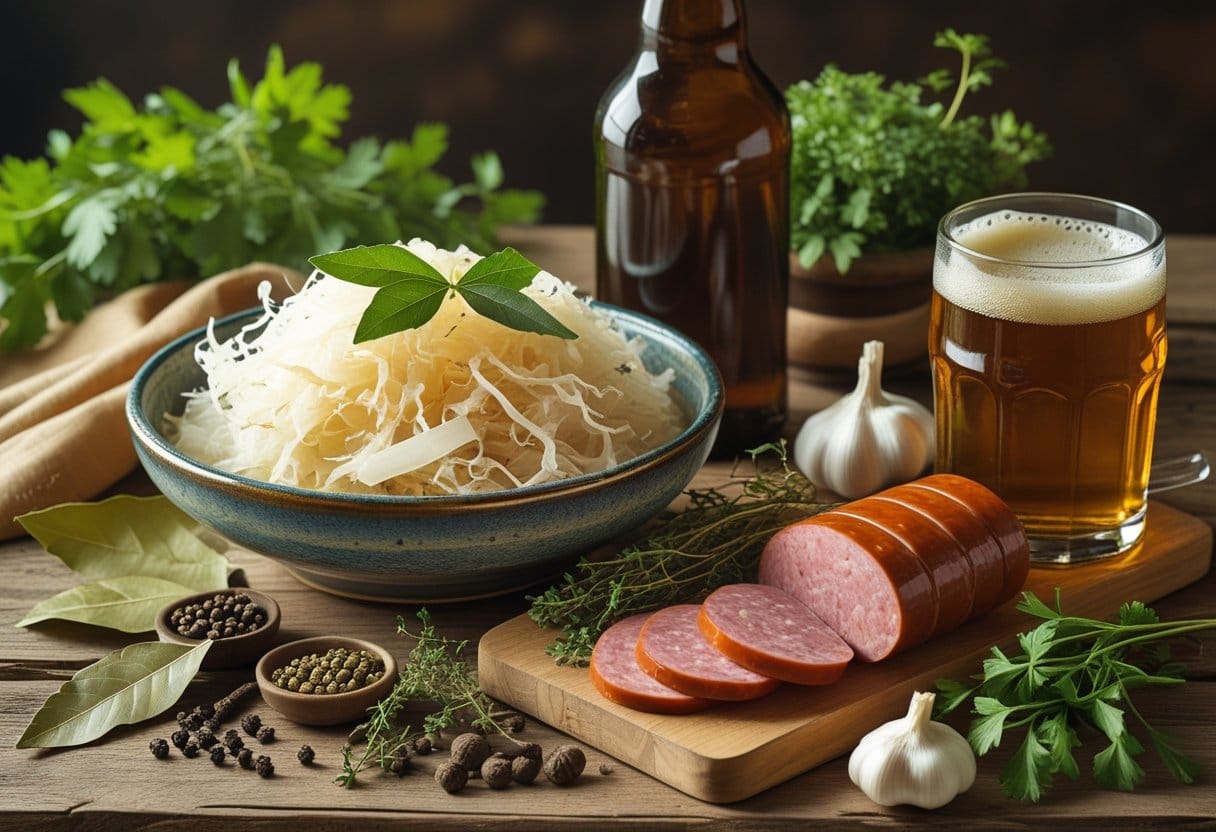
The flavours of sauerkraut rely heavily on spices and herbs. Their role is to balance the acidity of the fermented cabbage and add depth to the dish without masking the taste of the meat and beer.
Use of juniper berries and pepper
Juniper berries add a woody, slightly resinous note that goes well with fermented cabbage. Add them whole directly to the casserole dish.
Use between 6 and 10 for a family dish to avoid excessive bitterness. Black or white pepper adds a mild heat and enhances the mixture without overpowering it.
Crushed black pepper releases its aroma more slowly during cooking. The combination of berries and pepper creates a balance between aromatic freshness and subtle spiciness.
Use them together to enhance the flavour of beer when cooking, while maintaining harmony with smoked or salted meats.
Herbs and other traditional spices
Bay leaves are almost always present. They give a herbaceous and slightly bitter flavour that structures the broth.
One or two leaves are enough for a medium-sized casserole dish. Cumin or caraway is another traditional spice.
It aids in the digestion of cabbage and adds a warm, slightly aniseed flavour. Use it whole or ground, depending on the desired texture.
Add whole garlic cloves, sometimes simply crushed. It flavours the dish without overpowering it and goes well with the beer used for cooking.
A simple and effective blend may include:
- 2 bay leaves
- 1 teaspoon caraway seeds
- 2 cloves of garlic
- a few peppercorns and juniper berries
These ingredients, used in moderation, ensure a fragrant and balanced sauerkraut.
Steps for preparing beer sauerkraut
Proper preparation of the fermented cabbage is essential for this dish to be successful. The meat must also be cooked slowly, and the sausages added at the end.
Each step requires attention to balance the flavours. This also helps to achieve a melt-in-the-mouth texture.
Preparation of sauerkraut and meat
Rinse the sauerkraut in cold water to reduce its acidity. Drain it well before cooking.
You can blanch it for a few minutes in boiling water if it is very sour. This is not necessary if it is already sweet.
In a large casserole dish, fry finely chopped onions in lard or a little goose fat. This aromatic base will flavour the entire dish.
Add an apple cut into quarters, a few juniper berries, bay leaves and a little cumin. These ingredients add subtle flavours.
Desalt lightly salted meats such as pork belly or ribs in clean water if necessary. Then add them to the casserole dish to begin slow cooking with the sauerkraut.
Assembling in a casserole dish and cooking
Layer the sauerkraut alternately with the pieces of meat. Between each layer, add a little garlic, carrot slices and a few peppercorns.
Pour in the lager beer to partially cover the cabbage. It adds a bittersweet flavour that goes well with pork.
Add a small glass of stock or hot water to prevent the mixture from drying out. Cover the casserole dish and place it on a low heat or in the oven at 150°C.
Cook for at least 1½ hours, sometimes longer depending on the quantity. The cabbage becomes tender and absorbs the flavours of the beer and meat.
Adding the sausages and finishing touches
Add the sausages at the end of cooking so that they do not dry out. Cervelat, Strasbourg or Montbéliard sausages are suitable.
Poach them in the casserole dish for about fifteen minutes before serving. Meanwhile, cook some firm-fleshed potatoes separately.
They are traditionally served with sauerkraut. They go well with beer sauce.
Taste and adjust the seasoning before serving. Offer a little strong mustard or horseradish at the table to spice up the dish.
Tips and variations on beer sauerkraut
Sauerkraut can be prepared with beer in several ways, depending on personal taste. Some people seek to soften its acidity, while others replace meat with vegetarian alternatives or seafood.
Tips for less acidic sauerkraut
Raw sauerkraut can sometimes have a strong taste. To soften it, rinse it once or twice in cold water before cooking.
Blanch it for a few minutes in boiling water, then drain well. This preserves its texture while reducing its acidity.
Add herbs such as bay leaves, juniper berries or cloves during cooking. A grated apple or a little carrot also adds sweetness.
The choice of beer greatly influences the result. A light lager softens the dish, while an amber beer gives it more character.
Suggestions for vegetarian or seafood alternatives
For a vegetarian version, replace the meat with smoked tofu, seitan or vegetarian sausages. These alternatives preserve the spirit of the dish, without meat.
Add vegetables to enrich the dish. Potatoes, carrots, parsnips or mushrooms add texture.
For a seafood variation, use white fish such as cod or salmon. Steam them gently and add them just before serving.
Mussels or prawns also go well with beer sauerkraut. Choose a light lager to accompany seafood dishes.
Traditional service and accompaniments
Serve the sauerkraut with warm, generous beer, often in the centre of the table. Offer simple garnishes to balance the smoky and tangy flavours.
Presentation of the dish
Arrange the sauerkraut on a large warm serving dish. Place the stewed cabbage at the bottom, then arrange the smoked meats and sausages on top.
Arrange the steamed potatoes around the edge to complete the presentation. Each guest helps themselves directly from the dish, making for a convivial meal.
Serve the sausages whole or cut into pieces, depending on their size. Add crunchy gherkins or a little strong mustard for extra contrast.
Horseradish is also common in Alsace. It enhances the richness of meat with a spicy note.
Food and beer pairings
The beer used for cooking can also accompany the meal. An Alsatian lager remains the most common choice.
It balances the acidity of the cabbage and the richness of the meat. A dark beer adds more roundness and malty notes.
This beer is well suited if the dish contains a lot of smoked meat. Conversely, a wheat beer brings out the freshness and citrus notes.
It lightens the dish.
| Type of beer | Effect on meals | Example of an agreement |
|---|---|---|
| Blonde | Balanced, slightly bitter | Classic sauerkraut with Strasbourg sausages |
| Brunette | Malty, caramelised | Smoked ham, breast or bacon |
| White | Fresh, tangy | Lighter version or with fish |
Beer vs white wine in choucroute: the concrete differences
Traditional Alsatian choucroute uses white wine (Riesling or Sylvaner) — its acidity (pH ~3.5) cuts through the fat of the charcuterie and balances the fermented cabbage. Beer, being less acidic (pH ~4–4.5), produces a rounder, less sharp result. It’s not a downgrade — it’s a different dish. The malty notes of the beer complement the smokiness of the pork and sausages in their own way.
For beer, an Alsatian blonde or amber lager is the best fit: Kronenbourg, Météor, Fischer. A wheat beer also works well. Avoid heavily hopped beers (IPAs): bitterness concentrates during cooking and overpowers the delicate flavors of the cabbage. Allow 33 cl per kilo of prepared choucroute.
Choucroute and digestion: the probiotic angle
Raw, unpasteurized sauerkraut contains live lactic acid bacteria — primarily Leuconostoc mesenteroides and Lactobacillus plantarum. These strains have documented effects on gut microbiome balance. Commercial jarred sauerkraut is typically pasteurized (heated above 70°C), which kills the bacteria.
Cooking also destroys probiotics. To benefit from live cultures, add a small amount of raw, unheated sauerkraut at the moment of serving, or eat it separately as a starter. Sauerkraut sold in barrels at Alsatian charcuteries or specialty food stores is usually unpasteurized — worth seeking out if the nutritional aspect matters to you.
The recipe: beer sauerkraut
⏱ Prep 30 min · 🔥 Cook 2h30 · 🍽 Serves 6 servings · 🥩 Difficulty Easy
Ingredients
- 1.5 kg raw sauerkraut
- 750 ml blond Alsatian beer (Météor, Kronenbourg)
- 600 g smoked pork shoulder
- 400 g thick-sliced smoked bacon
- 6 Strasbourg sausages
- 6 Montbéliard or Frankfurt sausages
- 12 firm-fleshed potatoes
- 2 onions, sliced
- 3 garlic cloves
- 20 juniper berries
- 5 cloves
- 3 bay leaves
- 1 tsp cumin
- 100 g lard (or goose fat)
- 200 ml chicken stock
- Salt, pepper
Steps
- Rinse the sauerkraut. Rinse raw sauerkraut in cold water, press to remove excess salt. Loosen by hand.
- Sweat the onions. Melt lard in a large pot. Sweat onions and garlic 5 min without colouring.
- Add the sauerkraut. Add sauerkraut, stir to coat with fat. Add juniper berries, cloves, bay, cumin (in a muslin bag or directly).
- Add the beer. Pour beer and stock. Sauerkraut should be moist but not drowned. Salt sparingly (meats will season the dish).
- Add the meat. Place pork shoulder and smoked bacon on top. Cover and cook on very low heat 1h30.
- Cook the potatoes. Cook potatoes separately in salted water 25 min.
- Add the sausages. Add Strasbourg and Montbéliard sausages on top. Cover and continue 30 minutes.
- Serve. Pile sauerkraut in the centre of a platter, arrange sliced meats, sausages and potatoes around. Serve with strong Alsatian mustard.
Frequently Asked Questions
Beer or white wine for sauerkraut?
Both are traditional in Alsace! Blond beer gives a softer, slightly malty sauerkraut. White wine (Riesling, Sylvaner) brings more acidity and freshness. Some cooks use half-and-half.
Which beer exactly?
A blond Alsatian beer (Météor, Kronenbourg, Fischer) is the local choice. A Belgian blond like Duvel or Leffe Blonde also works very well. Avoid very bitter or sweet beers.
Should I rinse raw sauerkraut?
Yes, essential. Raw sauerkraut contains lots of salt and lactic acid. A good rinse in cold water mellows the dish and prevents excessive acidity or saltiness.
How much meat per person?
Plan about 250-300 g of total meat per person: 1 Strasbourg sausage + 1 Montbéliard + 100 g shoulder + 60 g smoked bacon. Adjust to appetites.
🍻 Explore our beers
Over 1,000 craft beers listed, with a comparator and nutritional info.
Browse the full catalogue →